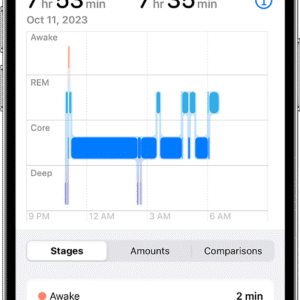


Travel often disrupts sleep. Long flights, unfamiliar hotel rooms, time zone changes, and irregular schedules can quickly reduce sleep quality and energy levels.
Sleep trackers for travel help you understand how these disruptions affect your rest. Whether you are flying across time zones, taking overnight road trips, or adjusting to a new hotel environment, the right device can provide consistent overnight data without adding extra hassle.
Portable wearables such as fitness bands and smart rings are especially useful for travel because they are lightweight and require minimal charging. Some models run for 7 to 14 days, making them ideal for extended trips without constant access to a charger.
Below are the top sleep trackers for travel, selected for portability, battery life, and real‑world performance. If you’re short on time, jump straight to the top picks.
Top Sleep Trackers for Travel in 2026
When choosing a sleep tracker for travel, portability, battery life, and offline reliability matter most. The devices below perform consistently during flights, hotel stays, and multi‑day trips.
If you want to see how these travel models stack up against everyday household devices, check out our comprehensive review of the best sleep trackers on the market.
Best Overall: Oura Ring Gen 4
Compact and lightweight, the Oura Ring is well‑suited for travel. It delivers accurate sleep stage analysis, recovery insights, and up to 7 days of battery life. Its discreet design makes it comfortable during overnight flights and extended hotel stays.
For business travelers, its readiness metrics can help schedule high‑focus tasks around peak energy periods during multi‑day trips.
Best for Budget Travelers: Xiaomi Smart Band 9
Affordable and efficient, the Xiaomi Smart Band 9 offers up to 16 days of battery life. Its slim profile makes it easy to wear during transit, and it reliably tracks sleep stages and heart rate without frequent charging.
Its extended battery life is particularly helpful for travelers who prefer to pack light and avoid carrying multiple chargers.
Best for Frequent Flyers: WHOOP 5.0 Strap
WHOOP focuses heavily on recovery and strain tracking, making it useful for travelers who frequently cross time zones. Battery life averages around 5 days, and the subscription model includes advanced analytics.
It is especially suitable for professionals who want detailed recovery insights after long‑haul flights or demanding schedules.
Best Non‑Wearable Option: SleepScore Max 2
This plug‑in device tracks sleep using contactless sonar technology. It eliminates battery concerns entirely and works best for extended hotel stays, though it is less practical for short, multi‑stop trips.
Travelers who dislike wearing wristbands or rings overnight can explore other non-wearable sleep trackers designed specifically for bedside monitoring.
Best App‑Based Tracker: Sleep Cycle
Sleep Cycle uses your smartphone’s sensors to estimate sleep patterns. While convenient and budget‑friendly, it depends on phone battery life and consistent placement for accurate tracking.
It is most suitable for short trips where carrying additional devices is not preferred.
Quick Travel Comparison
| Device | Type | Battery Life | Offline Tracking | Price Range | Best For |
|---|---|---|---|---|---|
| Oura Ring Gen 4 | Smart Ring | Up to 7 days | Yes | ~$349 | Lightweight premium tracking |
| Xiaomi Smart Band 9 | Fitness Band | Up to 16 days | Yes | ~$49 | Budget multi‑day travel |
| WHOOP 5.0 Strap | Wearable Strap | ~5 days | Yes | ~$239 + subscription | Recovery‑focused frequent flyers |
| SleepScore Max 2 | Non‑Wearable | Plug‑in | Yes | ~$149 | Hotel stays |
| Sleep Cycle App | Smartphone App | Phone‑dependent | Limited | Free / Premium | Casual travelers |
Strengths and Limitations for Travel
Oura Ring Gen 4
Strong portability and consistent overnight tracking. Suitable for most trips. Higher upfront cost.
Xiaomi Smart Band 9
Excellent battery life and affordability. Ideal for extended trips. Analytics are simpler than premium devices.
WHOOP 5.0 Strap
Recovery‑focused with detailed strain metrics. Requires subscription and shorter battery life.
SleepScore Max 2
No wearable required and no charging during use. Best for hotel stays, less practical for frequent location changes.
Sleep Cycle App
Convenient and budget‑friendly. Accuracy depends on phone placement and battery management.
Why Travel Disrupts Sleep and Why It Matters
Travel places unusual stress on your sleep. Long flights, inconsistent schedules, unfamiliar hotel rooms, and time zone changes can disrupt your natural sleep rhythm.
Most travel‑related sleep problems fall into three categories: schedule disruption, circadian misalignment, and environmental changes. Early departures, late arrivals, and long travel days often reduce deep sleep and increase nighttime awakenings. Even short trips may result in lighter, less restorative sleep.
Jet Lag and Circadian Disruption
Jet lag occurs when your internal body clock is out of sync with a new time zone. Crossing multiple time zones can make it difficult to fall asleep at night or feel alert during the day.
Sleep trackers help monitor how your sleep timing and sleep stages shift during this adjustment period. Reviewing multi‑night data makes it easier to gradually reset your schedule instead of relying on guesswork.
Environmental Factors
Noise, lighting, room temperature, and unfamiliar bedding frequently affect sleep quality while traveling. Hotel rooms and airplane cabins introduce variables that may increase restlessness or reduce deep sleep. Tracking these patterns allows you to identify which environments lead to better rest and make adjustments on future trips.
Over several days, poor sleep can affect focus, mood, and overall energy levels. For frequent travelers, maintaining sleep consistency can be the difference between feeling drained and staying productive on the road.
Benefits of Using Sleep Trackers During Travel
Travel makes sleep less predictable. Irregular schedules, time zone shifts, and unfamiliar environments often reduce sleep quality without you fully realizing it. A sleep tracker provides objective data so you can see exactly how your body responds to these disruptions.
Detecting Sleep Quality Changes
Sleep stage breakdowns, overnight heart rate patterns, and total sleep duration reveal whether your rest remains restorative during trips. If deep sleep decreases after flights or late arrivals, you can adjust bedtime habits, limit evening screen exposure, or improve room conditions such as lighting and temperature.
Identifying Travel‑Related Disruptions
Sleep trackers highlight patterns such as frequent awakenings, restlessness, or reduced recovery. Instead of guessing why you feel fatigued, you can respond strategically based on real data.
Monitoring Recovery Across Multiple Days
For multi‑day trips, consistent tracking becomes more valuable. Devices with extended battery life preserve uninterrupted sleep records, making it easier to monitor recovery trends across several nights.
Adapting to Schedule Changes
By reviewing nightly data, you can gradually adjust your sleep schedule, align with new time zones, and plan lighter activities after demanding travel days.
In short, sleep trackers turn invisible travel fatigue into measurable patterns, helping you stay rested and more productive on the road.
Using Sleep Data to Improve Future Trips
One of the biggest advantages of using sleep trackers during travel is long‑term pattern recognition. Reviewing your data after returning home allows you to compare travel nights with your normal sleep baseline.
If you consistently notice reduced deep sleep after long flights or late arrivals, you can adjust future travel plans accordingly. For example, scheduling lighter activities on arrival days or building in short recovery windows can improve overall performance.
Sleep trackers also highlight recovery trends across multiple nights. If international trips regularly affect your sleep for two or three days, planning buffer days becomes a strategic decision rather than a guess.
Using real sleep data turns future travel planning into an informed process, helping you stay energized and productive on the road.
Key Features to Look for in Travel‑Friendly Sleep Trackers
Not every sleep tracker is suited for travel. When moving between cities or time zones, portability, battery performance, offline reliability, and ecosystem compatibility matter more than advanced smartwatch extras.
Here are the features that make a sleep tracker truly travel‑ready.
Compact and Lightweight Design
Travel devices should be comfortable to wear for long periods and easy to pack. Slim fitness bands and smart rings are often more practical than bulky smartwatches, especially during overnight flights or multi‑day trips.
A lightweight device is less likely to interfere with sleep in unfamiliar environments.
Long Battery Life
Extended battery life is one of the most important travel features. Devices that last 7 to 14 days reduce the need to carry extra chargers and lower the risk of missing sleep data during long trips.
If extended battery performance is your top priority, compare the best sleep trackers with long battery life to see which models last the longest per charge. International travelers should also consider USB‑C or universal charging compatibility for convenience.
Offline Tracking and Airplane Mode
Reliable sleep trackers should continue recording data without Wi‑Fi or mobile connectivity. This is essential during flights, in remote areas, or when using airplane mode to conserve battery.
Airplane mode reduces unnecessary syncing while maintaining core tracking functionality. Your sleep data should automatically sync once connectivity is restored.
Automatic Time Zone Adjustment
Crossing time zones can disrupt sleep records. Devices that automatically adjust to local time help maintain accurate sleep logs and improve trend analysis during international travel.
Health Ecosystem and Travel Integration
Modern sleep trackers are most effective when connected to a broader health ecosystem. By syncing with platforms like Apple Health, Google Fit, or other fitness apps, users can view sleep, activity, heart rate, and recovery data in one centralized dashboard. This holistic view makes it easier to understand how daily habits and travel schedules affect overall wellness.
During travel, this integration becomes especially valuable. Long flights, time zone changes, and irregular routines can disrupt both sleep and activity levels. By combining sleep data with movement and heart rate metrics, travelers can better balance exertion with proper recovery.
Some jet lag management and travel health apps also use sleep timing data to recommend optimal bedtimes, light exposure, and schedule adjustments. When paired with a sleep tracker, these recommendations become more accurate and easier to follow, reducing guesswork during time zone transitions.
Rather than focusing on a single night’s sleep score, reviewing weekly sleep trends provides more meaningful insights. This broader perspective helps travelers make smarter adjustments and maintain consistent recovery throughout their trips.
To understand the exact technology powering these biometric readings, read our complete guide to sleep tracker features and sensor accuracy.
Practical Tips for Using Sleep Trackers While Traveling
Sleep trackers provide valuable insights, but they are most effective when combined with smart travel habits. A few practical adjustments can improve both sleep quality and tracking consistency during trips.
Prepare Before You Leave
Before your trip:
- Fully charge your device
- Update firmware and companion apps
- Sync recent data
- Enable airplane mode settings if available
If your tracker supports multi‑day battery life, check how many days of charge remain before departure to avoid carrying unnecessary chargers.
Clean the device sensors and pack a compact charger or power bank for longer trips. If syncing issues occur, restarting Bluetooth or updating firmware typically resolves minor travel‑related problems.
Track Sleep During Flights and Transit
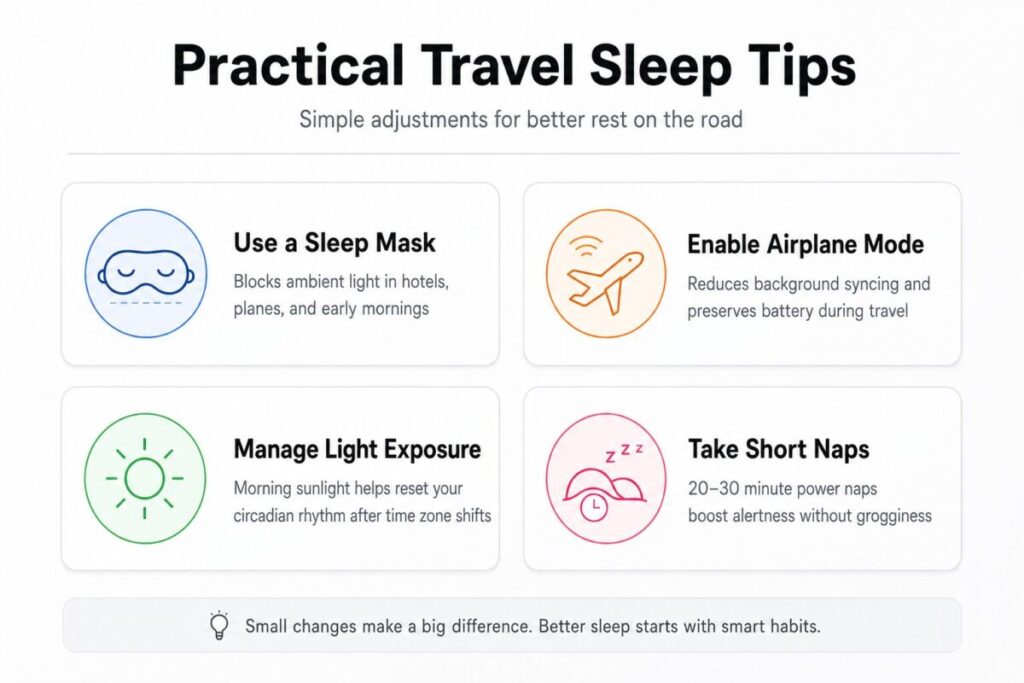
Wear your device during overnight flights or long layovers. Activate airplane mode to reduce battery drain while maintaining sleep tracking functionality.
Even short in‑flight naps can be logged and reviewed later to better understand recovery patterns.
Adjust Gradually to New Time Zones
Avoid forcing an immediate schedule shift upon arrival. Review your sleep timing over the first few nights and make gradual adjustments.
Monitor sleep duration and deep sleep levels. If quality drops significantly, consider earlier bedtimes and increased daylight exposure to help your body adapt. Shift workers with irregular schedules may benefit from sleep trackers for shift workers.
Optimize Your Sleep Environment
Hotel rooms and airplane cabins often introduce light and noise disturbances. Use earplugs, white noise, or a sleep mask to reduce interruptions. When possible, adjust room temperature to around 60–67°F for better comfort.
Tracking sleep stages can help you determine whether environmental adjustments improve deep sleep and reduce nighttime awakenings.
Manage Light Exposure and Napping
Limit screen use at least one hour before bedtime to preserve melatonin levels. Use blue‑light filters if needed.
Strategic naps of 20 to 30 minutes can ease time zone transitions without disrupting nighttime sleep. Reviewing both nap duration and overnight recovery data helps you fine‑tune your approach.
Consider Family Travel Needs
For family trips, choose devices with simplified interfaces or multi‑user app support to manage sleep data for children or older family members more easily.
Common Mistakes Travelers Make With Sleep Trackers
Sleep trackers are useful tools, but they are only effective when used properly during travel.
Ignoring Sleep Patterns
Many travelers collect sleep data but never review it. If your tracker consistently shows reduced deep sleep after flights or late arrivals, ignoring that pattern limits its value.
Use multi‑night trends to adjust bedtimes, light exposure, or recovery days on future trips.
Over‑Relying on the Device
Sleep trackers provide estimates, not clinical diagnoses. They help identify trends, but healthy sleep habits still matter.
Avoid obsessing over minor nightly fluctuations. Focus on weekly patterns instead.
Failing to Update Time Zone Settings
Some devices adjust automatically, while others require manual updates. Incorrect time zone settings can distort sleep logs and trend analysis.
Always confirm local time alignment after landing to ensure accurate data tracking.
Privacy, Data Security, and Accuracy Considerations
Sleep trackers collect personal health data, which makes privacy and reliability important—especially when traveling internationally.
What Data Sleep Trackers Collect
Most devices record sleep duration, heart rate, movement patterns, and sometimes blood oxygen levels. Some models may also store basic location or time zone information to improve tracking accuracy.
Review your device’s privacy policy to understand what data is stored locally and what is synced to cloud services.
Protecting Your Data While Traveling
Avoid syncing sensitive health data over unsecured public Wi‑Fi networks. Use strong passwords and enable two‑factor authentication whenever possible.
If your tracker supports airplane mode, disable unnecessary background syncing during flights or transit. For travel within regions with strict privacy regulations, confirm that your device complies with standard GDPR privacy regulations and local data protection laws.
Understanding Accuracy and Reliability
Sleep trackers estimate sleep stages using movement and heart rate patterns. While they are not substitutes for clinical testing, they provide reliable trend data when used consistently.
Devices that rely on heart rate variability and advanced sensors typically offer more detailed insights than motion‑only trackers. For meaningful interpretation, focus on weekly sleep patterns rather than single‑night fluctuations.
Frequently Asked Questions
What is the best sleep tracker for travel?
The best sleep tracker for travel depends on your priorities. Lightweight devices with long battery life, such as fitness bands or smart rings, are ideal for frequent travel. If portability and minimal charging are important, choose a device that lasts at least 7 to 14 days per charge.
Do sleep trackers work on airplanes?
Yes. Most sleep trackers continue recording sleep data in airplane mode without internet access. Your data will sync automatically once you reconnect to your phone.
How can sleep trackers help with jet lag?
Sleep trackers monitor sleep timing, duration, and recovery trends. Reviewing this data helps you gradually adjust your bedtime to match a new time zone instead of forcing sudden schedule changes.
Are non‑wearable sleep trackers good for travel?
Non‑wearable devices work well for hotel stays but are less convenient for frequent location changes. Wearables are usually more practical for flights and multi‑city trips.
Do I need a long battery sleep tracker for travel?
Long battery life is highly recommended for travel. Devices that last at least one week reduce charging interruptions and ensure consistent overnight tracking during extended trips.
Are sleep tracking apps reliable while traveling?
App‑based trackers can work for short trips, but they depend on phone battery life and proper placement. Dedicated wearable devices generally provide more consistent results.
Which sleep tracking smartwatch is best for travel?
For travel, lightweight devices with multi‑day battery life are usually better than full smartwatches. Options like the Oura Ring or Xiaomi Smart Band are compact, require less frequent charging, and are easier to wear during flights or hotel stays. If you prefer a full smartwatch, choose one with at least 5 to 7 days of battery life to avoid daily charging interruptions.
Conclusion
Travel often disrupts sleep, but the right sleep tracker can help you stay consistent and recover more effectively. By choosing a device that balances portability, battery life, and reliable tracking, you can monitor how flights, time zone changes, and unfamiliar environments affect your rest.
Lightweight wearables with multi‑day battery life are often the most practical option for travelers. Whether you are flying internationally, taking business trips, or planning extended vacations, tracking your sleep patterns allows you to adjust schedules, manage jet lag, and maintain energy levels more strategically.
Ultimately, the best sleep tracker for travel is the one that fits your routine, requires minimal maintenance, and delivers consistent data wherever your journey takes you.

A passionate tech blogger and the founder of Best Tech View, a dynamic platform dedicated to all things technology. With a keen interest in the tech, Ahmad strives to provide insightful and engaging content on the latest tech trends, and breakthroughs.