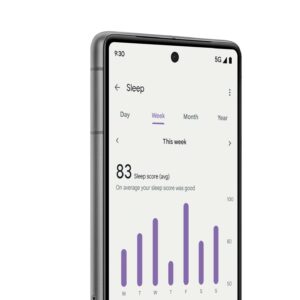


If you are searching for the best sleep trackers in 2026, you have probably noticed how many options are available. The problem is not finding a device. The problem is knowing which one actually delivers accurate and useful sleep data.
Most sleep trackers promise better rest. Not all of them provide meaningful insight. Some inflate deep sleep numbers. Others offer impressive features but fall short on battery life or long-term reliability. The real question is not which device has the most features. It is which one gives you consistent, actionable data you can use to improve your sleep.
In this guide, we compare the best sleep trackers available right now based on sleep tracking accuracy, heart rate and HRV monitoring, blood oxygen support, comfort, battery life, and overall usability. You will see how each device performs and who it is best suited for.
Before you invest in a sleep tracker, it helps to understand what these devices can and cannot measure. Let’s start with the models that stand out this year and why they matter.
If you want a quick overview before diving into detailed reviews, this table summarizes the top sleep trackers side by side.
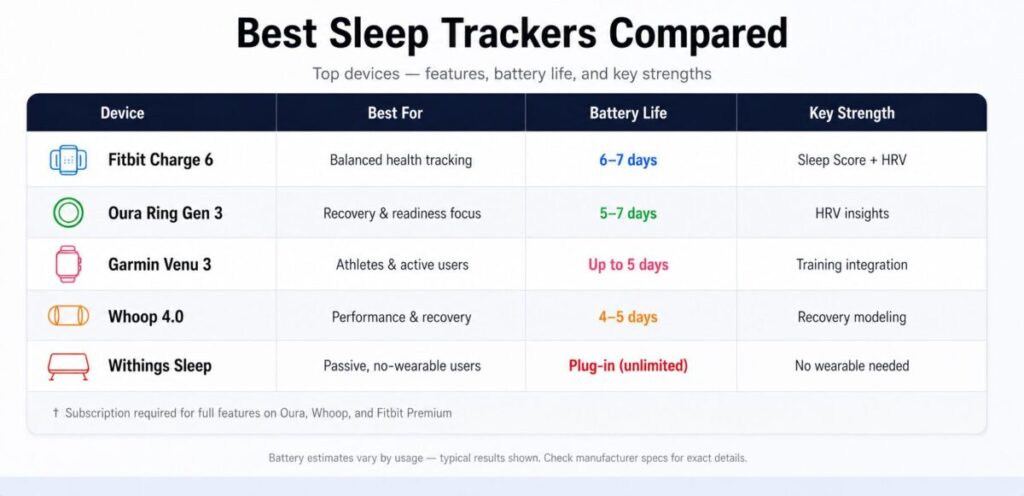
Quick Comparison of the Best Sleep Trackers
| Device | Best For | Battery Life | Key Strength | Subscription Required |
|---|---|---|---|---|
| Fitbit Charge 6 | Most users | 6–7 days | Balanced sleep & health tracking | Optional |
| Oura Ring Gen 3 | Recovery & HRV tracking | 5–7 days | Deep recovery insights | Yes |
| Withings Sleep | Non-wearable tracking | Plug-in | Passive sleep & breathing monitoring | No |
| Garmin Venu 3 | Athletes | 3–5 days | Training + sleep integration | No |
| Whoop 4.0 | Performance recovery | 4–5 days | HRV-driven recovery coaching | Yes |
Battery life varies depending on settings and usage.
Our Top Picks: Best Sleep Trackers Compared
If you want a quick answer, start here. These are the best sleep trackers in 2026 based on sleep tracking accuracy, biometric depth, battery life, comfort, and overall reliability.
Battery life and subscription details may vary slightly depending on usage and software updates.
1. Fitbit Charge 6 – Best Overall Sleep Tracker
Why it stands out
Fitbit offers the strongest balance between sleep accuracy, comfort, price, and battery life. For most users, it delivers enough data without becoming overwhelming.
Key features
- Detailed sleep stages including REM, deep, and light sleep
- Daily sleep score with trend tracking
- Heart rate, HRV, and blood oxygen monitoring
- Smart Wake alarm
- Around 6 to 7 days of battery life
Pros
- Reliable core sleep metrics
- Comfortable for overnight wear
- Strong battery life compared to smartwatches
- Good value for the feature set
Cons
- Advanced analytics require Fitbit Premium
- Built-in GPS is limited without phone pairing
Best for
Most people who want accurate, consistent sleep tracking without paying a monthly subscription for basic features.
Bottom line
If you want one device that handles sleep, general health tracking, and everyday activity well, this is the safest choice.
2. Oura Ring Gen 3 – Best for Recovery and HRV Insights
Why it stands out
Oura focuses heavily on recovery metrics. Its HRV tracking and readiness scoring are among the most respected in the consumer wearable space.
Key features
- Sleep stage tracking with trend analysis
- HRV and resting heart rate monitoring
- Blood oxygen and body temperature tracking
- 5 to 7 days of battery life
Pros
- Strong long-term recovery insights
- Extremely comfortable ring design
- Excellent sleep trend visualization
Cons
- Full data access requires a paid membership
- No display for quick on-device review
Best for
Users who care more about recovery, stress, and readiness than smartwatch features.
Bottom line
If sleep tracking is part of a broader recovery strategy, Oura provides deeper physiological context than most wrist-based devices.
3. Withings Sleep Analyzer – Best Non-Wearable Option
Why it stands out
This under-mattress sensor removes the need to wear anything at night. It continuously monitors sleep, breathing patterns, and heart rate without charging or straps.
Key features
- Sleep stage estimation
- Snoring and breathing disturbance detection
- Heart rate tracking
- No battery charging required
Pros
- Completely passive monitoring
- Suitable for people who dislike wearables
- Can flag potential sleep apnea events
Cons
- No daytime HRV or activity metrics
- Limited portability
Best for
Users focused on breathing trends or those who do not want anything on their wrist or finger at night.
Bottom line
Comfort and simplicity are the biggest advantages here. If wearables disrupt your sleep, this approach makes more sense.
4. Garmin Venu 3 – Best for Athletes
Why it stands out
Garmin combines strong sleep tracking with advanced training metrics. The sleep data integrates directly with performance metrics like Body Battery and recovery time.
Key features
- Sleep stages and sleep score
- HRV status tracking
- Blood oxygen monitoring
- Built-in GPS and multi-sport modes
Pros
- Excellent training ecosystem
- Strong integration between sleep and performance
- No mandatory subscription
Cons
- Bulkier than bands or rings
- Shorter battery life than minimalist trackers
Best for
Runners, cyclists, and athletes who want training metrics and sleep tracking in one device.
Bottom line
If performance matters as much as sleep, Garmin provides one of the most complete ecosystems available.
5. Whoop Strap 4.0 – Best for Data-Driven Recovery
Why it stands out
Whoop is designed around recovery, not step counts. It focuses heavily on HRV, strain, and sleep efficiency rather than traditional smartwatch features.
Key features
- Continuous heart rate monitoring
- HRV-based recovery scoring
- Sleep duration and efficiency tracking
- Personalized coaching insights
Pros
- Strong recovery modeling
- Clear performance-focused analytics
- No screen distractions
Cons
- Requires ongoing membership
- No on-device display
- Less detailed consumer-style sleep stage breakdown
Best for
Athletes and performance-focused users who want structured recovery guidance.
Bottom line
Whoop is not for casual users. It is for people who actively train and want data to guide recovery decisions.
How We Evaluated the Best Sleep Trackers in 2026
Choosing the best sleep trackers requires more than comparing feature lists. Many devices advertise advanced sleep insights, but not all deliver consistent or meaningful data.
Our evaluation focuses on reliability, usability, and long-term value rather than marketing claims or surface-level specifications.
Here are the core factors we considered when comparing each device.
Sleep Tracking Accuracy and Consistency
Most consumer sleep trackers estimate sleep stages using motion data and heart rate patterns. While they are not medical-grade tools, some devices provide more stable and consistent trend data than others.
We prioritized devices that show reliable total sleep time, realistic sleep stage distribution, and consistent results across multiple nights. Trend accuracy matters more than a single impressive sleep score.
Heart Rate and Heart Rate Variability Monitoring
Heart rate variability plays a central role in recovery, stress, and overall sleep quality analysis. Devices that deliver consistent overnight heart rate and HRV readings ranked higher in our comparison.
We also considered whether the tracker provides clear interpretation of HRV data rather than raw numbers that lack context.
Blood Oxygen and Breathing Insights
Some sleep trackers monitor blood oxygen levels and detect irregular breathing patterns. While these features cannot diagnose sleep apnea or medical conditions, they can help identify patterns that may require professional evaluation.
Devices with stable SpO2 tracking and meaningful breathing insights received higher consideration.
Comfort and Battery Life
A sleep tracker only works if you actually use it every night. Comfort, weight, and design play a major role in long-term consistency.
Battery life is equally important. Devices that require daily charging may lead to missed sleep data. We gave preference to trackers that balance performance with practical battery longevity.
App Experience and Data Clarity
Raw data alone does not improve sleep. The quality of the companion app matters.
We evaluated how clearly each device presents sleep stages, trends, recovery insights, and long-term progress. The best sleep trackers translate complex biometric data into understandable, actionable insights.
Subscription Model and Overall Value
Some trackers require a monthly membership to unlock advanced sleep analytics. Others provide full functionality without ongoing fees.
We considered both upfront cost and long-term subscription requirements when assessing overall value.
Consumer sleep trackers are best viewed as trend-monitoring tools rather than medical diagnostic devices. Their strength lies in helping users identify patterns, adjust habits, and make informed decisions about their sleep health over time.
Are Sleep Trackers Actually Accurate?
Sleep trackers have improved significantly in recent years, but accuracy depends on what you are measuring.
Most consumer devices use accelerometers and optical heart rate sensors to estimate sleep stages. Instead of directly measuring brain activity like a clinical sleep study, they rely on movement patterns and heart rate variability to predict whether you are in light, deep, or REM sleep.
Total Sleep Time vs Sleep Stages
Research shows that wearable sleep trackers are generally reliable at estimating total sleep time. They are less precise when distinguishing between specific stages such as deep sleep and REM sleep.
If you want a deeper breakdown of how devices analyze REM cycles, see our guide on sleep trackers with REM detection.
The key takeaway is this: stage data should be viewed as directional, not diagnostic. What matters most is consistency over time.
Heart Rate and HRV Reliability
Resting heart rate tracking is highly reliable across most modern wearables. These devices also measure heart rate variability, a key indicator of recovery and stress. You will find the most consistent HRV data in higher-end models that use advanced optical sensors.
Trackers like those discussed in our overview of sleep trackers with stress monitoring and sleep trackers with circadian rhythm tracking use HRV trends to generate readiness or recovery scores.
For users focused on performance and recovery, HRV trends are often more meaningful than individual sleep stage percentages.
Blood Oxygen and Breathing Monitoring
Some of the best sleep trackers now include blood oxygen monitoring. These sensors can detect drops in oxygen levels that may correlate with breathing disturbances.
You can learn more about how these features work in our breakdown of sleep trackers with blood oxygen level tracking and sleep trackers for sleep apnea.
However, it is important to understand that consumer devices cannot diagnose sleep apnea. They can only highlight patterns that may warrant medical evaluation.
For clinical diagnosis, a polysomnography test remains the gold standard.
(Here you can add an external reference to the Sleep Foundation or CDC for medical context.)
Non-Wearable Accuracy
Under-mattress systems use pressure and movement sensors to estimate sleep cycles and breathing patterns. While they may lack detailed HRV tracking, they offer strong consistency for total sleep time and breathing disturbance detection.
If you prefer this approach, explore our guide to non-wearable sleep trackers for a full comparison.
The Bottom Line on Accuracy
No consumer sleep tracker replaces a clinical sleep study.
What they do well is identify long-term patterns:
- Changes in sleep duration
- Shifts in bedtime consistency
- Trends in resting heart rate
- Recovery fluctuations
If you use a sleep tracker as a trend-monitoring tool rather than a diagnostic device, it can provide meaningful insight and help guide lifestyle adjustments.
Accuracy is not about perfection. It is about reliable patterns over time.
Understanding Modern Sleep Technology
Modern sleep trackers rely on sensor-based estimation rather than direct brain monitoring. Unlike clinical sleep studies that measure brain waves, consumer devices interpret patterns using movement, heart rate, and sometimes blood oxygen signals.
Why Sleep Tracking Matters
Most people misjudge how well they sleep. Feeling rested does not always reflect physiological recovery. Sleep tracking provides objective trend data that helps identify inconsistencies in sleep duration, bedtime regularity, and recovery markers.
Over time, this awareness can support better decision-making around stress, training load, and daily habits.
How Sleep Tracker Sensors Work
Wearable sleep trackers typically use accelerometers to detect movement and optical sensors to measure heart rate. Advanced models analyze heart rate variability and blood oxygen fluctuations to estimate sleep stages and recovery status.
Non-wearable systems rely on pressure sensors and motion detection to monitor breathing and movement throughout the night.
These devices do not measure brain activity directly. Instead, they use predictive algorithms to estimate sleep patterns based on collected biometric signals.
Key Features That Actually Matter in a Sleep Tracker
Most sleep trackers advertise long feature lists. The better question is which features actually matter for your situation.
Use this as a practical filter before choosing a device.
If You Care About Recovery and Stress
Look for heart rate variability tracking and consistent overnight heart rate monitoring. These metrics provide more meaningful recovery insight than sleep stage percentages alone.
Devices that emphasize HRV trends are better suited for performance-focused users.
If You Are Concerned About Breathing or Oxygen Levels
Choose a tracker that includes blood oxygen monitoring and breathing disturbance detection. These features cannot diagnose medical conditions, but they can highlight patterns worth discussing with a healthcare professional.
If You Want Simplicity
A clear sleep score and total sleep time tracking may be enough. Avoid devices that overwhelm you with excessive charts and technical metrics you will not use.
If Comfort Is Your Priority
Consider lightweight wearables or non-wearable systems. The most advanced tracker is useless if it disrupts your sleep or feels uncomfortable overnight.
If You Travel Frequently
Battery life becomes critical. Devices that last five to seven days reduce the risk of missing sleep data during trips.
If You Prefer an All-in-One Health Device
Smartwatches and advanced fitness bands combine sleep tracking with activity, heart rate monitoring, and training metrics. This makes them more versatile but sometimes less specialized.
The best sleep tracker is not the one with the most features. It is the one that aligns with your goals and fits into your routine without friction.
Wearable vs Non-Wearable Sleep Trackers: Which Is Better?
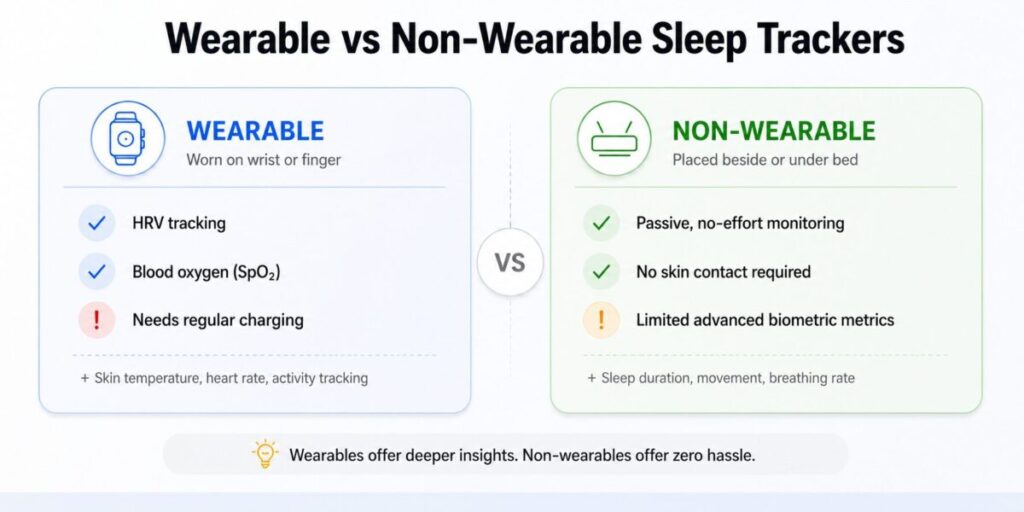
When comparing the best sleep trackers, one of the first decisions is whether you prefer a wearable or a non-wearable device. Both approaches collect sleep data, but they differ in comfort, biometric depth, and practicality.
Here is how they compare.
Wearable Sleep Trackers
Wearable devices include smartwatches, fitness bands, and smart rings worn on the wrist or finger. These trackers use motion sensors and optical heart rate monitoring to estimate sleep stages, heart rate variability, and blood oxygen levels.
Because they remain in contact with your skin, wearables can provide more detailed physiological data.
Advantages
- Continuous heart rate and HRV monitoring
- Blood oxygen tracking in many models
- Integration with fitness and activity tracking
- Portable and usable beyond the bedroom
For example, devices featured in our guide to wearable sleep trackers often combine sleep data with stress tracking and recovery metrics.
Limitations
- May feel uncomfortable for light sleepers
- Require regular charging
- Data accuracy can vary by brand and sensor quality
Wearables are typically better suited for users who want detailed recovery insights and all-day health tracking.
Non-Wearable Sleep Trackers
Non-wearable trackers are placed under the mattress or on a bedside surface. These systems use pressure sensors, motion detection, and sometimes sound analysis to estimate sleep cycles and breathing patterns.
Because they do not rely on skin contact, they prioritize comfort and simplicity over advanced biometric depth.
Advantages
- No device on your body
- No nightly charging
- Good for tracking total sleep time and breathing disturbances
You can explore a deeper comparison in our overview of non-wearable sleep trackers.
Limitations
- Limited or no HRV tracking
- Less detailed blood oxygen data
- Typically restricted to bedroom use
Non-wearable devices may be ideal for people who dislike wearing watches or rings overnight.
Which Type Should You Choose?
If you want detailed metrics such as HRV trends, stress monitoring, and blood oxygen tracking, a wearable device generally offers more depth.
If comfort and simplicity matter more than advanced biometrics, a non-wearable tracker may be the better choice.
The best sleep tracker is not the one with the most sensors. It is the one you will use consistently every night.
Can Smartphone Apps Replace Sleep Trackers?
Some smartphone apps estimate sleep using motion and sound detection. They are easy to use and require no additional device.
However, phone-based tracking lacks continuous heart rate, HRV, and blood oxygen monitoring. As a result, data depth is limited compared to wearable sleep trackers.
Apps can be useful for basic sleep duration tracking, but they are not a substitute for dedicated sleep monitoring devices.
Who Is a Sleep Tracker Best For?
The best sleep tracker depends on your lifestyle and priorities. Different users benefit from different features.
For Athletes and Fitness Enthusiasts
Athletes often benefit from devices that integrate sleep data with recovery metrics and training load. HRV tracking and readiness scoring can help adjust workout intensity.
You can explore more performance-focused options in our guide to sleep trackers for fitness enthusiasts.
For Sleep Apnea and Breathing Concerns
Users concerned about breathing irregularities may prefer devices that include blood oxygen tracking and snore detection.
For deeper comparison, see sleep trackers for sleep apnea and sleep trackers with blood oxygen level tracking.
For Frequent Travelers
Travel can disrupt circadian rhythm and sleep consistency. Portable devices with long battery life are ideal for users who frequently change time zones.
We compare travel-friendly options in sleep trackers for travel.
For Shift Workers
Irregular work schedules require consistent monitoring of sleep timing and recovery trends.
See our breakdown of sleep trackers for shift workers for devices designed around flexible schedules.
For Seniors
Comfort and ease of use are often top priorities. Devices with clear data presentation and minimal setup complexity may be preferable.
You can review options in sleep trackers for seniors.
How to Choose the Best Sleep Tracker for Your Needs
Even the best sleep trackers vary in focus. The right choice depends on how much data you want, how you plan to use it, and whether you value simplicity or depth.
1. Do You Want a Wearable or Non-Wearable Device?
Wearables provide more detailed biometric data, including HRV and blood oxygen trends. Non-wearable systems prioritize passive comfort and minimal maintenance.
If you are unsure which approach suits you, review our comparison of wearable sleep trackers and non-wearable sleep trackers.
2. How Important Is Advanced Biometric Data?
Some users only need total sleep time and a daily sleep score. Others want HRV trends, stress monitoring, and sleep cycle breakdowns.
If advanced metrics matter, consider devices that support sleep cycle analysis and stress monitoring features.
3. Are You Focused on Sleep Alone or Overall Health?
Many sleep trackers double as full fitness wearables. If you want integrated workout tracking, heart rate monitoring, and daily activity insights, a smartwatch or advanced fitness band may be appropriate.
If sleep is your only focus, a dedicated sleep monitor may offer better comfort and battery longevity.
4. What Is Your Budget Over the Long Term?
Device cost is only part of the equation. Some trackers require monthly subscriptions to unlock advanced analytics.
Before choosing, factor in both the upfront price and potential long-term membership costs.
5. Will You Actually Use It Every Night?
Consistency determines value. A feature-rich tracker is useless if it feels uncomfortable or requires constant charging.
Choose the device you are most likely to wear or maintain consistently for months.
How to Interpret Your Sleep Data
Sleep trackers generate a lot of numbers. The value is not in the data itself, but in understanding what those numbers actually mean over time.
Instead of focusing on a single night, look for trends across weeks.
What Sleep Stages Really Indicate
Most sleep trackers estimate three primary stages: light sleep, deep sleep, and REM sleep. These stages are predicted using movement and heart rate patterns rather than direct brain activity.
Light Sleep
This stage makes up the largest portion of your night. It plays a role in memory processing and transitioning between deeper stages.
Deep Sleep
Often associated with physical recovery, immune function, and muscle repair. Consistently low deep sleep may indicate stress, poor recovery, or irregular sleep schedules.
REM Sleep
REM is linked to emotional regulation and cognitive processing. Significant drops in REM over time may correlate with stress, alcohol use, or disrupted sleep cycles.
If you want a deeper explanation of how devices estimate these stages, review our guide on sleep trackers with sleep cycle analysis.
Remember, these values are estimates. What matters most is consistency and long-term patterns.
Key Metrics That Matter More Than a Sleep Score
Many devices simplify your night into a single sleep score. While useful, the underlying metrics tell a more complete story.
Total Sleep Time
This is generally the most reliable metric. Chronic short sleep duration is strongly associated with reduced recovery and cognitive performance.
Sleep Efficiency
This measures the percentage of time spent asleep while in bed. Low efficiency may signal frequent awakenings or difficulty maintaining sleep.
Resting Heart Rate
An elevated nighttime heart rate can indicate stress, illness, or poor recovery.
Heart Rate Variability (HRV)
HRV trends often provide better recovery insight than sleep stage percentages. Learn more in our overview of sleep trackers with stress monitoring.
Focus on Patterns, Not Perfection
No consumer sleep tracker replaces a clinical sleep study. Night-to-night fluctuations are normal.
Instead of reacting to one low sleep score, monitor:
- Weekly averages
- Changes in bedtime consistency
- Trends in resting heart rate
- HRV stability over time
Sleep tracking works best when it supports behavioral adjustments rather than creating anxiety around individual metrics.
Turning Sleep Data Into Real Improvements
Sleep trackers are not useful because they generate numbers. They are useful because they reveal patterns.
The goal is not to chase a perfect sleep score. The goal is to identify behaviors that consistently improve or disrupt your recovery.
Here is how to use your data effectively.
1. Track Trends, Not Single Nights
One poor night does not mean your sleep is broken. Look at weekly averages instead of reacting to daily fluctuations.
Focus on:
- Average sleep duration
- Consistency of bedtime
- Trends in resting heart rate
- Changes in HRV over time
If your resting heart rate is gradually rising or HRV is dropping, it may signal stress, illness, or overtraining.
2. Adjust One Variable at a Time
If you change everything at once, you will not know what actually improved your sleep.
Test changes methodically:
- Move your bedtime 30 minutes earlier for one week
- Reduce caffeine intake after early afternoon
- Limit late-night screen exposure
- Adjust room temperature
Then observe how your sleep duration, efficiency, and recovery metrics respond.
3. Use Data to Support Recovery
If your tracker provides HRV or readiness scores, use them to guide intensity.
Lower HRV and elevated resting heart rate may indicate the need for lighter workouts or earlier sleep.
For users focused on recovery modeling, devices covered in our comparison of sleep trackers with stress monitoring provide more detailed insight into these trends.
4. Identify Behavioral Triggers
Over time, you may notice patterns such as:
- Alcohol reducing REM sleep
- Late meals affecting sleep efficiency
- Irregular schedules lowering deep sleep consistency
These insights are more actionable than a single sleep score.
5. Avoid Over-Optimization
Sleep tracking should reduce uncertainty, not create anxiety. If you find yourself stressed about minor fluctuations, shift your focus to weekly consistency rather than daily perfection.
Sleep trackers work best as awareness tools, not performance scoreboards.
Consistent adjustments based on long-term trends can lead to measurable improvements in sleep duration, recovery stability, and overall well-being.
Frequently Asked Questions
Which sleep tracker is the most accurate?
No consumer sleep tracker matches a clinical sleep study, but higher-end devices like Oura, Whoop, Garmin, and Fitbit provide consistent trend data. Most are reliable for total sleep time and heart rate tracking, while sleep stage breakdowns should be viewed as estimates rather than precise medical measurements.
Are sleep trackers worth buying?
Sleep trackers are worth it if you want to monitor long-term sleep trends, recovery patterns, and heart rate variability. They are less useful if you expect medical-grade diagnosis. Their value comes from identifying habits and patterns that affect sleep consistency over time.
Can sleep trackers detect sleep apnea?
Some devices monitor blood oxygen levels and breathing disturbances, which may highlight irregular patterns. However, they cannot diagnose sleep apnea. A medical sleep study is required for formal diagnosis. Consumer devices should only be used as awareness tools, not diagnostic equipment.
Do sleep trackers measure REM and deep sleep accurately?
Sleep trackers estimate REM and deep sleep using motion and heart rate data. While not perfectly accurate, they are generally consistent in showing trends over time. Changes in stage distribution across weeks are more meaningful than single-night variations.
Is a wearable or non-wearable sleep tracker better?
Wearables typically provide more detailed biometric data, including heart rate variability and blood oxygen tracking. Non-wearable devices prioritize comfort and passive monitoring. The better option depends on whether you value advanced metrics or maximum comfort during sleep.
How long does it take to see improvements after using a sleep tracker?
Most users begin noticing patterns within two to three weeks of consistent tracking. Improvements depend on behavioral changes such as sleep schedule consistency, caffeine intake, and stress management rather than the device alone.
Are sleep trackers safe to use every night?
Modern sleep trackers are generally safe for nightly use. Optical heart rate sensors and motion tracking technology are non-invasive. If you experience skin irritation from wearables, switching to a non-wearable option may be more comfortable.
Final Recommendation: Which Sleep Tracker Should You Choose?
Choosing the best sleep tracker depends on how much insight you want and how consistently you plan to use it.
For most users, a well-rounded wearable like Fitbit offers strong overall value. It balances sleep tracking, heart rate, and daily activity without feeling overly technical.
Devices such as Oura or Whoop provide deeper physiological insights and readiness modeling. They suit users who prioritize recovery metrics and heart rate variability trends over smartwatch features.
Comfort takes precedence for some. An under-mattress tracker is often a better long-term fit for those who prefer not to wear anything overnight.
Athletes and performance-focused users may benefit from platforms like Garmin, where sleep data connects directly to training load and recovery tracking.
Consistency matters more than feature count. The best sleep tracker is the one you will use every night for months, not the one with the longest list of specifications.
Use sleep data as a guide, not a scorecard. Focus on patterns. Adjust habits gradually. Prioritize long-term improvement over perfect nightly numbers.
When used correctly, a sleep tracker can provide meaningful insight into recovery, stress, and sleep quality and help you make smarter health decisions over time.

A passionate tech blogger and the founder of Best Tech View, a dynamic platform dedicated to all things technology. With a keen interest in the tech, Ahmad strives to provide insightful and engaging content on the latest tech trends, and breakthroughs.