


Sleep trackers for health monitoring have become more advanced, but most people still don’t fully understand what they’re looking at.
Heart rate, blood oxygen, HRV, even ECG. These features promise deeper insight into your health, not just your sleep. But more data doesn’t automatically mean better decisions.
Here’s what matters.
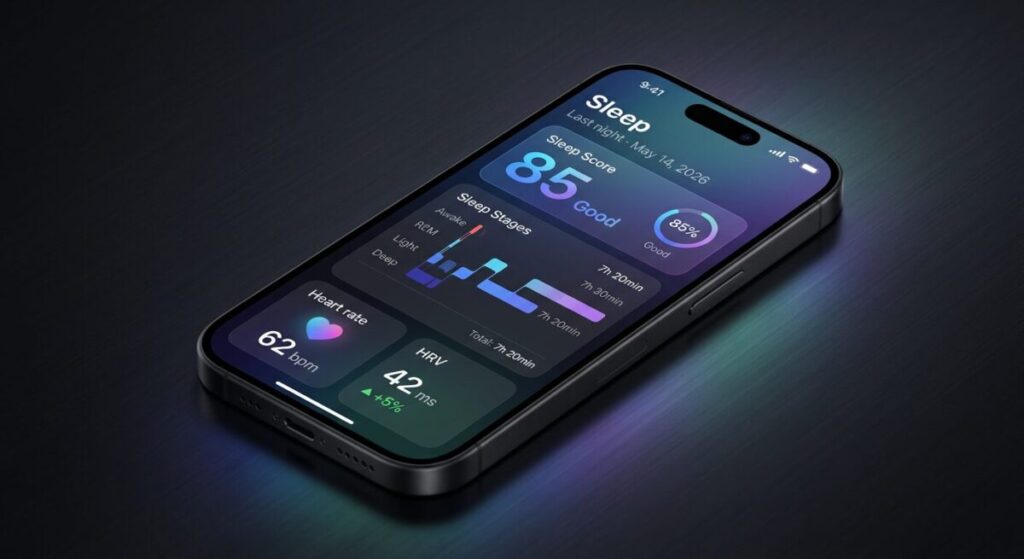
Sleep tracking tells you how you slept. Health monitoring tries to explain why.
That difference is important. A low sleep score is one thing. Understanding whether it’s caused by stress, poor recovery, or irregular breathing is where these features start to matter.
But not all of them are equally useful. Some are genuinely helpful when used correctly. Others are easy to misread or simply overhyped.
In this guide, we’ll break down the health features that actually make a difference, the ones you can ignore, and which devices handle them best.
Heart Rate Monitoring
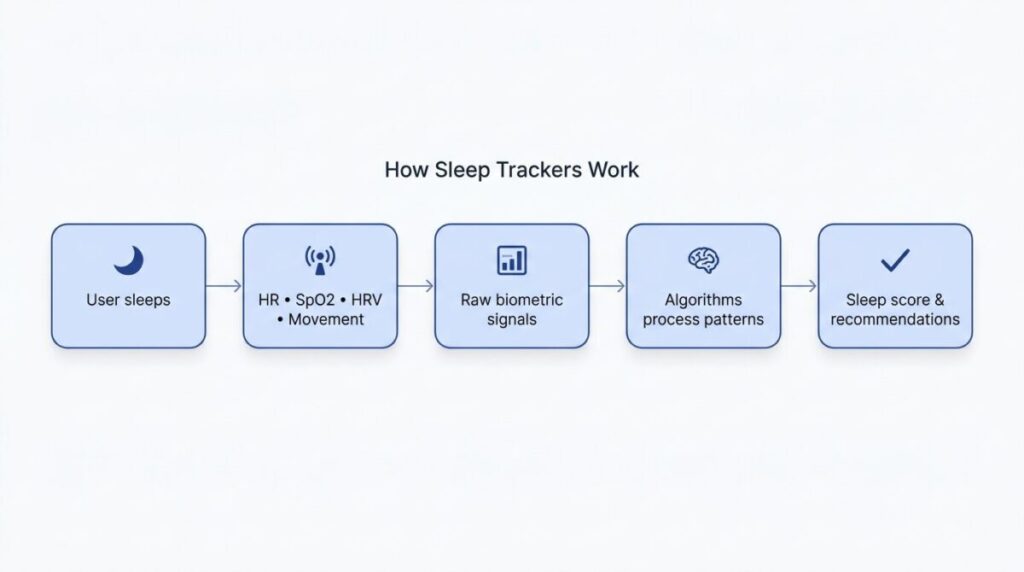
Heart rate tracking is one of the most common health features in sleep trackers, and for good reason. It gives you a baseline view of how your body behaves during sleep.
At a basic level, it measures your resting heart rate throughout the night. More advanced devices also track changes over time, which can signal stress, recovery, or disrupted sleep.
Here’s where it becomes useful.
A consistently elevated nighttime heart rate can point to poor recovery, late caffeine intake, stress, or even illness. On the other hand, a lower and stable heart rate during sleep usually indicates better recovery and overall sleep quality.
But it’s not perfect.
Wrist-based trackers are not as accurate as medical-grade devices. Movement, skin contact, and sensor quality all affect readings. So instead of focusing on exact numbers, it’s more useful to watch trends over time.
Some devices take this further by combining heart rate with other metrics like HRV and sleep stages. This creates a more complete picture of recovery rather than just isolated data points. If you want a deeper breakdown of how multiple features work together, see our guide on sleep tracker features.
Not all trackers handle heart rate data equally. Devices like Fitbit, Apple Watch, and Garmin tend to provide more consistent tracking, while simpler or budget devices may show more variation. If you’re comparing options, our best sleep trackers guide breaks down which devices perform best overall.
Who this is for:
Anyone who wants a simple, reliable signal of recovery and sleep quality
Where it adds value:
When you track patterns over time instead of focusing on one night
Where it can be misleading:
If you treat small fluctuations as meaningful or expect medical-level accuracy
Bottom line:
Heart rate monitoring is one of the most useful sleep tracking features, but only when you use it to spot trends, not chase exact numbers.
Blood Oxygen (SpO2) Tracking
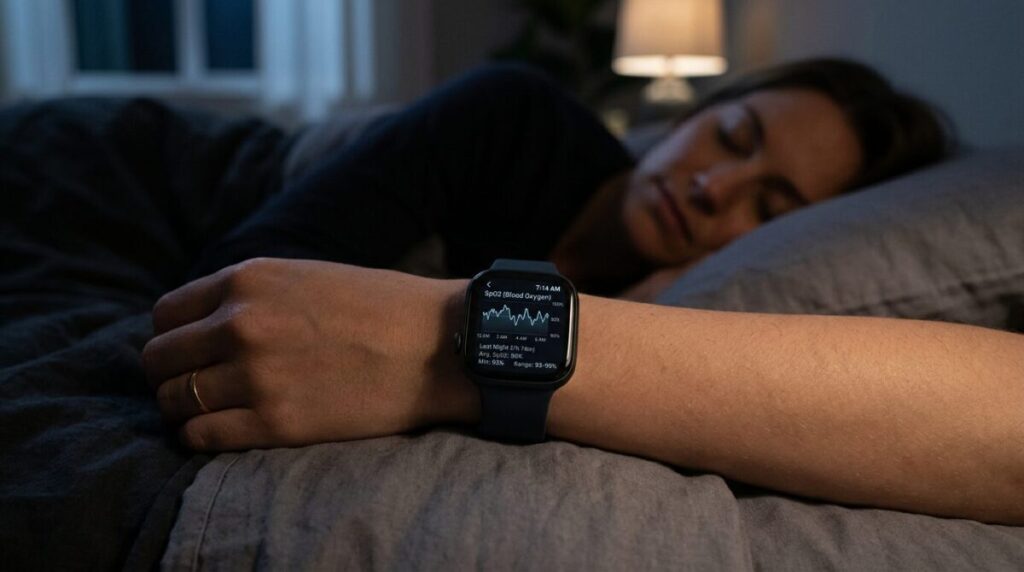
Blood oxygen tracking, often labeled as SpO2, measures how much oxygen your blood is carrying during sleep. It’s one of the most talked-about features in modern sleep trackers, especially because of its connection to breathing and sleep apnea.
Here’s where it can actually help.
If your oxygen levels drop repeatedly during the night, it may indicate breathing disruptions during sleep, which are often associated with sleep apnea, according to the Mayo Clinic.
This is why SpO2 tracking is often associated with early signs of sleep apnea or poor respiratory function. For users who suspect breathing issues, this feature can provide useful signals over time.
But it’s easy to misunderstand what the data really means.
Consumer sleep trackers do not measure blood oxygen with medical-grade accuracy. Readings can vary based on sensor quality, how the device fits, and even how you sleep. Occasional drops don’t automatically indicate a serious problem.
That’s why trends matter more than individual readings.
If you consistently see unusual patterns or repeated drops over several nights, that’s worth paying attention to. But it should be treated as a signal, not a diagnosis. If you want to understand how this connects to broader sleep health, see our guide on sleep tracker features.
Some devices handle SpO2 tracking better than others. Fitbit, Apple Watch, and certain Garmin models provide more consistent overnight tracking, while cheaper devices may show unreliable or incomplete data. If you’re comparing devices, our best sleep trackers guide breaks down which ones perform best overall.
Who this is for:
People concerned about breathing issues, sleep apnea risk, or nighttime oxygen levels.
This feature adds value when you track patterns over multiple nights and combine them with other data like heart rate and sleep quality. It can be misleading if you rely on single-night readings or assume it can diagnose medical conditions.
What this means in practice:
SpO2 tracking can reveal useful patterns related to breathing, but it’s not a diagnostic tool. Use it to spot trends, not to draw conclusions from isolated numbers.
ECG Monitoring
ECG, or electrocardiogram tracking, is one of the most advanced health features available in sleep trackers. It measures the electrical activity of your heart and can detect irregular rhythms such as atrial fibrillation.
That sounds powerful, and in some cases, it is.
Devices like the Apple Watch and certain Fitbit models allow you to take on-demand ECG readings. This can be useful if you experience symptoms like irregular heartbeat, dizziness, or palpitations.
But here’s the reality.
ECG is not continuously tracking your heart throughout the night in most consumer devices. It’s usually a manual feature that you have to activate. That means it’s not directly analyzing your sleep in the same way as heart rate or movement tracking.
So while it’s a valuable health tool, it’s not really a “sleep tracking” feature in the strict sense.
There’s also a tendency to overestimate what ECG can do. It can flag irregular patterns, but it cannot replace medical testing or diagnose heart conditions on its own. False positives and missed signals are both possible.
If you’re trying to understand how ECG fits alongside other features like heart rate and SpO2, it helps to look at the bigger picture. Our guide on sleep tracker features breaks down how these signals work together in real use.
Not all devices offer ECG, and those that do are usually in the premium category. If this feature matters to you, our best sleep trackers guide compares which devices include it and how reliable they are.
Who this is for:
People with known heart concerns or those who want occasional heart rhythm checks
When it helps:
When used to capture irregular symptoms and share data with a healthcare professional
Where it can be misleading:
If you expect continuous overnight monitoring or treat it as a diagnostic tool
What to take from this:
ECG is a powerful feature, but it’s not essential for most users. It’s best seen as an occasional health check, not a core part of sleep tracking.
Heart Rate Variability (HRV) and Stress Tracking
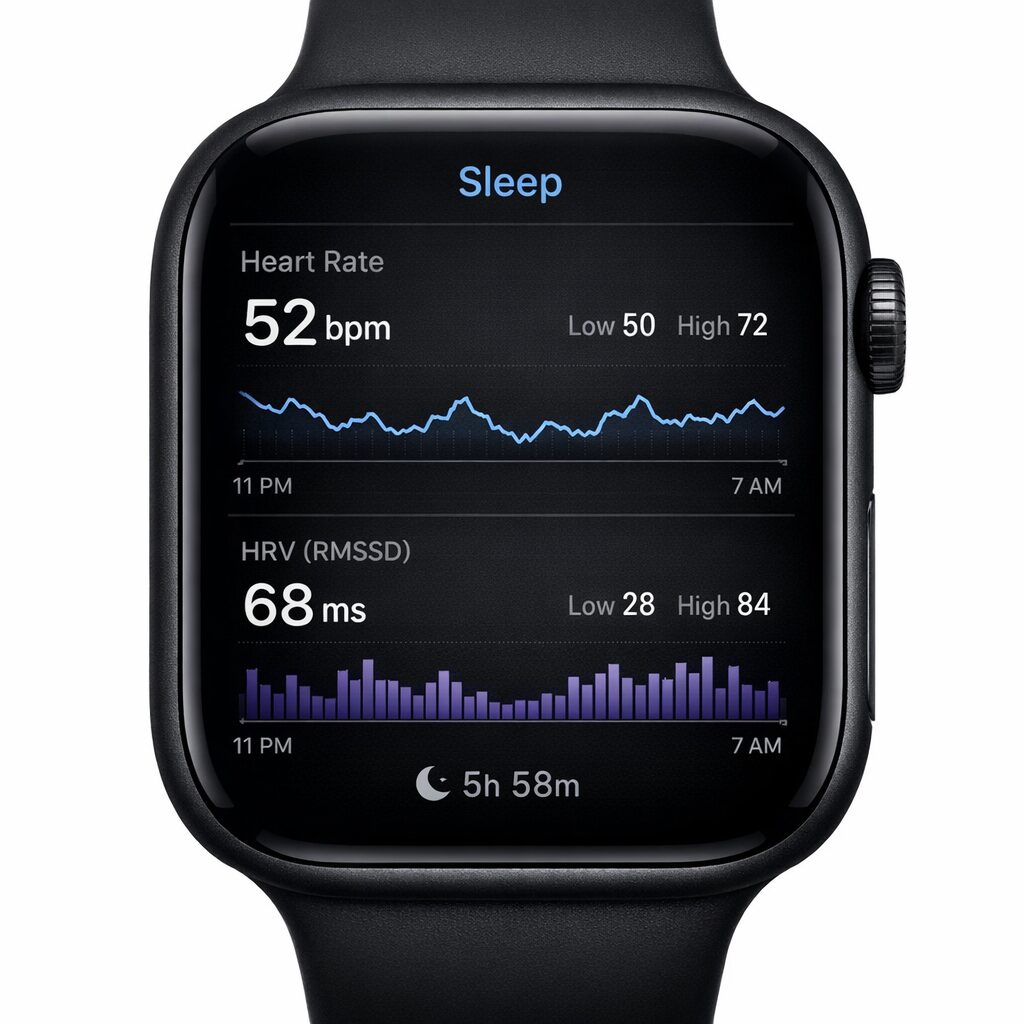
Heart Rate Variability, or HRV, measures the variation in time between each heartbeat. Unlike heart rate, which counts beats per minute, HRV reflects how your nervous system is responding to stress, recovery, and overall strain. It’s widely used as a marker of nervous system balance, as explained by the Cleveland Clinic.
This is where things get more interesting.
A higher HRV generally indicates better recovery and a more balanced nervous system. A lower HRV can signal stress, fatigue, poor sleep, or even overtraining. That makes it one of the most useful metrics for understanding how your body is actually handling daily demands.
But it’s also one of the most misunderstood features.
HRV numbers vary widely from person to person. There is no universal “good” number. What matters is your personal baseline and how it changes over time.
For example, if your HRV drops consistently after intense workouts, poor sleep, or high stress days, that pattern is meaningful. It tells you your body needs recovery, even if your sleep duration looks fine.
Some devices go a step further by combining HRV with stress tracking. They estimate how much time your body spends in a stressed versus relaxed state during the day and night. This can help connect lifestyle habits with sleep quality in a more practical way.
Devices like Oura, Fitbit, and Garmin tend to handle HRV tracking more effectively, especially when paired with long-term trend analysis. If you’re comparing how different features work together, our guide on sleep tracker features explains this in more detail.
Who this is for:
People focused on recovery, stress management, or athletic performance
When it helps:
When you track long-term trends and adjust habits based on patterns
Where it falls short:
If you compare your HRV to others or focus on daily fluctuations without context
The key takeaway:
HRV is one of the most powerful health metrics in sleep trackers, but only if you understand it as a trend, not a score to compete with.
Breathing Irregularities and Sleep Apnea Signals
Some sleep trackers attempt to detect breathing irregularities during sleep, often using a combination of SpO2 data, movement, and heart rate patterns. The goal is to identify signs that may be linked to conditions like sleep apnea.
This sounds like a major benefit, and in some cases, it can be.
If your device consistently shows drops in oxygen levels, restless sleep, or unusual breathing patterns, it may point to disrupted breathing during the night. Over time, these patterns can help you recognize that something isn’t right.
But this is where caution matters.
Sleep trackers do not diagnose sleep apnea. They only provide indirect signals based on sensor data. Many factors, including movement, poor device fit, or temporary changes in breathing, can affect the results.
That means false alarms are possible. So are missed issues.
The real value of this feature is awareness. If you notice consistent patterns over multiple nights, it may be worth discussing with a healthcare professional or considering a proper sleep study.
Devices like Fitbit and Apple Watch include features that highlight potential breathing disturbances, but even these are limited compared to clinical testing. If you’re evaluating how these signals connect with other health data, our best sleep trackers guide compares which devices handle this more reliably.
Who this is for:
People concerned about sleep apnea, snoring, or irregular breathing during sleep
When it helps:
When repeated patterns appear over time and prompt further investigation
Where it can be misleading:
If you rely on it for diagnosis or react to occasional irregular readings
What matters most:
Breathing detection features can raise useful early warnings, but they are not a substitute for medical evaluation. Treat them as signals, not conclusions.
Which Health Features Actually Matter (And Which Don’t)
Not all health features in sleep trackers are equally useful. Some provide real, actionable insight. Others sound impressive but add little value in daily use.
Here’s how it breaks down.
Heart rate tracking is one of the most reliable and useful features. It gives you a consistent signal of recovery and overall sleep quality, especially when viewed over time.
HRV takes this a step further. It helps you understand how your body is handling stress, fatigue, and recovery. For anyone focused on performance or long-term health trends, this is one of the most valuable metrics available.
Blood oxygen tracking sits somewhere in the middle. It can highlight potential breathing issues, but it’s often misunderstood. Occasional drops don’t mean much, and without consistent patterns, the data can be misleading.
Breathing irregularity detection is useful as an early warning signal, but it should never be treated as a diagnosis. If anything looks off repeatedly, the next step should be proper medical evaluation, not guesswork.
Now, here’s where expectations often go wrong.
ECG sounds like a must-have feature, but for most people, it isn’t. Unless you have a specific reason to monitor heart rhythm, it’s a feature you’ll rarely use. It’s powerful, but not essential for everyday sleep tracking.
Many users also assume that more features automatically mean better results. That’s not true. In reality, a simpler device that tracks heart rate and HRV consistently can be more useful than a feature-heavy device you don’t fully use.
Your choice should depend on what you actually care about.
If your goal is better sleep habits, focus on consistency and basic recovery signals. For more specific health concerns, features like SpO2 or ECG become more relevant.
To compare how these features perform across real devices, see our best sleep trackers guide, which breaks down what actually delivers in practice.
| Feature | What It’s Good For | When It Falls Short | Priority |
| Heart Rate Monitoring | Tracking recovery and overall sleep quality | Not accurate enough for medical use | High |
| HRV (Heart Rate Variability) | Understanding stress, recovery, and fatigue | Confusing without long-term tracking | High |
| Blood Oxygen (SpO2) | Identifying breathing irregularities over time | Misleading if viewed as single-night data | Medium |
| Breathing Detection | Spotting potential sleep apnea signals | Cannot diagnose conditions | Medium |
| ECG Monitoring | Detecting irregular heart rhythms when needed | Not continuous, rarely used by most people | Low |
Bottom line:
The best sleep tracker is not the one with the most features. It’s the one that gives you data you understand and actually use.
Best Sleep Trackers for Health Monitoring
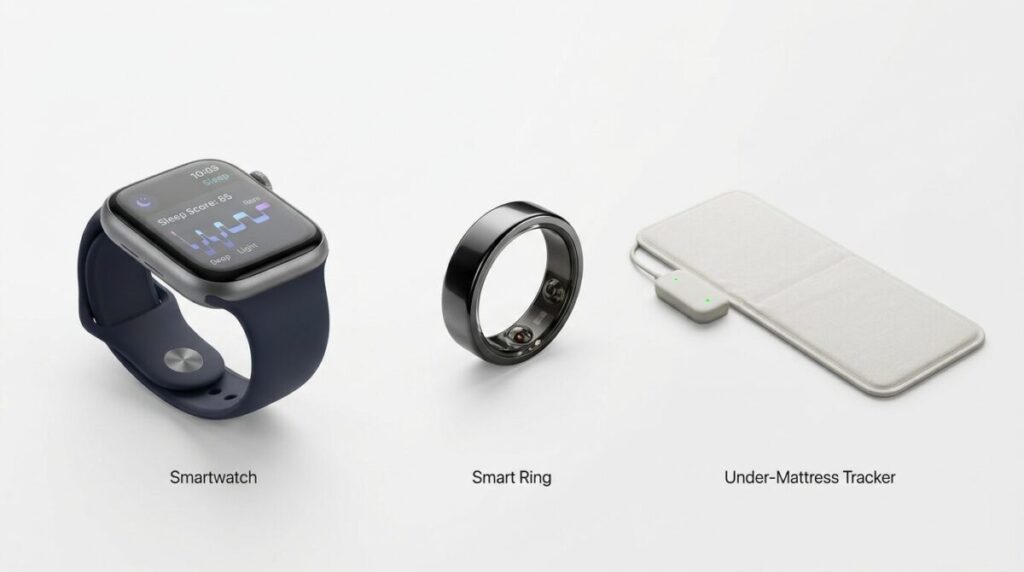
Not all sleep trackers handle health data the same way. Some focus on basic sleep stages, while others go deeper into recovery, heart health, and long-term trends.
If health monitoring is your priority, these devices stand out for different reasons.
Fitbit (Sense and Charge Series)
Fitbit offers one of the most balanced approaches to health tracking. It combines heart rate, SpO2, HRV, and stress tracking into a system that’s easy to understand. The daily readiness and stress scores make it easier to connect your sleep with how your body feels.
Best for:
Users who want a mix of simplicity and meaningful health insights
Limitation:
Some advanced insights require a premium subscription
Apple Watch
Apple Watch is the strongest option if you care about heart health features like ECG and irregular rhythm notifications. Its integration with Apple Health also makes it easier to view long-term trends across multiple metrics.
Best for:
Users focused on heart health and deep ecosystem integration
Limitation:
Battery life is shorter, which can affect overnight tracking consistency. If this is a concern, consider options with long battery life
Oura Ring
Oura focuses heavily on recovery and readiness using HRV, temperature, and sleep data. It’s less about raw data and more about interpretation, which makes it appealing for users who want clear insights without digging through charts.
Best for:
Recovery tracking, stress awareness, and long-term trends
Limitation:
No screen and limited real-time interaction
Garmin Devices
Garmin devices are strong in HRV, recovery, and performance tracking. They are especially useful for people who train regularly and want to connect sleep with physical performance.
Best for:
Athletes and performance-focused users
Limitation:
The interface can feel complex for beginners
If you’re trying to compare these devices beyond just health features, including comfort, battery life, and usability, our full guide on best sleep trackers breaks everything down in more detail.
| Device | Best For | Key Health Features | Limitation |
| Fitbit (Sense, Charge) | Balanced health tracking | HRV, SpO2, stress tracking, heart rate | Advanced insights require subscription |
| Apple Watch | Heart health monitoring | ECG, heart rate alerts, SpO2 | Short battery life |
| Oura Ring | Recovery and readiness insights | HRV, temperature, sleep trends | No screen, limited real-time feedback |
| Garmin Devices | Fitness and performance tracking | HRV, recovery metrics, heart rate | Complex interface for beginners |
The key takeaway:
The right device depends on what you value most. Some are better at heart health, others at recovery or simplicity. There’s no single best option, only the best fit for your needs.
Who Should Use Health-Focused Sleep Trackers
Not everyone needs advanced health tracking features. For some users, basic sleep data is enough. For others, these features can provide meaningful insight into recovery, stress, and potential health issues.
Here’s how to decide if they’re worth it for you.
If you’re concerned about breathing or sleep apnea
Features like SpO2 tracking and breathing irregularity detection can help identify patterns that may point to disrupted sleep. While they don’t replace medical testing, they can highlight when something feels off over time.
If this is your main concern, it’s worth exploring devices designed specifically for this purpose in our guide on sleep trackers for sleep apnea.
If you’re focused on fitness and recovery
Heart rate and HRV tracking are especially useful if you exercise regularly. These features help you understand how well your body is recovering and whether you’re pushing too hard or not recovering enough.
For a deeper look at performance-focused options, see sleep trackers for fitness enthusiasts.
If you have an irregular schedule
Shift workers and people with inconsistent sleep patterns benefit more from trend-based data than single-night scores. Features like HRV and sleep consistency tracking can help you adjust routines over time.
If this sounds like your situation, check out sleep trackers for shift workers.
If you’re buying for older adults
Health monitoring features can be useful, but simplicity matters more. Too much data or complex interfaces can make the experience overwhelming, which reduces long-term use.
Some devices are better suited for this than others. Our guide on sleep trackers for seniors focuses on options that balance clarity with useful health insights.
If you’re dealing with insomnia or poor sleep quality
In this case, behavior-focused features like coaching, stress tracking, and relaxation tools often matter more than raw health metrics. Data alone won’t fix sleep problems unless it leads to changes in habits.
You can explore better options in sleep trackers for insomnia.
What this means in practice:
Health-focused sleep trackers are most useful when they match a specific need. The more clearly you understand your goal, the easier it becomes to choose the right features and avoid unnecessary complexity.
Limitations You Should Know Before You Rely on These
Sleep trackers can provide useful health insights, but they come with clear limitations. Understanding these will help you avoid wrong conclusions and unrealistic expectations.
They are not medical-grade devices
Most consumer sleep trackers are designed for general wellness, not clinical diagnosis. While features like heart rate, SpO2, and even ECG can provide helpful signals, they are not as accurate as medical equipment.
If you have serious concerns about your health, these devices should never replace professional evaluation or sleep studies.
Data can be inconsistent
Sensor accuracy depends on factors like device fit, movement, and skin contact. Even high-end devices can produce slightly different results from night to night.
That’s why focusing on long-term trends is more useful than reacting to a single night of data.
Some features are estimates, not direct measurements
Sleep stages, stress levels, and even parts of HRV analysis are based on algorithms, not direct observation. This means the data is interpreted, not exact.
If you want a deeper understanding of how these features actually work, our guide on sleep tracker features breaks it down in detail.
Too much data can create anxiety
More data isn’t always better. Constant scores, alerts, and feedback can make some users overly focused on numbers instead of actual sleep quality.
This can lead to frustration or even sleep-related anxiety, especially when the data doesn’t match how you feel.
Devices don’t always agree with each other
Different brands use different algorithms. That means your sleep score, HRV, or recovery data may vary depending on the device you use.
Switching devices can sometimes feel confusing because the numbers don’t match, even if your actual sleep hasn’t changed.
Bottom line:
Sleep trackers are useful tools for awareness, not absolute truth. The value comes from patterns and habits, not perfect accuracy.
How to Choose the Right Health Tracking Features
Choosing the right sleep tracker is less about having more features and more about picking the ones you’ll actually use.
Here’s how to think about it.
If you’re just getting started
Focus on the basics. Heart rate tracking and simple sleep insights are more than enough in the beginning. Adding too many advanced features early on can feel overwhelming and make the data harder to follow.
If you want a simple starting point, look for devices that balance ease of use with essential tracking.
If you want deeper health insights
This is where features like HRV, SpO2, and stress tracking become more useful. They help you connect sleep with recovery, lifestyle habits, and overall health patterns.
But only choose these if you’re willing to track trends over time. Without consistency, the extra data doesn’t add much value.
If battery life and consistency matter to you
Health tracking works best when it runs continuously. Devices that need frequent charging can interrupt overnight tracking and reduce data quality over time.
If this is a concern, consider options with sleep trackers with long battery life that can run for several days without interruption.
If you prefer simplicity over data
Not everyone wants detailed charts and multiple health metrics. Some users benefit more from clear summaries and minimal interaction.
In that case, choose a device that focuses on easy-to-understand feedback rather than advanced analytics.
If you’re comparing multiple options
It’s easy to get lost in feature lists. Instead of comparing everything at once, focus on what matters for your specific goal.
If you want a full comparison across different devices, including comfort, accuracy, and usability, see our guide on best sleep trackers.
What to take from this:
The right features are the ones you understand and use consistently. More data doesn’t improve your sleep unless it changes your behavior.
Frequently Asked Questions
Are sleep trackers accurate for health monitoring?
Sleep trackers are reasonably accurate for general trends like heart rate and sleep duration, but they are not medical-grade devices. The data is best used to track patterns over time rather than relying on exact numbers.
Can a sleep tracker detect sleep apnea?
Sleep trackers can show signs of breathing irregularities, but they cannot diagnose sleep apnea. If you notice consistent issues, a medical sleep study is the only reliable way to confirm it.
What is the most important health feature in a sleep tracker?
For most users, heart rate and HRV provide the most useful insights. They help track recovery, stress, and overall sleep quality without adding unnecessary complexity.
Is SpO2 tracking necessary for better sleep?
Not for everyone. It’s mainly useful if you’re concerned about breathing issues or sleep apnea. Otherwise, it doesn’t add much value to daily sleep tracking.
Is ECG worth it in a sleep tracker?
ECG can be useful for people with heart concerns, but for most users, it’s not essential. It’s a feature you’ll likely use occasionally, not daily.
How often should I check my sleep data?
Checking trends a few times per week is usually enough. Looking at data every day or obsessing over small changes can become counterproductive.
Do more features mean a better sleep tracker?
No. The best sleep tracker is the one that gives you useful data you actually understand and use consistently.
Final Thoughts: What Actually Matters
Sleep trackers for health monitoring can give you useful insight, but only if you focus on the right signals.
Heart rate and HRV will tell you more about your recovery than most advanced features. SpO2 and breathing data can highlight potential issues, but they require context. ECG sounds powerful, but for most people, it’s not something you’ll use regularly.
The real value comes down to patterns.
If you use your tracker to understand trends, adjust habits, and stay consistent, it can genuinely improve how you sleep and recover. If you chase perfect scores or rely on single-night data, it quickly becomes noise.
So don’t look for the device with the most features.
Look for the one that gives you data you understand, trust, and actually use.

A passionate tech blogger and the founder of Best Tech View, a dynamic platform dedicated to all things technology. With a keen interest in the tech, Ahmad strives to provide insightful and engaging content on the latest tech trends, and breakthroughs.

