

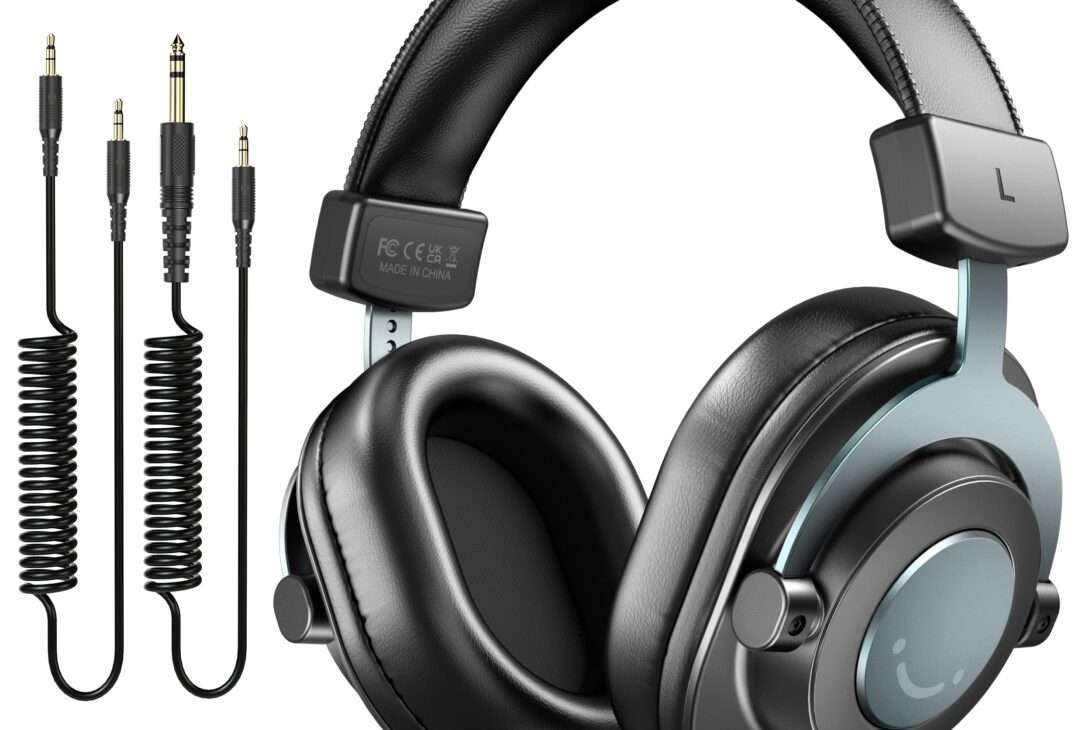
Studio headphones are not designed to make music sound better.
They are designed to make problems impossible to ignore.
When headphones exaggerate bass, you instinctively pull bass down in your mix.
Softened high frequencies create the opposite problem, making your track sound brittle on other systems.
Artificially widened stereo imaging can also mislead you, causing the mix to collapse when summed to mono.
Monitoring shapes decisions.
Decisions shape mixes.
That is why studio headphones are not accessories. They are diagnostic tools.
This guide breaks down what actually matters:
- What separates studio headphones from consumer models
- The real differences between open, closed, and semi‑open designs
- How driver technology influences transient response and detail
- Why impedance and amplification are not optional technicalities
- How headphone mixing can distort perception
- How professionals use headphones in recording, mixing, and mastering
- When calibration helps and when it does not
- The common mistakes that quietly damage translation
No hype. No rankings. Just structure and clarity.
Let’s start with the foundation.
What Studio Headphones Are Designed to Do
Studio headphones serve three primary purposes.
Studio headphones serve multiple roles. They monitor performances during recording, support critical listening during mixing, and reveal fine details during editing and mastering. When headphones exaggerate bass, you instinctively pull bass down in your mix.
Softened high frequencies create the opposite problem, making your track sound brittle on other systems.
Artificially widened stereo imaging can also mislead you, causing the mix to collapse when summed to mono.
Each of those tasks requires accuracy, not excitement.
Studio headphones are not tuned to impress you. They are tuned to give you control. Their job is to present sound in a way that helps you make reliable decisions, even when those decisions are uncomfortable.
Unlike most consumer headphones, studio models aim to:
- Reduce artificial bass emphasis
- Preserve midrange clarity
- Avoid sharp or exaggerated treble peaks
- Expose flaws instead of masking them
Here is the core principle.
If your monitoring chain lies, your mix will compensate.
And when a mix compensates for false information, it fails to translate outside your room.
That is why studio headphones exist. They reduce guesswork and force clarity.
Consumer Tuning vs Studio Tuning
Most consumer headphones are designed to sound exciting. They often follow what is commonly called a V‑shaped frequency curve.
That usually means:
- Boosted the low end
- Elevated treble
- Slightly recessed midrange
This type of tuning feels energetic. Bass sounds bigger. Highs feel crisp. The overall presentation feels impressive, especially during short listening sessions.
The problem appears when you try to make production decisions through that curve.
If the bass is exaggerated in your headphones, you will instinctively reduce the bass in your mix. On other systems, the track may sound thin.
If treble is hyped, you may soften high frequencies too much. The result can feel dull elsewhere.
Studio headphones take a different approach. They prioritize:
- Balanced midrange
- Controlled and accurate low end
- Smooth, non‑piercing highs
- Minimal artificial coloration
Midrange accuracy is especially critical.
Vocals, guitars, snare body, and much of the harmonic content that defines a mix sit in the midrange. If that region is skewed, the emotional weight of the track shifts. A vocal may feel too forward, too distant, too thin, or too heavy based on monitoring bias alone.
Studio headphones are not designed to impress in the first five minutes.
They are designed to remain reliable after five hours.
Consumer tuning aims to entertain.
Studio tuning aims to inform.
Open‑Back vs Closed‑Back vs Semi‑Open
This is not a cosmetic decision.
The design you choose directly affects how you record, mix, and judge space.
Most confusion around studio headphones comes from misunderstanding how these designs behave in real situations.
Let’s break them down properly.
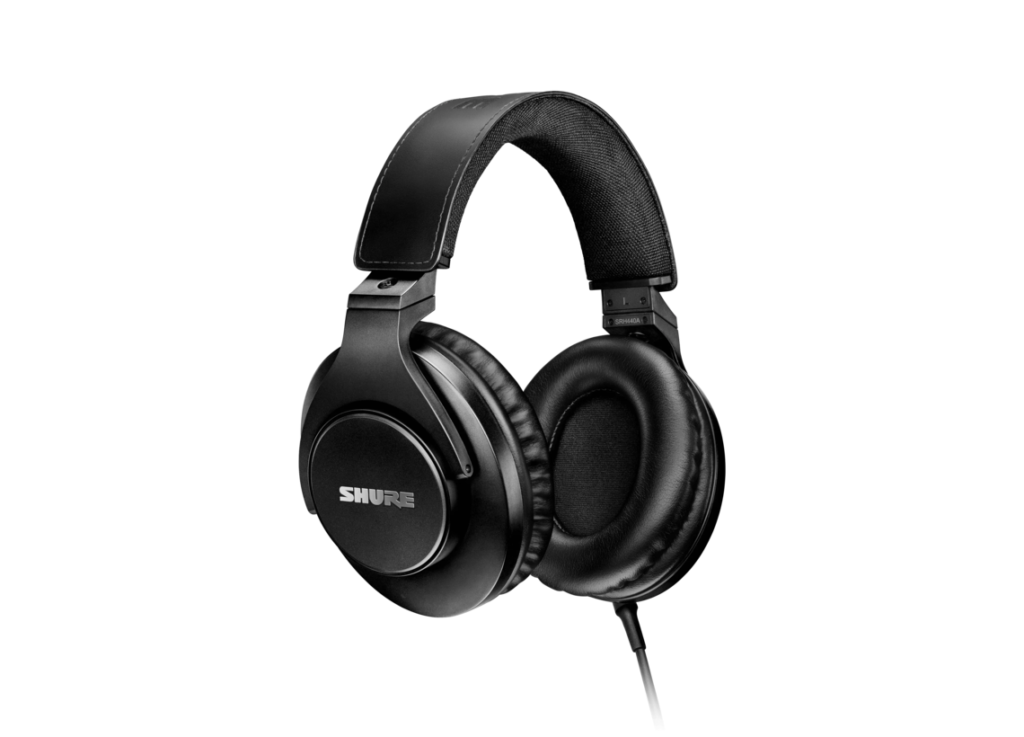
Closed‑Back Headphones
Closed‑back headphones use sealed earcups that prevent sound from escaping and reduce outside noise from entering.
They are commonly used for:
- Recording vocals
- Tracking instruments
- Podcasting and voice work
- Working in untreated or noisy rooms
Closed‑back designs prioritize control.
Advantages
- Strong isolation from room noise
- Minimal microphone bleed during recording
- More contained low‑end perception
Isolation is critical when recording. If the click track leaks into the microphone, the take is compromised. Closed‑back headphones solve that problem.
Limitations
- Narrower perceived soundstage
- Heat buildup during long sessions
- Sound can feel more internal and less spacious
Because the earcups are sealed, the stereo image often feels more centered and less expansive. That is not necessarily a flaw. It is simply a design tradeoff.
Closed‑back headphones are practical tools. They are built for control and containment.
If your priority is recording clean takes, closed‑back is usually the correct choice.
For a deeper look at this design and more model ideas, see our guide to closed back headphones.
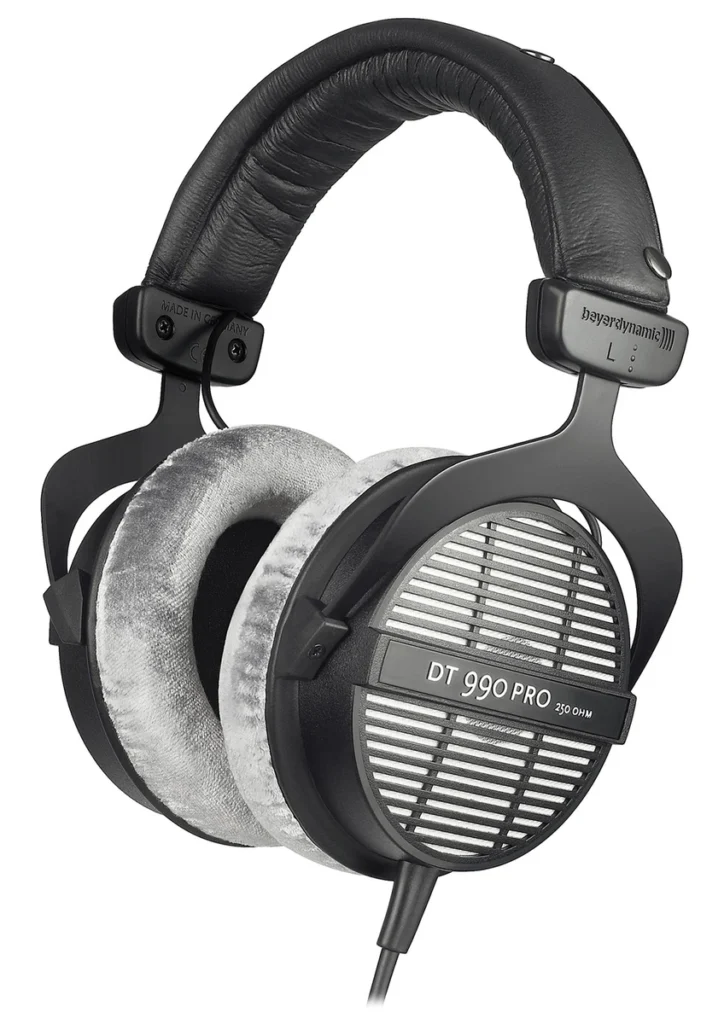
Open‑Back Headphones
Open‑back headphones allow air and sound to move freely through vented earcups.
They are typically used for:
- Mixing
- Mastering
- Critical listening in quiet environments
Open designs prioritize spatial realism.
Advantages
- Wider stereo image
- More natural sense of depth
- Reduced ear pressure during long sessions
Because air flows more freely, open‑back headphones often feel closer to listening on speakers. Spatial cues are easier to interpret, and fatigue tends to build more slowly.
Limitations
- Sound leaks outward
- External noise enters easily
- Unsuitable for recording with live microphones
Using open‑back headphones during vocal tracking almost guarantees bleed. That makes them inappropriate for recording sessions.
For mixing and mastering in a quiet room, however, open‑back designs often provide a more natural reference.
We cover this style in detail, along with more model suggestions, in our open back headphones guide.
Open vs Closed comparison table:
| Feature | Closed‑Back | Open‑Back |
|---|---|---|
| Isolation | High | Low |
| Best For | Recording | Mixing |
| Soundstage | More contained | Wider and more natural |
| Sound Leakage | Minimal | High |
| Room Noise | Reduced | Fully audible |
| Long Session Comfort | Warmer | Generally cooler |
Semi‑Open Designs
Semi‑open headphones attempt to combine elements of both designs.
They allow some airflow while retaining partial isolation.
In theory, this sounds ideal. In practice, they often represent a compromise rather than a clear advantage.
Most professionals prefer a clear decision:
Closed‑back for recording.
Open‑back for mixing.
Choosing based on the task usually produces better results than choosing a hybrid, hoping it will do everything equally well.

Deep Dive: Driver Technology and How It Shapes Sound
Driver type is not just a marketing label.
It directly affects how a headphone handles transients, low‑frequency control, distortion, and perceived detail.
Two headphones can look similar on paper and measure similarly on a frequency graph, yet behave very differently in real sessions. The reason is usually found in the driver design and how it is implemented.
Let’s look at the two dominant technologies in studio headphones.
Dynamic Drivers: Why They Still Dominate Studios
Dynamic drivers are the most common type used in studio headphones.
They operate using a voice coil attached to a diaphragm. When electrical current passes through the coil, it moves within a magnetic field and pushes air.
That sounds simple, but performance depends on execution.
Three core factors shape how a dynamic driver behaves:
- Diaphragm material
- Magnetic strength
- Damping and enclosure design
Each one affects how accurately the headphone reproduces sound.
Diaphragm Material
The diaphragm is the surface that physically moves air.
Lighter diaphragms respond faster to signal changes.
Heavier diaphragms may struggle with rapid transient shifts.
Transient response matters when evaluating:
- Snare attack
- Kick punch
- Percussive detail
- Plosives in vocals
- Subtle compression artifacts
If a diaphragm is too heavy or insufficiently controlled, fast transients can smear slightly. That smear makes aggressive mixes feel smoother than they actually are.
You may believe your compression settings are balanced. On speakers, the mix can feel harsher than expected because the headphone masked that sharpness.
Magnetic Strength and Control
The strength and consistency of the magnetic field determine how precisely the diaphragm moves.
Stronger magnetic control generally results in:
- Tighter low‑end response
- Reduced distortion at higher playback levels
- More consistent dynamic behavior
In lower‑quality dynamic drivers, control often weakens in the low frequencies first. That is where distortion begins to creep in.
In practical terms, you may underestimate sub‑bass issues or fail to detect low‑frequency muddiness during mixing.
Damping and Enclosure Design
The internal acoustic chamber plays a major role in final sound.
Poor damping can cause:
- Resonant bass peaks
- Muddy low mids
- Ringing or resonance at specific frequencies
Well‑designed damping reduces unwanted resonance and stabilizes midrange clarity.
This explains why two dynamic headphones with similar published specs can feel dramatically different in clarity and tightness.
Execution matters more than category. Two headphones can measure similarly on paper yet feel very different in clarity.
Planar Magnetic Drivers: Why They Feel Different
Planar magnetic drivers operate differently.
Instead of a voice coil pulling from a central point, a thin diaphragm with embedded conductive traces moves more evenly across its surface between magnetic arrays.
This changes three core behaviors:
- Transient speed
- Bass precision
- Distortion characteristics
Transient Response
Planar drivers are often described as faster.
The reason is mechanical consistency.
The diaphragm is thin and evenly driven. Force distribution is more uniform. There is less concentrated mass pulling from a single point.
In practical listening terms:
- Kick drums feel more defined
- Snare hits feel sharper
- Subtle compression artifacts are easier to notice
Planar headphones often reveal detail more aggressively.
However, more detail does not automatically mean better decisions. It simply means more information is exposed. Not guarantee better decisions. It simply exposes more detail.
Low‑Frequency Behavior
Planar headphones often produce bass that feels controlled rather than boosted.
Instead of exaggerated punch, the low end may feel tighter and more disciplined.
For mastering work, this precision can help detect:
- Sub‑bass imbalance
- Low‑frequency distortion
- Over‑compression artifacts
But this advantage depends on proper amplification.
Planar headphones are often less efficient. Underpowered amplification reduces their clarity and dynamic control.
Does Driver Type Automatically Determine Quality?
No.
Driver design influences potential.
Tuning and implementation determine the outcome.
A well‑tuned dynamic headphone can outperform a poorly tuned planar.
A poorly damped design can ruin even expensive hardware.
The real question is not dynamic versus planar.
The real question is how well the entire system is engineered.
Understanding driver behavior helps you interpret what you are hearing. It does not replace experience.
Impedance, Sensitivity, and Amplification
Impedance, measured in ohms, determines how much electrical voltage a pair of headphones requires in order to perform properly.
This is not just a technical detail. It directly affects clarity, headroom, and dynamic control.
Low Impedance Headphones
Headphones rated between roughly 32 and 80 ohms are easier to drive.
They typically:
- Reach adequate volume from most USB audio interfaces
- Work with laptops and portable devices
- Do not require dedicated amplification in most home studios
For many beginner and intermediate setups, this range is practical and reliable.
High Impedance Headphones
Headphones rated 150 to 300 ohms or higher require more voltage to reach proper performance levels.
When powered correctly, high‑impedance designs often provide:
- Tighter control over low frequencies
- Cleaner dynamic response
- Reduced distortion at higher levels
However, if your interface cannot supply enough voltage, these headphones may sound:
- Quiet
- Less dynamic
- Slightly dull or compressed
In that situation, the problem is not the headphone. It is the amplification.
Sensitivity Matters Too
Sensitivity, measured in dB per milliwatt, determines how efficiently headphones convert power into volume.
Higher sensitivity means:
- Louder output with less power
Lower sensitivity means:
- More power required for the same volume
Impedance and sensitivity work together. Looking at one without the other can be misleading.
Matching your headphones to your audio interface is not optional.
If the electrical chain is weak, clarity and dynamics suffer.
Frequency Response and the Myth of “Flat”
Many manufacturers advertise a frequency range such as 20 Hz to 20 kHz.
That number alone tells you almost nothing about tonal balance.
Nearly all modern headphones cover that theoretical range. The real question is how evenly they reproduce it.
When evaluating frequency behavior, pay attention to:
- Midrange smoothness
- Low‑frequency control
- Upper‑mid peaks
- Treble balance
The midrange is especially critical. Vocals, guitars, snare body, and most harmonic content live there. If that region is uneven, the emotional balance of the mix shifts.
Low‑frequency control determines whether bass feels tight or bloated.
Upper‑mid peaks can cause harshness and listening fatigue.
Treble balance affects clarity and perceived detail.
No headphone is perfectly flat. Even respected studio models have measurable deviations.
What matters is predictability.
Engineers learn the tonal character of their headphones over time. Once you understand how your monitoring behaves, you can compensate intelligently.
Consistency beats theoretical perfection.
Psychoacoustics and the Illusion of Accuracy in Headphones
Headphones remove the room. That sounds like an advantage.
It is not that simple.
When you remove room acoustics, you remove one source of distortion. But you also remove spatial cues that your brain relies on to judge width, depth, and low‑frequency energy.
Understanding how the brain processes sound explains why mixing on headphones can mislead even experienced engineers.
Stereo Separation and the Crossfeed Problem
With speakers, both ears hear both channels.
Sound from the left speaker reaches both ears at slightly different times and levels. The same happens with the right speaker. The room adds reflections that shape spatial perception.
With headphones, this natural interaction disappears.
The left ear hears only the left channel.
The right ear hears only the right channel.
There is no natural crossfeed.
This creates exaggerated stereo separation.
A guitar panned hard left can feel extremely isolated on headphones. On speakers, the same pan feels more integrated into the overall soundstage.
Because of this difference, headphone mixes often:
- Over‑pan elements
- Create unnaturally wide stereo spreads
- Feel narrower or less cohesive when played on speakers
Crossfeed plugins attempt to simulate speaker interaction by sending a small amount of each channel to the opposite ear with a slight delay. They can help, but they are approximations.
Awareness matters more than simulation.
Low‑Frequency Perception Differences
Low frequencies behave differently in headphones than in speakers.
Speakers move air. You feel bass physically in your chest and body. That physical sensation contributes to how you judge low‑end weight.
Headphones stimulate only the ears.
Because of this, sub‑bass may feel present but not powerful. Low‑mid buildup can go unnoticed. Kick and bass relationships may seem tighter than they truly are.
When played back on large systems, those same mixes can feel overly heavy or uncontrolled.
Headphones provide clarity, but they remove physical reference. That changes perception.
Perceived Depth and Reverb
Depth perception depends on spatial cues.
Early reflections, room interaction, and distance information help the brain interpret how far away a sound feels.
Headphones remove room cues entirely. Reverb tails often sound detailed and clear, but depth becomes more abstract.
As a result, engineers mixing only on headphones often:
- Underestimate reverb levels
- Misjudge front‑to‑back placement
- Create mixes that feel flatter on speakers
Headphones enhance detail. They reduce spatial realism.
Listening Fatigue and Perceptual Drift
Headphones deliver sound directly into the ear canal. Extended sessions increase fatigue faster than speaker monitoring at moderate levels.
As fatigue builds:
- High frequencies feel harsher
- Upper mids feel more aggressive
- Judgment becomes less reliable
You may compensate by reducing treble. Later, the mix sounds dull on other systems.
Lower listening levels and regular breaks protect objectivity.
When Detail Becomes a Trap
Headphones often reveal more micro‑detail than speakers.
That can encourage over‑editing.
You may fix tiny imperfections that would never be noticed in real‑world playback. In the process, you risk over‑processing the track.
Detail is valuable. Obsession is not.
The goal is translation, not microscopic perfection.
The Core Insight
Headphones do not provide objective truth. They provide a controlled listening environment.
That environment removes room distortion, but it introduces perceptual distortions of its own.
Engineers who achieve consistent results are not those with the most expensive headphones. They are the ones who understand how perception shifts between headphones and speakers.
Monitoring is not about eliminating variables.
It is about understanding them.
Studio Headphones vs Studio Monitors
In a serious production setup, headphones and monitors are not competitors. They serve different purposes.
Treating one as a replacement for the other creates blind spots.
What Headphones Do Better
Headphones excel at precision work.
They help you:
- Detect small clicks and digital artifacts
- Hear subtle compression changes
- Notice background noise
- Examine reverb tails
- Work late at night without disturbing anyone
- Mix in rooms that are not acoustically treated
Because headphones remove room acoustics, they eliminate one major variable. In untreated spaces, that alone can make them more reliable than monitors.
They are especially important during tracking. When recording vocals or instruments, headphones prevent bleed and allow performers to monitor clearly.
Headphones are tools for detail.
What Monitors Do Better
Monitors reproduce sound in physical space.
They allow you to:
- Hear how the mix interacts with air and room boundaries
- Judge stereo width more realistically
- Feel low‑frequency energy
- Evaluate depth and front‑to‑back placement
Low end behaves very differently on speakers. You do not just hear bass. You feel it. That physical feedback affects balance decisions.
Monitors also reveal how your mix behaves in an environment closer to real‑world playback.
Monitors are tools for realism.
The Balanced Approach
The most reliable workflow combines both.
Use headphones to identify problems and refine details.
Switch to monitors to judge overall balance, width, and impact.
If something sounds perfect on headphones but unstable on speakers, the mix is not finished.
Translation is the goal. Not comfort. Not convenience.
Headphones reveal flaws.
Monitors reveal truth in space.
Understanding the difference improves decisions.
Comfort and Long‑Session Fatigue
Comfort is not a cosmetic detail. It directly affects accuracy.
When headphones are uncomfortable, your brain shifts focus from listening to physical discomfort. That subtle distraction alters judgment.
Several design factors influence long‑term comfort:
- Ear pad material
- Clamp force
- Weight distribution
- Ear cup depth
Ear Pad Material
Velour pads tend to breathe better and remain cooler over long sessions. Leather or synthetic pads often provide stronger isolation but can trap heat.
Heat buildup changes how long you can concentrate. It also increases fatigue.
Clamp Force
Too little clamp reduces seal and affects bass perception. Too much clamp creates pressure and tension around the jaw and temples.
Both extremes alter how you perceive low frequencies.
Weight Distribution
Heavier headphones are not automatically bad. Poor weight distribution is.
If pressure concentrates on a small area of the head, fatigue sets in faster.
Ear Cup Depth
Shallow ear cups can cause the ear to touch the driver housing. That contact changes seal and comfort.
Seal affects bass response. Comfort affects session length. Session length affects decision quality.
Fatigue leads to poor judgment.
Moderate listening levels and physically comfortable designs protect objectivity.
Build Quality and Longevity
Studio headphones are tools. Tools should last.
Unlike casual consumer headphones, professional models are expected to endure daily use.
Look for:
- Replaceable ear pads
- Detachable cables
- Reinforced hinges
- Availability of spare parts
Ear pads wear down over time. As they compress, the seal changes. That alters frequency response, especially in the low end.
Detachable cables matter because cables fail before drivers do.
Durable hinges and yokes prevent structural failure during repeated use.
Serviceable design extends lifespan and preserves consistent monitoring.
Studio equipment should be maintainable. Disposable construction belongs in consumer markets, not professional environments.
Calibration and Correction
Correction software measures headphone response and applies a compensating curve.
In theory, this flattens frequency deviations and improves translation.
In practice, calibration can:
- Smooth frequency peaks
- Reduce exaggerated bass or treble
- Improve consistency between sessions
However, correction has limits.
It cannot:
- Improve driver quality
- Increase dynamic range
- Fix distortion
- Compensate for poor amplification
Overcorrection can also introduce new artifacts or alter phase relationships.
Calibration supports disciplined monitoring. It does not replace experience.
Use it as a refinement tool, not as a shortcut.
Wireless Studio Headphones
Wireless technology has improved dramatically over the past decade. Modern Bluetooth codecs are more stable, latency is lower than before, and overall sound quality is significantly better than early wireless models.
However, improvement does not mean equivalence.
Wireless systems still introduce technical compromises that matter in professional environments. For casual listening, those compromises may be acceptable. For critical work, they often are not.
Let’s examine why.
Latency Still Matters
Latency is the delay between audio being generated and audio being heard.
For casual listening, small delays are rarely noticeable. For recording, they are disruptive.
When tracking vocals or instruments, even slight latency can:
- Disrupt timing
- Affect rhythmic precision
- Create a disconnected performance feel
Professional recording requires near‑zero latency monitoring. Wired headphones deliver that consistently. Wireless systems cannot guarantee real‑time response under all conditions.
Even so‑called low‑latency Bluetooth codecs are not truly instantaneous.
For tracking sessions, wired monitoring remains the reliable standard.
Compression and Codec Limitations
Wireless audio relies on codecs to compress data for transmission.
Even high‑quality codecs introduce some degree of compression. That compression can:
- Alter transient response
- Reduce micro‑detail
- Affect stereo imaging
- Introduce subtle artifacts
For everyday listening, these differences may be minor. For critical mixing and mastering decisions, they matter.
When evaluating small EQ adjustments, compression artifacts, or fine dynamic changes, you want the cleanest possible signal path.
Wired connections remove compression from the monitoring chain.
Signal Stability and Environmental Interference
Wireless systems depend on several variables:
- Battery level
- Signal strength
- Environmental interference
- Bluetooth pairing reliability
In professional environments, predictability is essential.
Dropouts, signal interruptions, or pairing glitches are more than inconveniences. They break concentration and disrupt workflow.
Wired headphones eliminate that layer of uncertainty.
Battery Dependency and Long Sessions
Wireless headphones rely on internal batteries.
That introduces:
- Charging cycles
- Performance variation as battery drains
- Long‑term battery degradation
In extended studio sessions, power loss is not just inconvenient. It interrupts focus and workflow continuity.
Wired headphones remove that risk entirely.
When Wireless Makes Practical Sense
Wireless headphones are not inherently wrong for studio environments. They can be useful for:
- Casual reference listening
- Editing away from the main desk
- Reviewing mixes on the move
- Content creation outside a controlled studio space
Some models offer both wired and wireless modes. In those cases, wired mode should be used for any critical recording, mixing, or mastering decisions.
Wireless can be convenient.
Convenience should not replace consistency.
Practical Workflow Examples
Studio headphones are not used the same way in every situation. Recording, mixing, and mastering demand different priorities.
A common mistake is assuming one pair, one listening level, and one workflow works for everything. It does not.
Let’s look at how studio headphones function in real sessions.
Recording Session Workflow
During recording, isolation is the priority.
You may be tracking:
- Lead vocals
- Acoustic instruments
- Electric guitar through a mic’d amp
- Live drums
- Voice-over
In these situations, headphone bleed becomes the enemy.
Why Closed‑Back Headphones Matter
Closed‑back headphones prevent sound from escaping into microphones. If a click track leaks into a vocal mic, the take is compromised. Even subtle bleed becomes obvious once compression is applied.
Closed‑back headphones:
- Minimize leakage
- Reduce external noise
- Provide a controlled monitoring environment
Open‑back designs allow sound to escape and enter freely. That behavior is useful in mixing but problematic in tracking.
For recording, control outweighs spatial realism.
Monitoring Levels During Recording
Louder is not better.
Many performers ask for more volume in their headphones. Excessive monitoring levels:
- Increase bleed
- Accelerate fatigue
- Affect pitch control
- Mask distortion or clipping
Moderate monitoring levels protect performance and capture quality. The goal is clarity, not intensity.
What the Engineer Listens For
During recording, headphones function as diagnostic tools.
You are listening for:
- Digital clipping
- Plosives and harsh consonants
- Background noise
- Phase inconsistencies
- Headphone bleed
- Performance timing
Recording is about capture integrity. Closed‑back headphones support that goal.
Mixing Session Workflow
Mixing shifts priorities.
Now you are shaping balance, space, and tone rather than preventing leakage.
Why Open‑Back Headphones Often Help
Open‑back headphones provide:
- A wider stereo presentation
- More natural spatial cues
- Less pressure during long sessions
That expanded image assists with:
- Panning decisions
- Reverb placement
- Vocal positioning
- Layer separation
Closed‑back models can exaggerate low end or feel spatially confined. For mixing, that can distort judgment.
Volume Discipline During Mixing
Most balance mistakes happen at high volume.
At louder levels:
- Bass feels larger
- High frequencies feel smoother
- Perception compresses
Experienced mixers often work at low to moderate levels, especially on headphones.
If a mix holds together quietly, it usually translates better at higher volumes.
Lower levels reveal balance. Higher levels create illusion.
Reference Track Strategy
Headphones remove room acoustics. That improves clarity but reduces real‑world context.
Regularly compare your mix to professionally mixed reference tracks.
Ask:
- Is the vocal too forward?
- Is the kick overpowering the bass?
- Are high frequencies becoming harsh?
Reference tracks restore perspective that headphones alone cannot provide.
Mastering Session Workflow
Mastering is about precision, not creativity.
Small changes matter.
Why Resolution Matters
During mastering, you are evaluating:
- Subtle EQ adjustments
- Micro compression artifacts
- Stereo width changes
- Limiter distortion
- Low-level noise
High-resolution headphones, often open‑back or planar designs, make these details easier to detect.
But detail alone is not enough.
Level Matching Is Critical
The brain prefers louder audio.
If volume increases even slightly, a track often feels better. That illusion is dangerous in mastering.
Level matching must be precise when comparing:
- Before and after EQ
- Before and after compression
- Different limiting thresholds
On headphones, loudness bias is amplified because sound is delivered directly to the ears.
Precision requires restraint.
Cross‑Checking Is Essential
Headphones expose detail. Speakers reveal physical realism.
Final checks should include:
- Studio monitors
- Small consumer speakers
- Car playback
- Earbuds
If a track sounds flawless on headphones but unstable on speakers, it is not finished.
Translation defines completion.
Common Mistakes People Make with Studio Headphones
Most monitoring problems do not come from bad headphones.
They come from poor decisions.
Here are the mistakes that quietly damage mixes and prevent proper translation.
Choosing Bass‑Heavy Headphones for Mixing
This is one of the most common errors.
Many headphones labeled as “studio” still boost bass and treble. At first, that sound feels powerful and impressive. That is exactly why it is misleading.
If your headphones exaggerate low end, you will instinctively reduce bass in your mix. On speakers, the result will sound thin.
The same logic applies to boosted highs. If treble is elevated, you will soften high frequencies too much. On other systems, the mix will feel dull.
Studio headphones should not make your music sound exciting.
They should make it sound accurate.
If everything sounds amazing through your headphones, they are hiding problems.
Ignoring Impedance and Power Requirements
Impedance is not just a number on a specification sheet. It directly affects performance.
Many people purchase high‑impedance headphones without checking whether their interface can properly drive them.
If your interface cannot provide sufficient voltage:
- The headphones may lack dynamic range
- Transients can feel weaker
- Bass may seem less controlled
- You may increase volume to compensate
Then the headphones get blamed for a power problem.
Before choosing high‑impedance models, verify your interface output specifications. In some cases, a dedicated headphone amplifier is necessary.
Power affects clarity. It is not optional.
Mixing at Excessive Volume
Mixing loud feels impressive. It also distorts perception.
At higher listening levels:
- Bass appears larger than it really is
- High frequencies feel smoother
- Compression seems less aggressive
- Fatigue builds quickly
Professional mixers often work at low to moderate levels, especially on headphones.
If your mix falls apart when you lower the volume, the balance was never correct.
Volume discipline protects objectivity.
Assuming One Pair Can Handle Every Task
It is tempting to believe one high‑quality pair of headphones can handle recording, mixing, mastering, and travel equally well.
In reality, different tasks require different strengths.
Closed‑back headphones are ideal for recording because they isolate sound.
Open‑back headphones are typically better for mixing because they provide a more natural stereo image.
Trying to use one pair for every scenario usually means accepting compromise.
Choose based on the task, not convenience.
Trusting Headphones Without Cross‑Checking
Headphones isolate left and right channels completely. Speakers do not.
Because of this difference:
- Stereo width can feel exaggerated
- Low end may be misjudged
- Depth perception changes
Even a quick check on speakers, car audio, or basic earbuds can reveal translation problems.
Headphones are powerful diagnostic tools. They are not complete monitoring systems.
Chasing Specifications Instead of Learning Your Gear
Many people focus heavily on:
- Frequency response numbers
- Impedance ratings
- Driver type
- Brand reputation
Specifications matter. Familiarity matters more.
A well‑understood mid‑priced headphone often produces better results than an expensive pair you do not know well.
Consistency comes from learning how your monitoring behaves over time.
How to Choose the Right Studio Headphones
Start with your primary task. Regular recording work calls for closed‑back designs, while mixing‑focused workflows benefit more from open‑back models.
Consider your equipment as well. Basic audio interfaces may struggle with very high‑impedance headphones.
Long sessions demand comfort and manageable weight.
And in untreated rooms, headphones often provide more consistent monitoring than speakers.
Do not chase brand names. Match the headphone to your workflow.
The right choice is contextual, not universal.
FAQ: Studio Headphones
Are studio headphones better than consumer headphones?
For music production, yes.
Studio headphones are designed to present sound as accurately as possible. They avoid exaggerated bass and overly bright treble so that mix decisions remain balanced.
Consumer headphones are designed for enjoyment. Studio headphones are designed for judgment.
If your goal is accurate monitoring, studio models are the safer choice.
Can I mix entirely on headphones?
Yes, you can.
Many producers mix primarily on headphones, especially in untreated rooms. Headphones remove room acoustics from the equation, which can actually improve clarity.
However, headphones exaggerate stereo separation and change low‑frequency perception. Cross‑checking on speakers, even briefly, improves translation and reduces blind spots.
Headphones are precise. Speakers provide realism. Using both improves consistency.
Do I need two pairs of studio headphones?
Not strictly, but it helps.
Closed‑back headphones are ideal for recording because they prevent bleed.
Open‑back headphones are typically better for mixing because they provide a wider and more natural stereo image.
If you regularly record and mix, owning one of each gives you flexibility and reduces compromise.
If you can only own one pair, choose based on your primary task.
How long do studio headphones last?
With proper care, most professional studio headphones last five to ten years or longer.
Replacing ear pads periodically is important. Worn pads change the seal, which can alter bass response and overall balance.
Models with detachable cables and replaceable parts tend to last longer and remain consistent over time.
Are expensive headphones always better?
Not automatically.
Higher price often means better materials, tighter tolerances, and improved durability. It does not guarantee better decisions.
There are diminishing returns in audio equipment. A well‑understood mid‑range headphone can produce excellent results if you learn its character and limitations.
Skill and familiarity matter more than price alone.
Conclusion
Studio headphones are tools for disciplined listening. They do not improve your music on their own. What they improve is your judgment.
Every mix is a series of decisions. Balance decisions. EQ decisions. Compression decisions. Spatial decisions. When your monitoring is accurate, those decisions become more consistent. And consistency is what allows a mix to translate across different playback systems.
Choosing the right studio headphones is not about brand reputation or marketing claims. It is about matching the tool to your workflow, your environment, and your technical setup. Closed‑back designs make sense for recording and isolation.
Open‑back designs are often better for spatial judgment during mixing. Impedance must match your interface. Comfort must support long sessions without fatigue.
Understanding these factors matters more than chasing specifications or trends. Learn how your headphones behave. Pay attention to how your mixes translate. Use speakers as a cross‑reference when possible.
Monitoring shapes decisions. Consistent decisions create consistent results.
That is the real purpose of studio headphones.
If you are ready to choose a model, see our full comparison of the best studio headphones.

A passionate tech blogger and the founder of Best Tech View, a dynamic platform dedicated to all things technology. With a keen interest in the tech, Ahmad strives to provide insightful and engaging content on the latest tech trends, and breakthroughs.