
Studio headphones are tools, not toys. If you record, mix, or master music, the right pair can show you exactly what is in your tracks instead of flattering them.
Unlike consumer models that boost bass and shine up the top end, studio headphones aim for neutral sound and detail. They let you hear clicks, noise, balance problems, and small EQ issues before your listeners do.
Brands such as Audio‑Technica, Sennheiser, Beyerdynamic, AKG, and Focal have built whole reputations on reliable studio headphones. The hard part is knowing which type fits your work and budget.
This guide breaks down the main types of studio headphones, the features that actually matter, and the trusted models engineers and producers keep reaching for in 2026.
What Makes Studio Headphones Different?
Accuracy over excitement
Most consumer headphones are tuned to sound fun: heavy bass, bright treble, and a V‑shaped sound signature. However, that kind of tuning is terrible for critical work. That is great for casual listening, but terrible for critical work.
Studio headphones aim for:
- flatter frequency response
- minimal coloration
- great detail and separation
This lets engineers, musicians, and creators:
- hear problems in the mix (harshness, masking, noise)
- set levels and EQ more precisely
- make mixes that translate to speakers, cars, and earbuds
Isolation and monitoring
Studio headphones are also tools for monitoring:
- while recording (so click tracks and backing tracks do not leak into mics)
- while editing in less‑than‑perfect rooms
- when working late at night without disturbing others
Good isolation plus honest sound is what separates usable studio headphones from “nice‑sounding” consumer pairs.
For another perspective on neutral studio tuning, Sennheiser’s studio headphone overview is also a useful reference.
A Short Evolution Of Studio Headphones
Over time, studio headphones have grown from simple radio headsets into highly specialized tools.
- 1920s–1950s: Early dynamic headphones used for radio and telephony.
- 1960s–1980s: Stereo headphones become popular with hi‑fi listeners and broadcasters.
- 1990s–2000s: Brands like Sony, AKG, Sennheiser, and Beyerdynamic define many of the “industry standard” studio models still used today.
- 2010s–now:
- Better driver designs (including planar magnetic)
- Improved comfort for long sessions
- Detachable cables, replaceable pads
- Some wireless/ANC options for creators who work on the move
Today, you can pick from lightweight closed‑backs for tracking, open‑backs for mixing, and extremely high‑end audiophile models for mastering and critical listening.
Main Types Of Studio Headphones
Understanding the two main types will help you quickly narrow down your options.
Closed‑back Headphones – for Recording and Isolation
Closed‑back designs have sealed earcups. Because of that, they are best for recording vocals and instruments, working in noisy environments, and podcasting or voice-over work.
Best for:
- Recording vocals and instruments
- Use in noisy rooms or shared spaces
- Podcasting, livestreaming, voice‑over
Pros
- Strong isolation from outside noise
- Very little sound leakage into microphones
- Often, more bass impact
Cons
- Soundstage can feel more “inside your head.”
- Long sessions can get warmer on the ears
Popular closed‑back studio models include:
- Sony MDR‑7506
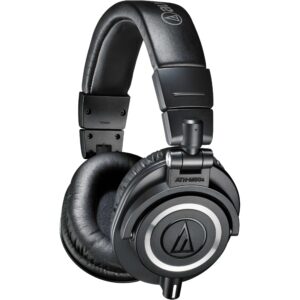
- Audio‑Technica ATH‑M50x / M70x
- Beyerdynamic DT 770 Pro
- AKG K371
- Neumann NDH 20
For a deeper look at this design and more model ideas, see our guide to closed back headphones.
Open‑back Headphones – for Mixing and Critical Listening
Open‑back designs have vents or grills on the earcups, letting air and sound pass freely.
Best for:
- Mixing and mastering
- Sound design
- Long, focused listening sessions in a quiet room
Pros
- More natural, speaker‑like sound
- Wider soundstage and better imaging
- Ears usually stay cooler
Cons
- Leak sounds outwards (everyone nearby can hear)
- Let room noise in – not good with live mics
- Require a quiet environment
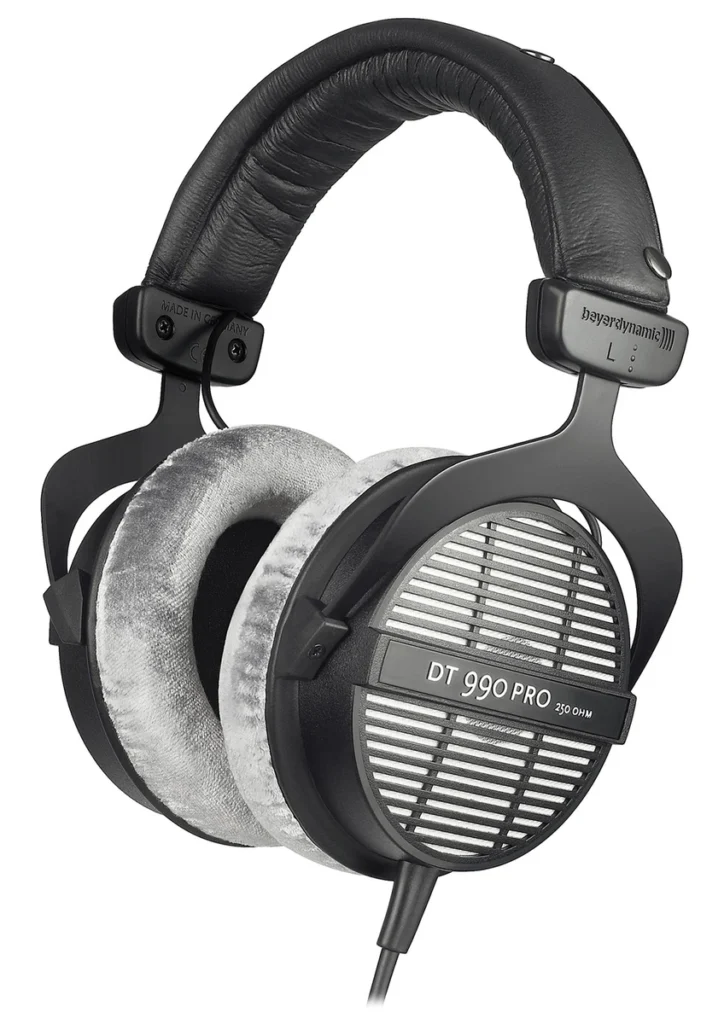
Popular open‑back models:
- Sennheiser HD 600 / HD 660S2
- Beyerdynamic DT 1990 Pro / DT 900 Pro X
- AKG K702 / K712
- HiFiMan Sundara
- Shure SRH1840
Simple rule:
- Recording → Closed‑back
- Mixing/Mastering (in a quiet room) → Open‑back
We cover this style in detail, along with more model suggestions, in our open back headphones guide.
Many studios keep at least one good closed‑back + one good open‑back.
Key Features To Look For
1. Frequency Response (How “honest” is the sound?)
A studio headphone should cover at least 20 Hz – 20 kHz, but numbers alone don’t tell the full story. What matters more is:
- Flat or neutral response (no huge bass/treble boosts).
- Clear mids where vocals, guitars, and most instruments sit.
- Controlled bass – present but not boomy.
- Smooth, non‑fatiguing highs.
Many manufacturers publish response charts; review measurements and user feedback instead of trusting marketing phrases like “extra deep bass” for studio use.
2. Comfort and Build Quality
Long sessions are normal in the studio. Look for:
- Soft, replaceable ear pads (velour or high‑quality leather/pleather).
- Adjustable headband with enough padding.
- Swiveling or tilting earcups for a better seal.
- Solid hinges and yokes (metal or reinforced plastic).
Good studio headphones:
- feel secure but not painful after 2–3 hours.
- have detachable cables so you can replace a broken cable without buying a new pair.
- Often have spare pads available.
3. Impedance and Sensitivity
These two specs determine how easy the headphones are to drive.
- Impedance (ohms):
- Low (under ~50 Ω): Works fine from phones, laptops, and small interfaces.
- Medium (50–100 Ω): Often better built and controlled; still OK with many audio interfaces.
- High (100+ Ω): May need a dedicated headphone amp to reach full potential.
- Sensitivity (dB/mW):
Higher sensitivity = more volume from less power.
For home/project studios using a typical USB interface, 32–80 Ω headphones are usually a safe choice.
4. Cable and Connector Quality
Cable quality matters for both durability and convenience.
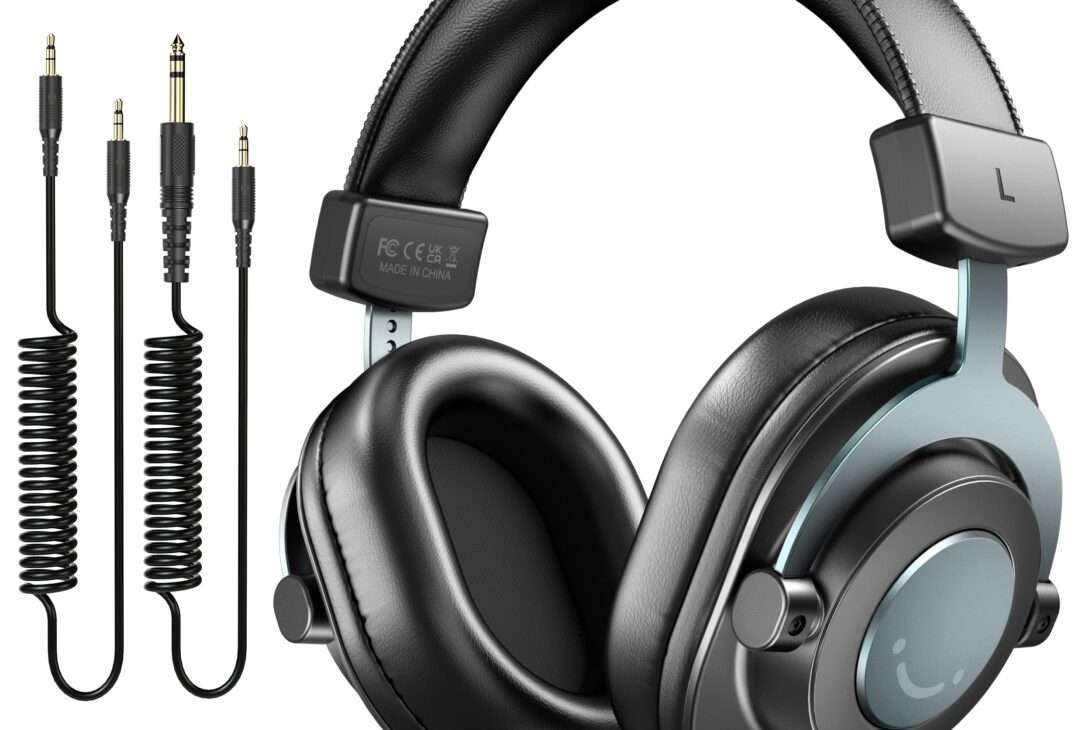
- Prefer detachable cables (straight or coiled).
- 3.5 mm plug with 1/4″ adapter covers most interfaces and mixers.
- Coiled cables are handy if you move around a lot; straight cables are simpler at a desk.
- Avoid overly thin, non‑replaceable cables for studio use.

Credit: www.amazon.com
Popular Studio Headphone Brands and Models (By Category)
Below are some widely used models, grouped so you can match them to your level and budget.
Workhorse Studio Classics
These models show up in studios worldwide and are safe, well‑known choices.
Closed‑back
- Sony MDR‑7506 – Neutral, clear, great for tracking and broadcast.
- Audio‑Technica ATH‑M50x – Punchy and durable, a favorite in project studios.
- AKG K371 – Closed‑back with a very accurate, “reference curve” sound.
- Beyerdynamic DT 770 Pro – Deep bass, strong isolation, robust build.
Open‑back
- AKG K702 – Wide soundstage, great for panning and spatial mixing.
- Sennheiser HD 600 / HD 650 – Classic neutral references for mixing and mastering.
Mid‑range and Professional Models
For more advanced users who want higher resolution and a better build.
- Sennheiser HD 660S2 – Refined version of the HD 600 line, with a bit more low‑end extension.
- Beyerdynamic DT 900 Pro X (open‑back) – Spacious sound with better portability than older high‑impedance models.
- Beyerdynamic DT 1990 Pro (open‑back) – Very detailed, analytical sound for critical mixing.
- Beyerdynamic DT 1770 Pro (closed‑back) – High‑end closed‑back alternative to the 1990 Pro.
- Neumann NDH 20 (closed‑back) – Excellent isolation with a balanced, studio‑focused tuning.
- Focal Listen Professional (closed‑back) – Detailed, punchy sound that reveals mix issues quickly.
High‑End and Audiophile‑Grade Studio Headphones
For engineers, mastering studios, and audiophiles who want the absolute best.
- Focal Clear Mg Professional (open‑back) – Extremely detailed and dynamic, with great imaging.
- Focal Utopia / Stellia – Ultra‑high‑end reference headphones (open and closed‑back).
- Audeze LCD‑X / LCD‑XC – Planar magnetic models with rich, detailed sound and deep bass.
- Dan Clark Audio Ether 2 – Lightweight planar with a very neutral, non‑fatiguing presentation.
- Sennheiser HD 820 (closed‑back) – Audiophile‑level closed‑back, rare in this category.
These models are expensive, but if you do critical work or want one final “endgame” pair, they are worth auditioning.
Budget‑Friendly Picks for Beginners
If you are starting out, you do not have to spend a fortune. Look for models with good value and honest sound.
Some solid entry‑level options:
- Sennheiser HD 206 – Very cheap, decent for basic monitoring.
- Audio‑Technica ATH‑M20x – Good first step into studio headphones.
- Samson SR850 – Semi‑open design with a surprisingly detailed soundstage for the price.
- AKG K240 Studio – Long‑time affordable studio favorite.
- Sony MDR‑7506 – Technically mid‑priced, but still one of the best “first real studio” headphones.
Studio Headphones vs Studio Monitors
In practice, you need both in a serious setup, but they serve different roles.
Headphones
- Reveal small clicks, noise, edits, and reverb tails
- Great for late‑night work and environments with poor room acoustics
- Essential for tracking (recording with mics)
Monitors
- Present a stereo image in front of you, like real speakers
- Show how the mix interacts with your room
- Better for judging low end and overall balance
Best practice:
- Use headphones to catch details and fix problems.
- Then, use monitors to finalize balance, stereo width, and “feel”.
Credit: www.ebay.com
Wired vs Wireless Studio Headphones
Wireless headphones with Bluetooth are great for casual listening and travel, but in the studio wired studio headphones are still the safest choice for critical work because they avoid latency and battery issues. Standalone models do have a place, especially for casual listening, reference checks, or content creation on the go.
Wired advantages
- Essentially zero latency
- No battery to worry about
- Consistent, full‑quality signal
Wireless advantages
- Freedom to move around
- Great for non‑critical tasks (editing, reference listening, content creation on the go)
If you use wireless studio headphones, pick models that can be used wired as well, and switch to the cable for any critical editing, tracking, or mixing. For a broader look at wired audio in general, see our guide to wired headphones.
Noise Isolation and Noise Cancellation
Passive Isolation
Comes from the physical design: closed‑back cups, seal around the ear, dense materials.
Best for:
- Recording sessions
- Noisy environments where you do not want mic bleed
- Focusing without turning the volume too high
Active Noise Cancellation (ANC)
Uses built‑in microphones to analyze outside noise and generate a cancelling signal.
Pros:
- Much quieter environment in planes, trains, and shared offices
- Let’s you hear low‑level details more easily in those environments
Cons:
- Can slightly change the sound signature
- Adds complexity and cost
- Not always necessary in a treated studio room
Many pros keep one ANC pair for travel and portable work, and one pure passive pair for studio work.
If you want to understand noise canceling tech more broadly, our noise canceling headphones guide goes deeper.
Calibration, EQ, and Getting the Best Sound
Even great headphones are not perfectly flat. As a result, calibration and EQ can help:
- Tools like Sonarworks SoundID Reference can measure your specific studio headphones and apply a correction curve.
- Simple parametric EQ in your DAW or OS can tame problem areas (boomy low‑mids, harsh upper‑mids).
Basic approach:
- Start with neutral or “studio” EQ presets, if available.
- Make small, careful adjustments (±3 dB) instead of big boosts/cuts.
- Always cross‑check on speakers and other headphones.
Quick Buying Checklist
Before you buy, run through this list:
- Use case: Mainly recording, mixing, or both?
- Type: Closed‑back for tracking, open‑back for mixing in a quiet room.
- Comfort: Can you wear them for 2–3 hours without pain or heat build‑up?
- Frequency response: Neutral/flat enough for honest work, not super‑bass‑heavy.
- Impedance: Matches your interface or headphone amp (32–80 Ω is safest).
- Cables & pads: Detachable cable? Replaceable pads? Available spare parts?
- Budget: Are you getting the best option in your price range, not just the most hyped brand?
If possible, try a few models back‑to‑back – your own ears and comfort are the final judge.
Purchasing Guide And Tips
Seeking the perfect studio headphones can lead to audio nirvana. Here’s a quick guide packed with tips to help you make that stellar purchase.
What To Look For When Buying Studio Headphones
The search for outstanding studio headphones demands attention to key features.
- Sound Quality: Premium sound reproduction is crucial.
- Comfort: Long sessions require comfortable wear.
- Build Quality: Durability means a longer lifespan.
- Frequency Response: A wide range ensures better sound fidelity.
- Impedance: Higher impedance is fit for studio use.
- Open-back vs Closed-back: Choose based on your isolation needs.
How To Test Headphones Before Purchase
Testing studio headphones ensures you’re investing in the right gear.
- Listen to a Variety of Music: Check audio quality across different genres.
- Check for Comfort: Wear them for an extended period.
- Inspect the Build: Look for solid materials and robust construction.
- Read Reviews: Explore others’ experiences for informed decisions.
- Compare: Test various headphones back-to-back.
- Ask for a Demo: Request a trial at the store if possible.
FAQ: Studio Headphones
What are studio headphones?
Studio headphones are professional‑grade headphones designed for accurate, detailed sound reproduction. They focus on a neutral frequency response and good isolation so engineers and musicians can make precise decisions while recording, mixing, and mastering.
Can I use studio headphones for casual listening?
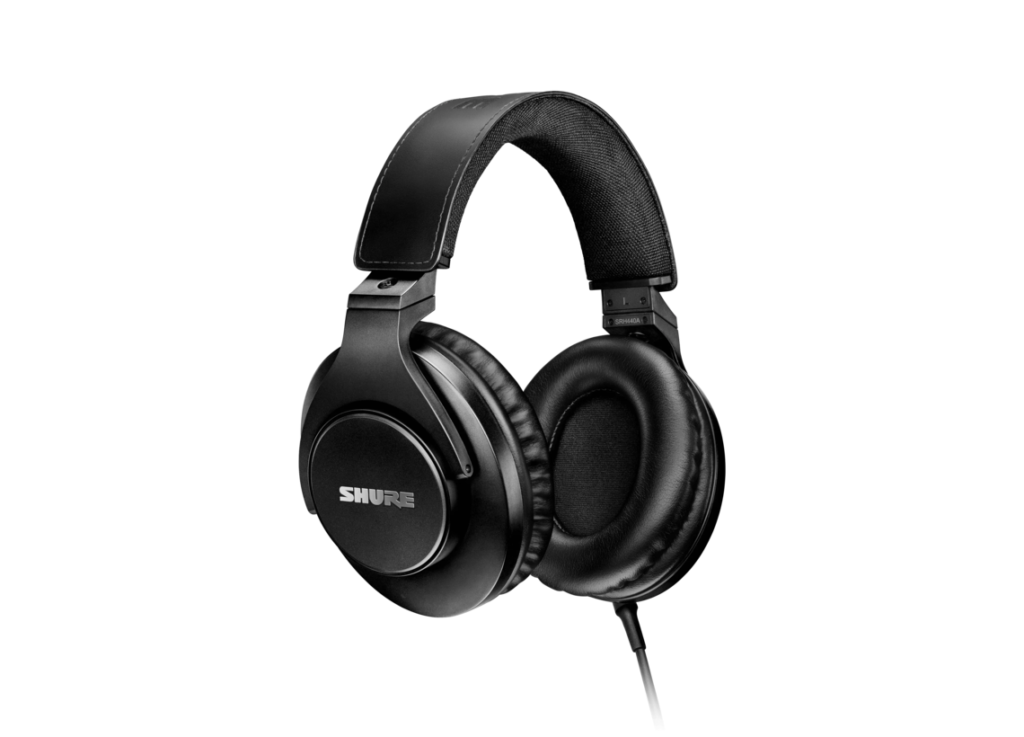
Credit: www.shure.com
Yes. Many people enjoy studio headphones for everyday music because of their clarity and detail. Just remember that they will not usually boost bass or treble the way many consumer models do, so the sound may feel more “honest” and less hyped.
Are open‑back or closed‑back better?
Neither is “better” overall.
- Closed‑back is better for recording and noisy spaces due to isolation.
- Open‑back is better for mixing and critical listening in a quiet room because of the more natural soundstage.
Most serious users eventually own one of each.
Do I need a headphone amp?
If your studio headphones are:
- 32–80 Ω and fairly sensitive → your audio interface or mixer will usually be enough.
- 150–300 Ω or higher → a dedicated headphone amp helps them reach full volume and control, especially for open‑back and high‑end models.
Conclusion
The right studio headphones are more than just “better bass” – they are precision tools. They let you hear what is really happening in your music, catch small problems, and build mixes that translate across systems.
- If you record a lot, start with a solid closed‑back pair.
- If you mix and master seriously, add a good open‑back reference.
- Pay attention to comfort, build, and replaceable parts so they can serve you for years.
Invest once in the right pair, and every track you work on will benefit from the clarity, detail, and confidence they bring to your studio.

A passionate tech blogger and the founder of Best Tech View, a dynamic platform dedicated to all things technology. With a keen interest in the tech, Ahmad strives to provide insightful and engaging content on the latest tech trends, and breakthroughs.