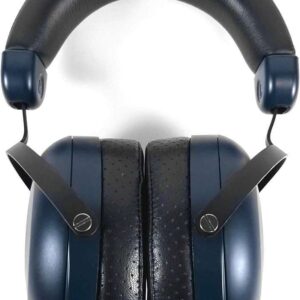

Open back headphones are not general purpose gear. They are built for one main thing. Natural, open sound.
Instead of sealing your ears, they let air and sound move through the back of the cups. That single design choice changes how music, games, and mixes feel. It also limits where you can use them.
If you listen in quiet rooms, care about soundstage, and do not need isolation, open back headphones can be a big upgrade. If you commute on trains or work in a noisy office, they will probably drive you crazy.
This guide will help you decide which side you are on.
You will learn:
- What open back headphones are and how they work
- How they compare to closed back and in ear designs
- Where they shine and where they are a bad idea
- Which models are worth a look at different budgets
- How to match them with the right amp or source
- How they help with mixing, mastering, and gaming
- Care for them and know what to watch for when buying
Let’s start with the basics.
What Are Open Back Headphones
Open back headphones use ear cups that are not sealed. The outer side of each cup is vented with grills or mesh. Air and sound can pass in and out.
That has several effects:
- The driver’s back wave is not trapped inside the cup
- Internal reflections and echo are reduced
- The sound feels less boxed in and more like speakers in a room
- Outside noise can get in easily
- Your music leaks out to people nearby
Most open back headphones are over ear headphones, with pads that go around your ears instead of sitting on them. That gives room for larger drivers and can be more comfortable for long sessions.
They are often used by:
- Audiophiles who listen at home
- Producers and engineers who need another reference besides monitors
- Gamers who play in quiet rooms and want better positional audio
They are not built for isolation, travel, or shared spaces.
How Open Back Headphones Change The Sound
Soundstage And “Out Of The Head” Listening
Closed headphones tend to put the sound between your ears. Open backs tend to push it out into a wider, deeper space.
With good open backs you can:
- Hear where instruments sit left and right
- Sense depth, not just width
- Notice room reverb and ambience more easily
It does not turn your head into a live concert hall, but it moves in that direction. Many people describe the effect as speakers on a desk rather than a radio in your skull.
Less Internal Resonance
In closed designs, the driver’s back wave bounces inside the cup. Manufacturers use foam, padding, and shapes to tame reflections. That can work well, but it always changes the sound.
Open backs let that energy escape. This reduces:
- Cup resonance
- Internal echo
- Low frequency buildup inside the enclosure
The result can feel:
- Cleaner in the mids and highs
- Less boomy in the bass
- More honest to the source material
You will still hear the headphone’s own tuning, but there is usually less “cup sound” added on top.
Open Back vs Closed Back vs In Ear
Most buyers are not choosing between hundreds of designs. They are choosing between three main categories.
Here is a simple comparison.
| Type | Isolation from outside noise | Sound leakage to others | Soundstage feel | Typical uses |
|---|---|---|---|---|
| Open back headphones | Low | High | Wide and spacious | Home listening, mixing, gaming at home |
| Closed back headphones | Medium to high | Low to medium | More intimate, inside the head | Travel, office, vocal tracking |
| In ear headphones | High with good tips | Very low | Narrow to moderate | Commuting, gym, portable use |
If you need privacy and isolation, closed back headphones or in ear headphones win. If you have a quiet room and want a believable stereo image, open backs are strong candidates.
Most people who get serious about audio end up with at least two types. One for the outside world. One for the desk or the listening chair.
Why People Choose Open Back Headphones
Open backs exist for a reason. Several, in fact.
More Natural Soundstage
Open backs tend to create a wider, more open image. Instruments feel like they sit in a space instead of on your eardrums.
You notice this most on:
- Orchestral and jazz recordings
- Live albums
- Ambient and cinematic music
- Games with good environmental audio
If you like to close your eyes and “see” where things are in the mix, this matters.
Less Claustrophobic Listening
Because the cups are vented, air pressure does not build up in the same way. Your ears can stay cooler. The sound does not press on your head as hard.
Some people find closed models fatiguing after an hour. The same people can wear open backs for much longer without feeling trapped or sweaty.
Honest Mids And Highs
Designers often tune open backs for a more neutral or reference sound. You tend to get:
- Clear vocals
- Accurate acoustic instruments
- Treble that is airy rather than dull
There are exceptions. Some open backs are bright, some are warm. But if you look at classic studio and audiophile models, many are open and relatively flat through the mids.
Less Ear Fatigue For Some Listeners
Because the sound interacts a bit with the room, and the seal is lighter, some people find open backs easier to listen to for long sessions. Especially if they are doing critical work rather than passive background listening.
Where Open Back Headphones Work Well
The right tool, wrong job problem shows up a lot with headphones. Here is where open backs tend to do very well.
Home Music Listening
This is the ideal use case. You sit in a quiet room. No children yelling. No engines humming. You have time to focus on the record.
In that setting, open backs offer:
- A sense of space around the music
- Less heat and clamp fatigue
- Clear view into layers of the mix
If you treat listening as an activity, not just noise while you do other things, open backs can be a better choice than closed models.
Mixing And Mastering
Producers and engineers often use open backs as one of several references.
They help with:
- Hearing panning choices
- Judging reverb tails and ambience
- Avoiding bass bloom from closed enclosures
They also avoid some of the low end boost that many consumer headphones have. That can make decisions about kick and bass more trustworthy.
They do not replace speakers in a treated room. They add another angle. For the bigger picture on monitoring chains and neutral models, you can read our studio headphones guide and our list of the best studio headphones.
Gaming In A Quiet Room
For gaming, open backs have clear strengths.
You get:
- Wide, detailed soundstage
- Good positional cues for footsteps and effects
- A less suffocating feel in long sessions
They are ideal if:
- You play on PC or console in your own room
- Avoid sharing space with family or roommates
- You care about both immersion and clarity
If you share a living room or bedroom with others, open backs can annoy them. Your gaming headsets pillar is where you should push people toward closed models with boom mics when that is the case.
Practice For Musicians
Guitarists, keyboard players, and other musicians sometimes like open backs for practicing with amp modelers and software.
They can:
- Hear some of the instrument itself in the room
- Talk between takes without pulling headphones off
- Enjoy a wider soundstage when playing along with tracks
Again, this only makes sense in relatively quiet spaces.
When Open Back Headphones Are A Bad Idea
Open backs are terrible in some situations. That is not a bug. It is a design choice.
Avoid them if you spend a lot of time:
- On trains, buses, or airplanes
- In open offices or shared workspaces
- Quiet places like libraries, waiting rooms, or similar spots
- In noisy homes where you need isolation
For commuting and travel, travel headphones and in ear headphones are usually a better fit, and for sports or gym use, check our sports headphones guide.
You will hear every external sound. Everyone near you will hear your audio. You will be tempted to crank the volume to drown out the noise, which is bad for your hearing.
Long exposure to loud sound can damage your hearing, even with open back designs. Volume and listening time matter more than the type of headphone. For clear guidance on safe listening and noise related hearing loss, you can read the resources from the CDC and the National Institute on Deafness and Other Communication Disorders (NIDCD).
Closed back headphones and in ear models are built for those cases. Use them there and keep open backs for home.
Key Technical Factors For Open Back Headphones
Specs are not everything. They can still help you avoid bad matches.
Drivers And Acoustic Design
Most open backs use dynamic drivers. Some higher end models use planar magnetic drivers.
- Dynamic drivers are common, affordable, and can sound excellent
- Planar magnetics can offer very fast response and low distortion, but they tend to be heavier and more expensive
You do not pick on driver type alone, but it is useful context when comparing.
Impedance And Sensitivity
Impedance (in ohms) and sensitivity (in dB per mW) tell you how hard the headphone is to drive.
Here is a simplified view.
| Impedance range | Typical use case | Source requirement |
|---|---|---|
| Under 32 ohms | Phones, tablets, laptops | Most built in outputs are fine |
| 32 to 80 ohms | Home and office, some studio use | Strong laptop jack or simple headphone amp |
| 80 to 300 ohms | Studio and audiophile models | Dedicated headphone amp or audio interface |
If you plug a 250 or 300 ohm open back into a weak phone or laptop jack, you may get:
- Low volume
- Weak bass
- Harsh treble when you turn it up
In that case the problem is the source, not the headphone.
Do You Need An Amp
Some open backs work fine out of a decent laptop or interface. Others want more power.
A few practical examples based on typical use:
- Sennheiser HD 650
- 300 ohm
- Likes a proper amp with good voltage swing
- Beyerdynamic DT 1990 Pro
- 250 ohm
- Needs a solid state amp or interface that can drive higher impedance loads
- AKG K702
- 62 ohm
- More forgiving, but still benefits from a clean desktop amp
The simplest rule: if you have to turn your device close to full volume for a normal listening level, you probably need an amp.
Your wired headphones pillar can carry a more general introduction to DACs and amps, since that applies to all wired models.
Credit: www.amazon.com
Top Open Back Headphones To Know About
You already listed some good examples. Let’s organize them.
High End Picks For Audiophiles
These models are aimed at experienced listeners with good sources.
- Sennheiser HD 800 S
Huge soundstage and precise imaging. Very revealing of mix and gear. - Audeze LCD 4
Planar magnetic. Intense detail and dynamics. Heavy and not cheap, but loved in studios and by serious hobbyists. - Focal Utopia
Dynamic drivers pushed very far. Clean, fast, and highly resolving. A reference for many reviewers.
These are not entry level. They also tend to pair best with high quality DACs and amps.
Solid Midrange And Budget Options
You mentioned several well known models.
- Audio Technica ATH AD700X
Very light and comfortable. Known for wide soundstage and good detail per dollar. Popular with gamers and casual listeners. - Philips SHP9500
Budget open back that punches above its price. Easy to drive and a good first taste of open sound. - Grado SR80e
On ear and open. Lively tuning that some people love for rock and acoustic music. Not for bass heads.
You can also mention classic models like Sennheiser HD 600 or HD 650 in your studio and audiophile content. Many readers will discover them naturally if you link between pages.
Wireless Open Back Headphones
You asked if they are myth or reality. They are real, but rare. If you are more interested in cordless listening in general than in open back design, our wireless headphones guide is a better starting point.
Modern wireless open backs combine open acoustic design with Bluetooth or RF.
Examples include:
| Model | Notes | Approximate battery life |
|---|---|---|
| Grado GW100 | Bluetooth open back with Grado styling | Around 15 hours |
| Sennheiser RS 185 | RF wireless system for home listening | Around 18 hours |
| HIFIMAN Ananda BT | High end planar magnetic with Bluetooth | Around 10 hours |
They aim at people who want:
- Open sound at home
- Freedom to move around without cables
They are not cheap, and they still leak sound. They are for a narrow audience, not the average buyer.
Open Back Headphones For Gaming
Open backs can be very good for games, in the right conditions.
Pros For Gamers
- Wide soundstage makes game worlds feel larger
- Directional cues are easier to follow in shooters and open world games
- Lighter feel and airflow can be more comfortable in long sessions
Ideal game types:
- Open world RPGs and adventure games
- Tactical shooters where footsteps and spatial cues matter
- Story driven games where atmosphere is important
Cons For Gamers
- Poor isolation means house noise interferes with the audio
- Sound leakage can bother roommates, partners, or family members
- Bass may feel less punchy than in closed gaming headsets
The conclusion for gaming is simple. If you play in a private room, open backs are a strong choice. If you share space or need isolation, point people back to your gaming headsets and closed back guides.
Mixing, Mastering, And Studio Work
You already made this point in your post, and it is worth keeping.
Open backs help with:
- Checking the stereo image
- Hearing depth and space in reverbs and delays
- Avoiding some of the internal bass buildup of closed cups
Roles that often use open backs:
| Role | Typical use case |
|---|---|
| Producers | Balancing tracks and checking details |
| Mix engineers | Evaluating panning and ambience |
| Mastering engineers | Cross checking against speakers |
They are not used for:
- Vocal or instrument tracking near live mics
- Closed booth monitoring where isolation is critical
For that, you still need closed models.
Comfort, Ear Pads, And Simple Customization
Comfort and pads matter more than most people expect.
Pad Materials And Sound
Common pad materials change both feel and sound.
- Foam only
- Basic comfort
- Can soften bass and reduce isolation
- Velour or fabric
- Soft and breathable
- Often used on open backs
- Let’s let more high frequencies through, so you can feel more “open”
- Leather and leatherette
- Better seal and stronger bass
- Warmer on the ears
- More common on closed headphones
Changing pads can:
- Raise or lower perceived bass
- Change how “forward” or “laid back” the mids feel
- Adjust how much air and sparkle you hear on top
Warn people that pad swaps are not purely cosmetic. They can alter the tuning.
Light Modding Options
Simple mods that many people do:
- Replace stock pads with more comfortable versions
- Swap cables for better flexibility, durability, or connectors
- Add extra padding to the headband if it creates a pressure point
More invasive mods, like internal damping and driver tweaks, are possible but easy to get wrong. Better to steer readers toward specialized forums if they want to go that far.
Cable Quality And Its Effect
Cables do not have magic powers, but they are not irrelevant either.
Key factors:
- Material and thickness affect durability
- Shielding helps avoid interference and noise
- Connector quality affects long term reliability
Common cable materials:
- Oxygen free copper for general use
- Silver plated copper in some higher end cables
Practical advice is simple:
- Use a well made cable that does not kink easily
- Avoid very long, thin cables if you sit near your source
- Replace stock cables when they show wear or cause dropouts
You do not need exotic cable marketing. You just need solid construction.
Care And Longevity
Open backs can last many years if you treat them well.
Basic care:
- Wipe pads and headband with a soft cloth from time to time
- Do not poke or press on the driver through the grill
- Keep them in a case or on a stand, not thrown on a bed or floor
- Avoid leaving them in hot cars or in direct sunlight for long periods
Common repair issues:
| Issue | Symptoms | Simple action |
|---|---|---|
| Worn earpads | Discomfort, extra sound leak | Replace pads with compatible new ones |
| Frayed cable | Static, dropouts, one side out | Replace cable or have it resoldered |
| Loose jack | Intermittent signal | Clean or replace the connector |
If the headphone is from a well known brand, replacement parts are often available. That keeps a good pair going instead of in a landfill.
Buying Tips For Your First Open Back Headphones
Here is a short, practical checklist.
- Use case
- Only buy open backs if you mainly listen in quiet, private spaces
- Budget
- Decide a range
- Look for models with strong, repeated praise in that bracket
- Comfort
- Check weight, pad shape, and clamp in reviews
- If possible, buy from a place with a good return policy
- Source gear
- If you will use them straight from a laptop or phone, choose lower impedance models
- If you already own a DAC or amp, you can consider higher impedance studio or audiophile pairs
- Research
- Read a mix of user and professional reviews
- Watch for consistent comments about soundstage, tonality, and build
Avoid impulse buys fueled by hype threads. Open backs are a long term tool, not a gadget of the week.
FAQ About Open Back Headphones
Are open back headphones better than closed back?
They are better for natural soundstage and home or studio listening. Closed backs are better for isolation, travel, and shared spaces. You pick based on where and how you listen.
Can I use open back headphones outside or on a commute?
You can, but it is not smart. Noise from outside will ruin the detail, and people will hear your audio. Closed or in ear models are much more practical for commuting.
Are open back headphones good for mixing?
Yes, as one of several references. They help you hear space, panning, and subtle details. They do not remove the need for checking mixes on speakers and on more typical closed headphones.
Do open back headphones have less bass?
They often have less boosted bass and less pressure. Good open backs can still reproduce low frequencies accurately. They just do not slam as hard as some closed, bass heavy models.
Do I need an amp with open back headphones?
If the impedance is high or you find yourself maxing out your device volume, an amp is a good idea. If the headphone is low impedance and fairly sensitive, a decent laptop or audio interface may be enough.
Conclusion
Open back headphones are not for everyday commuters. They are tools for people who have some control over their listening space and care about how sound sits in that space.
They give you:
- A more open, speaker-like soundstage
- Less feeling of being sealed off from the room
- A clearer view into mixes, games, and recordings
They also give you:
- No real isolation
- Heavy sound leakage
- A need to match them with the right source and volume habits
If you mostly listen at home and want to enjoy the details in your music and games, a good pair of open back headphones deserves a place on your list. Use closed backs or in ears to fight noise. Use open backs actually to hear into your audio.

A passionate tech blogger and the founder of Best Tech View, a dynamic platform dedicated to all things technology. With a keen interest in the tech, Ahmad strives to provide insightful and engaging content on the latest tech trends, and breakthroughs.