Active Noise Cancellation (ANC) is one of the most useful features modern headphones offer. It reduces background noise so you can listen more comfortably at lower volumes instead of fighting against planes, trains, offices, and street sound.
Active Noise Cancellation, or ANC, tackles the problem a different way. Instead of shouting over the noise, it cancels much of it before it reaches your ears.
This guide explains:
- What ANC actually is and how it works
- The different types of noise reduction in headphones
- The benefits and limitations of ANC
- Where ANC makes the biggest difference
- How to choose the right ANC headphones or earbuds for you
- How to care for them so they keep working well
If you are trying to decide which ANC headphones to buy or whether ANC is worth the extra money, start here.
What Is Active Noise Cancellation
What Is Active Noise Cancellation Active Noise Cancellation is a system in headphones and earbuds that reduces ambient noise using microphones and digital processing.
It sits at the heart of most modern noise canceling headphones, which we cover in more detail in our main noise canceling headphones guide. Instead of only blocking sound with physical materials, ANC detects external noise and then cancels much of it before it reaches your ears.
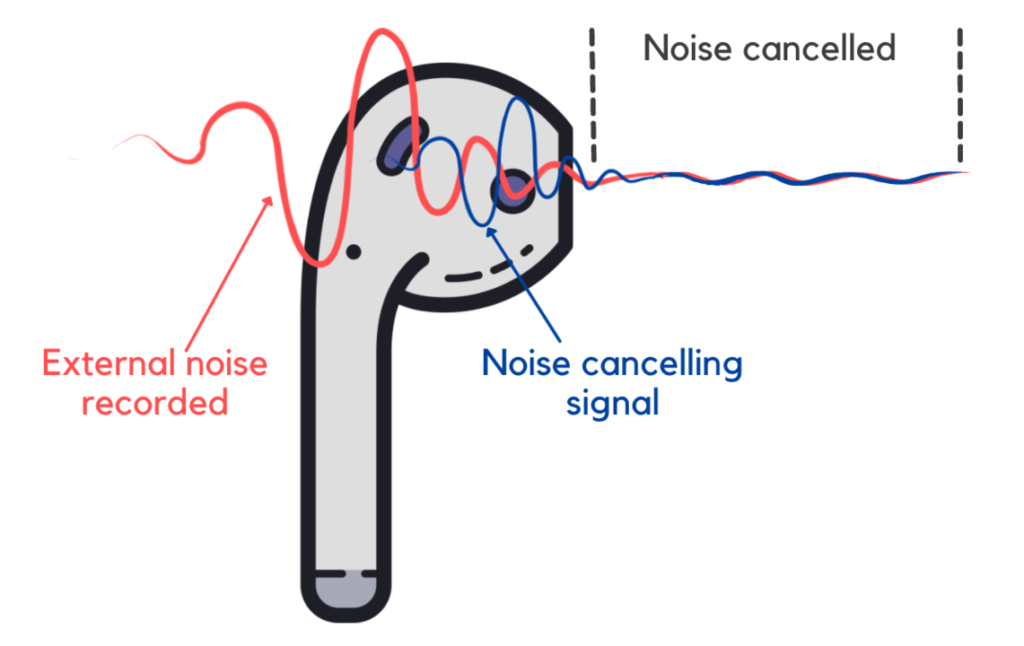
Instead of only blocking sound with physical materials, ANC:
- Detects external noise with microphones
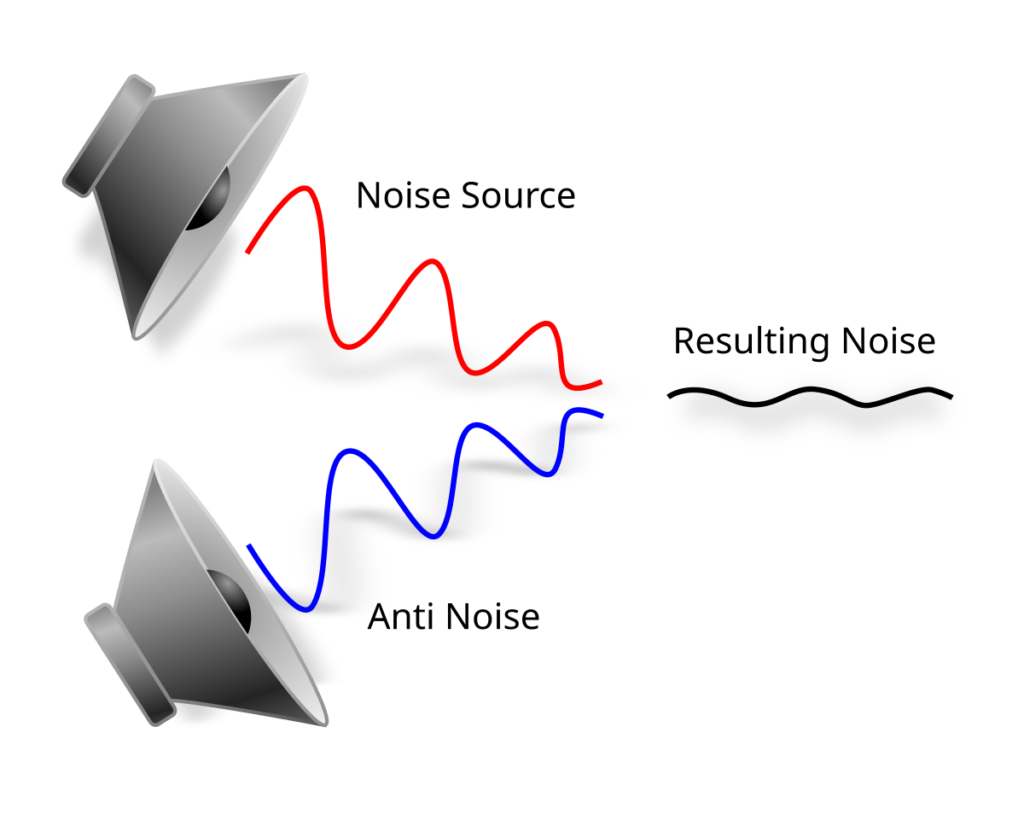
- Generates an “anti-noise” signal
- Plays that signal along with your music
When the noise and anti-noise meet, they cancel each other out at your ear. The result is less noise and a quieter background.
ANC is especially effective against:
- Steady low frequency sounds such as engine rumble
- Air conditioning and ventilation noise
- General hum and drone in cabins and offices
It does not remove all sound. Human voices, sudden bangs, and very high frequencies are harder to cancel completely, but the overall load on your ears still drops.
Credit: en.wikipedia.org
How Active Noise Cancellation Works
Here is the basic signal chain in most ANC headphones.
- Microphones capture ambient noise
Tiny microphones on the outside (and sometimes inside) of the ear cups or earbuds pick up surrounding sound. - A processor analyzes the noise
A digital signal processor (DSP) measures the incoming noise in real time and calculates a matching “anti noise” waveform. - Speakers play the anti noise
The headphones play the anti noise through the same drivers that play your music. - Destructive interference happens
When noise and anti noise reach your ear at the same time and opposite phase, they cancel out much of the sound energy.
This process happens continuously, thousands of times per second. That is why ANC needs power and batteries, unlike passive isolation.
If you want a more technical breakdown of the physics behind this, the Active Noise Control article on Wikipedia gives a deeper engineering view.
Types Of Noise Reduction In Headphones
There are three main approaches you will see.
Passive Noise Isolation
- Works through physical barriers only
- Uses closed ear cups, padding, and a good seal to block sound
- Common in closed back over ear headphones and in ear tips
This does not use electronics. It is like ear muffs combined with speakers. It is like good ear muffs plus speakers, and you see this approach in most closed back headphones and many in ear headphones.
Active Noise Cancellation (ANC)
- Uses microphones, DSP, and anti noise
- Very effective for low frequency and steady sounds
- Requires battery power
Most ANC headphones and earbuds use either:
- Feedforward ANC (mics outside the ear)
- Feedback ANC (mics inside the ear)
- Hybrid ANC (a combination of both)
Adaptive Or Adjustable Active Noise Cancellation
- ANC level changes based on environment
- Some systems use machine learning to detect patterns
- Many products let you choose different ANC modes for travel, office, or outdoors
This is still ANC. It is just more flexible and often more comfortable over time.
Simple comparison
| Type | How it works | Best for |
| Passive isolation | Physical seal only | Blocking mid and high frequency sounds, no battery use |
| Standard ANC | Mics and DSP create anti noise | Reducing steady low frequency noise |
| Adaptive ANC | ANC level changes with environment | ANC level changes with the environment |
Key Components Inside Active Noise Cancellation Headphones
ANC hardware looks simple from the outside. Inside, several parts work together.
Microphones
- Capture outside and inside sound
- Must be sensitive and placed carefully
- Some models use several mics per ear for better accuracy
If microphones are poor or badly positioned, ANC performance suffers.
DSP And Algorithms
- Analyze incoming noise
- Calculate anti noise in real time
- Try to avoid changing the sound of your music too much
Better algorithms:
- React quickly
- Handle a wider range of frequencies
- Introduce fewer artifacts, such as hiss or pumping effects
Speakers And Ear Cups
- Drivers play both music and anti noise
- Ear cup design and seal help with passive isolation
- Poor seals around glasses or hair can reduce ANC effectiveness
In ear models rely on tips that seal well. Over ear models rely on pads that match your head shape.
Benefits Of Active Noise Cancellation
ANC is not just a fancy extra. In the right settings, it can change how you feel at the end of the day.
Better Listening At Lower Volume
With less background noise, you do not need to turn volume as high to hear details.
Benefits:
- Less ear fatigue
- Better clarity in music and speech
- More nuance in quiet passages
Listening at reasonable levels is also safer for your hearing over time.
Easier Focus And Productivity
In busy offices or at home:
- Constant small noises pull your attention away
- People talking near you makes focusing hard
ANC reduces that load. You still hear key sounds if you want, especially with transparency modes, but:
- Your brain works less to filter noise
- Deep work and reading feel easier
More Comfortable Travel
On planes and trains, engine noise is constant. ANC:
- Cuts the low frequency rumble
- Makes movies and music easier to follow
- Makes it easier to sleep or relax
Once you get used to ANC on flights, it is hard to go back.
Challenges And Limitations Of Active Noise Cancellation
It is important to know what ANC does not do well.
Frequency Limits
ANC is strongest against:
- Steady, low frequency sounds
It is weaker against:
- Irregular, sharp noises
- High frequency sounds such as clinking or some speech
Good passive isolation still matters, especially for higher frequencies.
Wind And Motion Artifacts
Wind can:
- Hit the microphones
- Create whooshing or crackling sounds
Many headphones include a “wind noise reduction” mode, but in very windy situations you may still want to reduce ANC or switch modes.
Rapid head movement or shaking can also sometimes confuse the system.
Effect On Sound Quality
In some designs:
- ANC processing slightly alters tonal balance
- A faint background hiss can appear in very quiet tracks
Higher end models usually manage this better, but it is still a tradeoff. Always test ANC on and off when you audition headphones.
Battery Use And Complexity
ANC:
- Drains battery faster than passive listening
- Adds more parts that can fail
- Can introduce lag if combined with Bluetooth in some scenarios
For most users, the benefits outweigh these costs, but you should be aware of them.
Where ANC Is Used
ANC has moved beyond specialty headphones.
Consumer Headphones And Earbuds
This is the most visible use:
- Over ear travel headphones from brands like Sony, Bose, Apple, Sennheiser, Bowers & Wilkins, and others
- In ear true wireless earbuds with ANC for commuting and office use
They focus on balancing:
- Noise reduction
- Sound quality
- Comfort
- Features like transparency and app control
Cars And Vehicles
Car makers use ANC to:
- Cut engine and road noise in the cabin
- Make conversations and audio clearer
- Reduce fatigue on long drives
Luxury models were first. The tech is slowly moving down to more mainstream vehicles.
Workplaces And Industry
In offices and industrial settings, ANC appears in:
- Headsets used in call centers
- Protective ear gear for loud environments
- Office headphones used for focus
Here the focus is often more on hearing protection and communication clarity than on music quality.
Active Noise Cancellation In Different Listening Scenarios
Travel And Commuting
Travel is where strong ANC helps the most. On planes and trains, engines and cabin noise never stop. Over ear ANC headphones with good passive isolation and strong active noise cancelling make a big difference.
For specific model ideas that balance ANC, comfort, and portability, you can start with our wireless headphones for travel guide. If you want to see both wired and wireless options together, our broader travel headphones guide is also useful.
Office And Remote Work
In offices and home workspaces, ANC reduces HVAC hum, keyboard chatter, and general room noise. It makes it easier to focus on calls and deep work. Comfort and microphone quality matter a lot in this setting.
Many people use wireless headphones here instead of full travel headsets, because they want a lighter fit and better integration with laptops and phones during the day.
Gaming And Studio Listening
For competitive gaming and studio work, latency and a clean, unprocessed signal often matter more than strong ANC. In these cases, good wired closed back headphones with strong passive isolation are usually a better choice than heavy processing.
If you mostly play games, you will probably be happier with dedicated gaming headsets. If you mix, edit, or master music, neutral studio headphones are designed for that job and usually do not use ANC at all.
How Active Noise Cancellation Headphones Have Evolved
ANC has existed for decades, but consumer use is much newer.
- 1950s: Early analog ANC concepts appear, mainly for aviation
- 1980s: Bose and others develop practical pilot headsets
- 2000s: First consumer ANC travel headphones gain popularity
- 2010s: Wireless ANC headphones and earbuds become common
- 2020s: Adaptive ANC, transparency modes, and better integration with phones and apps
Today, even mid range headphones offer ANC that outperforms many early high end models.
How To Choose The Right Active Noise Cancellation Headphones Or Earbuds
You do not pick the “best ANC headphones” in general. You pick the best for how you use them.
Step 1: Define Your Main Use
Ask:
- Mostly travel by plane or train
- Spend a lot of time in an office or shared home space
- Need ANC mainly for music, for calls, or for both
Travel gear is not always the best studio gear, and vice versa.
Step 2: Evaluate Noise Cancelling Performance
Look for:
- Strong reduction of engine and HVAC hum
- Minimal hiss or “pressure” feeling
- Adjustable ANC modes and a transparency mode
Reviews and measurements help, but try to test in a noisy environment if you can.
Step 3: Check Sound Quality
ANC is only half the story. The headphone still needs to sound good.
Consider:
- Tonal balance (not just heavy bass)
- Clarity in vocals and dialogue
- How music sounds with ANC both on and off
If you care a lot about sound, this matters just as much as how quiet they make the room feel.
Step 4: Comfort And Fit
You may wear them for hours.
For over ear models:
- Pad softness and depth
- Clamp force
- Weight distribution
For in ear models:
- Tip variety and seal
- Pressure relief
- Long term comfort for your specific ears
A slightly worse sounding but very comfortable pair is often better than the reverse.
Step 5: Battery Life And Charging
Check:
- Claimed battery life with ANC on
- Fast charging capabilities
- Whether the case (for earbuds) adds enough extra hours for your longest days
For heavy travelers, 20+ hours with ANC on in over ears, or at least several full charges in the case for earbuds, is a good target.
Step 6: Controls, App, And Features
Look at:
- How easy it is to switch ANC modes and transparency
- Whether the app allows personalization and firmware updates
- Support for voice assistants if you use them
Nice additions include:
- Wear detection (auto pause/resume)
- Custom EQ
- Multipoint Bluetooth to connect to more than one device
Simple Buying Checklist
Here is a quick table you can use.
Factor: What to look for
Use case: Travel, office, commuting, home music, or mixed
ANC strength Blocks engine and HVAC noise well, adjustable levels
Sound quality Balanced tuning, good clarity, not just bass heavy
Comfort: Fits your head or ears well for long sessions
Battery life is enough for your longest use with ANC on
Features: Transparency mode, app control, multipoint, good mic
Price Within budget, real value over cheaper options
Credit: www.linkedin.com
Maintaining Your Active Noise Cancellation Headphones
Keeping ANC gear in good condition prolongs performance and life.
Cleaning And Care
- Wipe ear pads and headbands with a soft, slightly damp cloth
- Clean ear tips on earbuds separately and let them dry fully
- Avoid harsh cleaners and big temperature swings
Always store them:
- In a case when traveling
- Away from direct sun and moisture
Troubleshooting Common ANC Issues
Typical problems and quick actions:
- No ANC: Check battery level and ANC mode setting
- Hiss or crackling: Move away from strong wind, change mode, or reset the headset
- Uneven sound: Clean pads or tips and inspect grills for debris
Safety And Hearing Health
ANC can help you listen at lower volumes, which is usually better for your ears than blasting sound over noise. Even so, very loud listening for long periods can still damage hearing, with or without ANC. For clear medical advice on safe listening levels and noise‑induced hearing loss, you can read the resources from the NIDCD (National Institute on Deafness and Other Communication Disorders).
If firmware updates are available via the app, install them. Many companies improve ANC and stability with software.
The Future Of Active Noise Cancellation
ANC will likely become smarter rather than simply “stronger.”
Expect:
- More AI assisted adaptive ANC that learns your patterns
- Better integration with hearing safety features
- Lighter, more efficient components that use less power
- Wider use in home, office, and automotive spaces
Some systems will:
- Adjust ANC and volume to keep you in safer listening ranges
- Coordinate between your headphones and your phone or car for smoother handoffs
The goal is a quieter, less tiring experience without you needing to think about settings constantly.
FAQ About Active Noise Cancellation
Is ANC the same as Active Noise Cancellation
Yes. ANC is short for Active Noise Cancellation. People use the two terms interchangeably.
Does ANC block all noise?
No. It is best at steady low frequency noise such as engines and fans. It is weaker against irregular, high pitched, or close voices.
Is ANC safe for daily use?
The technology itself is generally safe. In fact, it can help you listen at lower volumes. The main risk is still listening too loud for too long, with or without ANC.
Does ANC hurt sound quality?
On some models, ANC processing can slightly change the sound or add faint hiss. Higher end designs usually minimize this. Always listen with ANC on and off before you decide.
Should I get ANC headphones for gaming or studio work?
For competitive gaming or studio mixing, latency and absolute sound purity matter more than ANC. In those cases, a good wired closed back headphone with strong passive isolation may be a better choice.
Conclusion: Using ANC Wisely
Active Noise Cancellation is one of the most useful features to appear in headphones and earbuds in years. Used well, it can:
- Make travel quieter
- Make offices more bearable
- Let you enjoy music and podcasts at safer volumes
The key is to:
- Match the product to how and where you listen
- Balance ANC performance with sound quality and comfort
- Treat ANC as a tool to reduce noise, not as a reason to blast volume
Pick your ANC headphones with your real life in mind, not just specs on a page, and you will get much more from them every day.

A passionate tech blogger and the founder of Best Tech View, a dynamic platform dedicated to all things technology. With a keen interest in the tech, Ahmad strives to provide insightful and engaging content on the latest tech trends, and breakthroughs.