

VR headsets with smart assistant enhance the immersive experience by integrating voice commands and intelligent features. They provide hands-free control and personalized interaction.
Virtual Reality (VR) headsets combined with smart assistants are revolutionizing the digital landscape. These devices offer an immersive experience by integrating voice commands, making it easier for users to interact without using their hands.
Smart assistants like Alexa, Google Assistant, or Siri can control settings, launch applications, and answer queries, adding convenience and personalization.
These headsets are used for gaming, virtual meetings, educational purposes, and fitness. The seamless blend of VR and AI technology makes these devices a powerful tool for various applications, offering an enhanced and intuitive user experience.
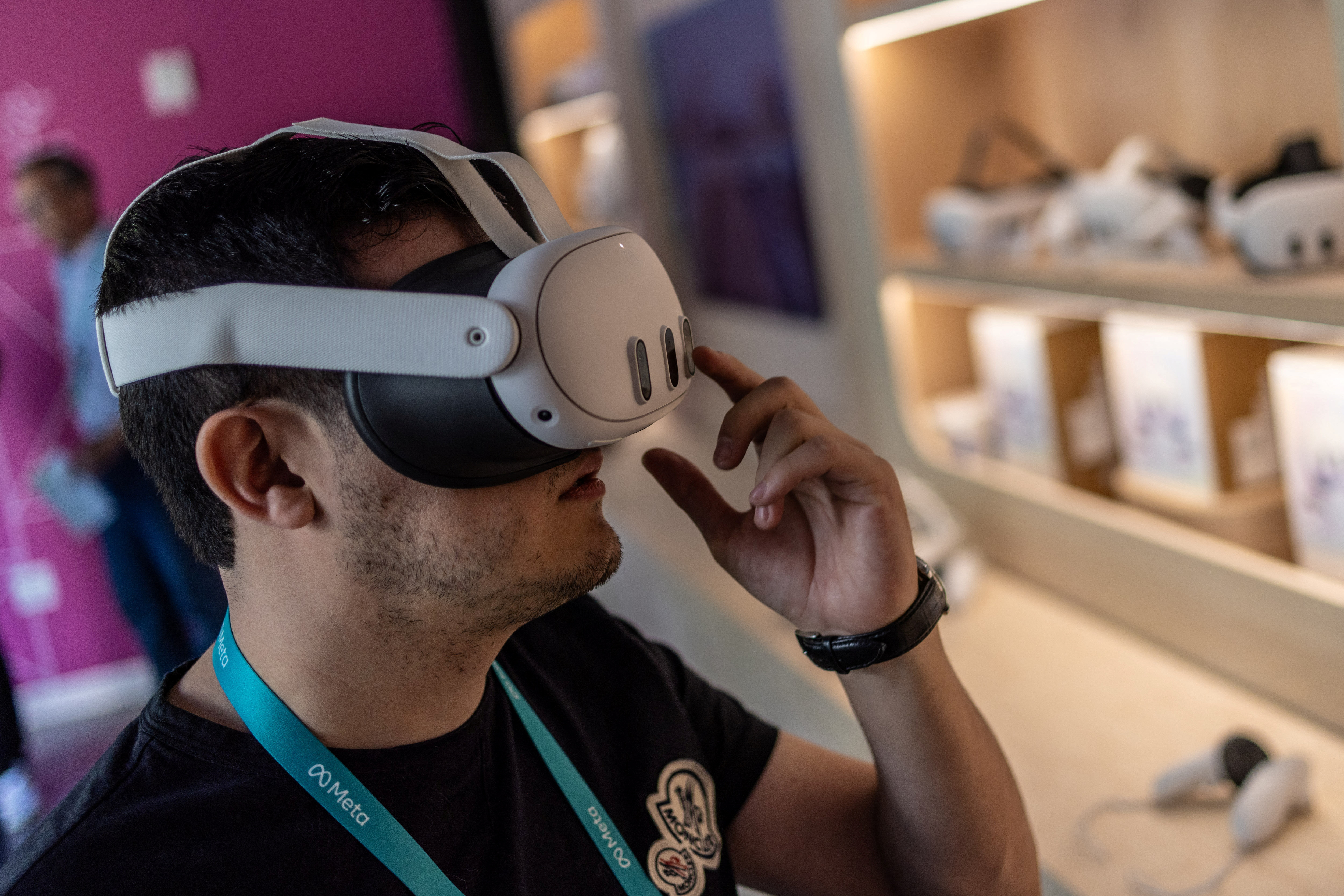
Credit: www.reuters.com
Introduction To VR and Smart Assistants
Welcome to the exciting world of VR headsets with smart assistant. This technology combines immersive experiences with intelligent help. Let’s dive into the basics of VR and smart assistants.
Brief History Of VR
Virtual Reality, or VR, has been evolving for decades. In the 1960s, the first VR headset, known as the Sensorama, was invented. It offered a multi-sensory experience. In the 1980s, the term “virtual reality” became popular. Companies started creating more advanced VR systems.
By the 1990s, VR arcades were common. They provided immersive gaming experiences. Fast forward to the 2000s, and VR technology improved significantly. Today, VR headsets are more affordable and accessible. They offer high-quality visuals and interactive experiences.
Role Of Smart Assistants
Smart assistants, like Alexa and Google Assistant, simplify our daily tasks. They respond to voice commands, providing answers and controlling devices. Integrating smart assistants with VR headsets enhances the user experience.
Imagine exploring a virtual world and asking your smart assistant for help. You can get directions, play music, or control smart home devices. This integration makes VR more interactive and convenient.
With smart assistants, users can enjoy hands-free control. This feature is especially useful in VR environments. It allows for seamless interaction without interrupting the experience.
| Year | Milestone in VR |
|---|---|
| 1960s | First VR headset, Sensorama |
| 1980s | The term “virtual reality” was popularized |
| 1990s | VR arcades become common |
| 2000s | VR technology advances significantly |
In summary, VR headsets with smart assistants offer a seamless, interactive experience. This combination brings the best of both worlds together.
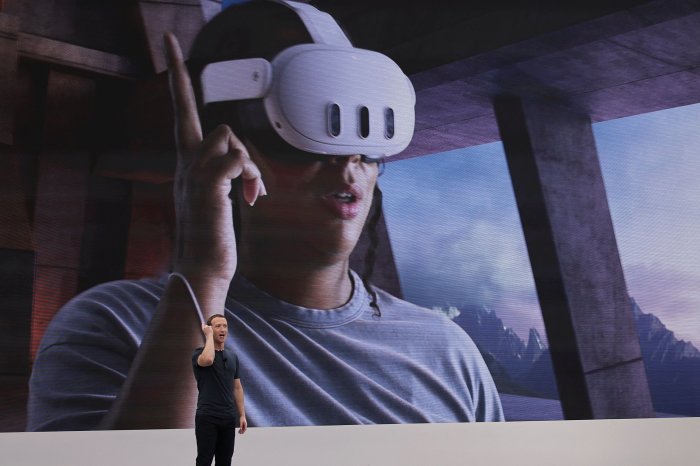
Credit: www.wsj.com
Merging VR with Smart Assistants
Virtual Reality (VR) headsets have revolutionized the way we experience digital content. The integration of smart assistants with VR headsets takes this experience to a whole new level. This powerful combination enhances user interaction, making it more intuitive and seamless.
How Integration Works
Smart assistants like Alexa, Google Assistant, and Siri can now be embedded in VR headsets. This integration allows users to control their VR environment using voice commands. Imagine exploring a virtual world and asking your smart assistant to change the scene or provide information without leaving the experience.
| VR Headset | Smart Assistant | Functionality |
|---|---|---|
| Oculus Quest 2 | Google Assistant | Voice Search, Scene Control |
| HTC Vive | Alexa | Home Automation, Voice Commands |
| PlayStation VR | Siri | Game Assistance, Voice Navigation |
Benefits Of Integration
The integration of smart assistants with VR headsets offers numerous benefits. Here are some key advantages:
- Enhanced Interaction: Users can interact with VR using simple voice commands.
- Hands-Free Control: No need to use controllers for basic functions.
- Accessibility: Makes VR more accessible for users with disabilities.
- Multitasking: Perform tasks like checking the weather while immersed in VR.
These benefits make the VR experience more immersive and user-friendly.
Leading VR Headsets With Smart Assistants
Virtual Reality (VR) headsets continue to transform how we inhabit digital spaces. Recent models not only offer stunning resolution and refresh rates but also integrate smart assistant and voice control features, making navigation and use more intuitive.
Below, we explore the top VR headsets available going into 2025, their standout features, and prices.
Top Models
- Meta Quest 3 – Standalone, versatile, built-in voice assistant.
- HTC Vive XR Elite – High-fidelity mixed reality with Vive Voice.
- PlayStation VR2 – Console-tied powerhouse with integrated PS5 voice control.
- Apple Vision Pro – Premium mixed reality headset with Siri and deep iOS integration.
- PICO 4 – Popular in Asia and Europe with integrated PICO Assistant voice control.
- HP Reverb G2 Omnicept Edition – Professional-grade visuals, Windows voice integration.
Key Features Comparison
| Feature | Meta Quest 3 | HTC Vive XR Elite | PlayStation VR2 | Apple Vision Pro | PICO 4 | HP Reverb G2 Omnicept |
|---|---|---|---|---|---|---|
| Original Brand | Meta (formerly Oculus) | HTC | Sony | Apple | PICO by ByteDance | HP with Microsoft |
| Display Resolution (per eye) | 2064 × 2208 pixels | 1920 × 1920 pixels | 2000 × 2040 pixels | 3660 × 3200 pixels | 2160 × 2160 pixels | 2160 × 2160 pixels |
| Viewing Angle | Around 110 degrees | Close to 110 degrees | Roughly 110 degrees | About 100 degrees | Approximately 105 degrees | Near 114 degrees |
| Screen Refresh | Supports 90 and 120 Hz | Fixed at 90 Hz | Offers 90 or 120 Hz | Runs at 90 Hz (peaks near 100 Hz) | Operates at 72 or 90 Hz | Standard 90 Hz |
| Voice / Assistant Support | Meta voice control available | Vive voice features included | Uses PS5 voice system | Controlled via Siri | Built-in PICO voice assistant | Integrated with Windows voice services |
| Typical Price (USD) | $499 (128 GB) / $649 (512 GB) | Around $1,099 | About $549 | Starts near $3,499 | Around $429 | About $1,250 (Omnicept) |
Highlights
- Meta Quest 3:
A powerful standalone headset with crisp resolution and intuitive Meta Voice Commands for navigation, app launching, and settings control.
Price: $499–$649. - HTC Vive XR Elite:
Compact headset focused on high-quality mixed reality, enterprise apps, and portability. Vive Voice integration allows verbal commands.
Price: $1,099. - PlayStation VR2:
Designed for PlayStation 5 gamers, this headset excels with OLED displays and built-in haptics. Supports PS5 voice commands for quick navigation.
Price: $549. - Apple Vision Pro:
Apple’s revolutionary mixed-reality headset combines ultra-high-resolution micro‑OLED displays with seamless iOS ecosystem integration. Offers full Siri functionality. Positioned as a productivity, entertainment, and AR/VR hybrid device.
Price: $3,499. - PICO 4:
Popular in Europe and Asia, offering affordable pricing and growing game/app libraries. Comes with PICO Voice Assistant for system controls.
Price: ~$429. - HP Reverb G2 Omnicept Edition:
Specially designed for enterprise and simulation use, with eye tracking, heart rate sensors, and Windows Voice Control/Cortana integration. Not aimed at casual gaming, but unmatched for clarity and industrial VR.
Price: ~$1,250.
Summary
The modern lineup shows how far VR has come:
- Meta Quest 3 remains the everyday champion for most users.
- HTC Vive XR Elite serves professionals and enthusiasts craving clarity.
- PlayStation VR2 is a no-brainer for PS5 gamers.
- Apple Vision Pro pushes the bleeding edge (and your wallet).
- PICO 4 provides a budget-friendly option, especially outside the U.S.
- HP Reverb G2 Omnicept shines in simulation, training, and enterprise settings.
Collectively, they prove that VR in 2025 is about choice, performance, and seamless integration with voice assistants—whether that’s Siri, Meta Voice, Vive Voice, or other systems.
Enhancing User Experience
VR headsets with smart assistants are transforming the way users interact with virtual worlds. These advanced technologies offer a more immersive and personalized experience. This section will explore how voice commands and personalized interactions enhance the user experience.
Voice Commands
Voice commands allow users to control their VR headsets effortlessly. By simply speaking, users can navigate menus, launch apps, and adjust settings. This hands-free control makes the experience more intuitive and engaging.
- Ease of Use: No need to fumble with buttons or remotes.
- Quick Access: Instantly open apps or games.
- Enhanced Immersion: Stay focused on the virtual world.
Voice commands also reduce physical strain. Users can remain comfortable and fully immersed. This feature is especially beneficial for long sessions in VR.
Personalized Interactions
Personalized interactions make VR experiences unique and tailored to each user. Smart assistants can learn user preferences and habits. They can suggest content, adjust settings, and provide personalized recommendations.
- Customized Content: Receive suggestions based on your interests.
- Adaptive Settings: Enjoy automatic adjustments for optimal experience.
- Interactive Feedback: Get real-time responses and tips.
This personalization enhances user satisfaction. It makes each session feel unique and engaging. Users feel more connected to their virtual environments.
| Feature | Benefit |
|---|---|
| Voice Commands | Hands-free control and ease of use |
| Personalized Interactions | Tailored content and adaptive settings |
VR headsets with smart assistants offer a more immersive and personalized experience. These technologies make VR more accessible, engaging, and enjoyable.
Applications In Gaming
Virtual Reality (VR) headsets with smart assistants are revolutionizing gaming. These advanced devices offer immersive experiences and intuitive controls. Let’s explore their applications in gaming.
Immersive Gameplay
VR headsets provide players with truly immersive gameplay. The 360-degree view and 3D audio transport players into the game world. Gamers feel like they are inside the game, not just watching it.
The smart assistant enhances this experience. It can provide real-time feedback and tips without interrupting gameplay. Players can ask for help or get information instantly. This keeps the focus on the game and improves performance.
Voice-controlled Actions
Voice-controlled actions make gaming more interactive and exciting. Players can use voice commands to perform in-game actions. This can be faster and more intuitive than traditional controls.
- Cast spells or use special abilities with simple voice commands.
- Change weapons or items without pausing the game.
- Communicate with other players using voice chat.
The smart assistant can recognize and process these commands quickly. This ensures smooth and responsive gameplay. It also adds a layer of realism to the gaming experience.
Credit: www.linkedin.com
Applications In Education
Virtual Reality (VR) headsets with smart assistants are revolutionizing education. They offer immersive and interactive learning experiences. Students can explore new worlds and concepts like never before.
Virtual Classrooms
Virtual classrooms allow students to attend lessons from anywhere. They can join classes without leaving their homes. VR headsets create a sense of being in a real classroom.
- Students can interact with teachers in real-time.
- Virtual desks and whiteboards replicate a traditional classroom.
- Group activities and discussions become more engaging.
Smart assistants help manage schedules and answer questions. They provide reminders for assignments and exams.
Interactive Learning
Interactive learning is now more engaging with VR headsets. Students can participate in virtual labs and experiments. They can experience historical events and explore distant planets.
| Subject | VR Application |
|---|---|
| Science | Virtual labs for experiments |
| History | Experience historical events |
| Geography | Explore different terrains |
Smart assistants provide instant feedback and additional resources. They help students understand complex topics through interactive visuals.
VR headsets make learning fun and memorable. Students retain information better and enjoy the learning process.
Challenges And Limitations
VR headsets with smart assistants are amazing. They bring new experiences to users. But, they also have challenges and limitations. These need to be addressed for better user satisfaction.
Technical Hurdles
Technical hurdles are a big issue. VR headsets need strong hardware. They need powerful processors and high-resolution displays. These components can make headsets bulky and heavy.
Another problem is battery life. VR headsets need a lot of power. This means they can run out of battery quickly. Users may need to charge them often, which can be annoying.
Latency is also a concern. Users expect smooth experiences. Any delay can make users feel dizzy or uncomfortable. This is a big challenge for developers.
User Privacy Concerns
User privacy is very important. VR headsets with smart assistants collect data. They gather personal information to improve user experience. But, this data can be misused.
Data security is another concern. Hackers can steal personal information. This can lead to identity theft. Users need to feel safe while using VR headsets.
Voice assistants listen to user commands. They need to store and process this data. Users worry about who has access to their conversations. This makes them uneasy.
| Challenge | Impact |
|---|---|
| Technical Hurdles | Heavy headsets, short battery life, latency issues |
| User Privacy Concerns | Data misuse, security risks, privacy breaches |
Future Of VR and Smart Assistants
The future of VR and smart assistants is bright. VR headsets with smart assistants will change how we live. Imagine a world where your VR headset guides you. It helps you shop, learn, and play games.
Upcoming Innovations
Many new features are coming to VR headsets. These features will make life easier and more fun. Here are some innovations to look forward to:
- Voice Commands: Control your VR world with your voice.
- AI Integration: Smart assistants will learn your habits and preferences.
- Real-Time Translation: Speak in any language, and your assistant will translate.
- Enhanced Graphics: Enjoy more realistic and immersive visuals.
Potential Impact
VR headsets with smart assistants will have a big impact on our lives. Here’s how:
| Area | Impact |
|---|---|
| Education | Virtual classrooms will make learning more interactive. |
| Shopping | Shop in virtual stores with the help of your assistant. |
| Entertainment | Games and movies will be more engaging and immersive. |
| Work | Virtual meetings will feel like real-life gatherings. |
Frequently Asked Questions
Are VR Headsets Good For ADHD?
VR headsets can help individuals with ADHD by improving focus and engagement. They offer immersive experiences and interactive learning. Consult a healthcare professional before use.
Do VR Headsets Use AI?
Yes, VR headsets use AI. AI enhances user experiences by improving graphics, tracking movements, and personalizing interactions in virtual environments.
Are VR Headsets Good For Autism?
VR headsets can be beneficial for autism. They provide controlled environments for social skills practice and sensory experiences.
What VR Headset Reads Your Mind?
No VR headset currently reads your mind. Some headsets use brainwave sensors for limited control, but full mind-reading is not available.
Conclusion
VR headsets with smart assistants are revolutionizing the tech landscape. They offer immersive experiences and seamless connectivity. As technology advances, these devices will become even more integrated into daily life. Embrace this innovation to stay ahead in the digital age.
Invest in a VR headset with a smart assistant today.

A passionate tech blogger and the founder of Best Tech View, a dynamic platform dedicated to all things technology. With a keen interest in the tech, Ahmad strives to provide insightful and engaging content on the latest tech trends, and breakthroughs.
