


Here’s what matters. Most people buy studio headphones based on brand reputation, spec sheets, or someone else’s opinion. Then their mixes fall apart on speakers and they blame the room.
The real issue is simpler. They never understood the features.
Labels like high resolution audio or studio quality sound convincing, but they tell you almost nothing about how a headphone behaves during a vocal session, a long edit, or a late-night mix.
Driver size affects response, but not always in the way people assume. High impedance can mean control, or it can mean underpowered distortion if your interface cannot drive it properly. Even ear pad material can shift perceived tone over time.
Once you understand how design, tuning, and comfort interact, you stop guessing. You stop buying based on reputation. You start choosing based on workflow.
This guide breaks down what each feature actually does and where common assumptions fall apart.
Acoustic Design and Sound Structure
Open Back vs Closed Back Overview
This is the first real fork in the road.
Before driver size, before impedance, before brand, you are choosing how the headphone handles air.
Open back headphones let air move freely through the ear cups. That airflow reduces pressure buildup and often creates a wider, more speaker-like presentation. The sound feels less trapped inside your head. Imaging can feel more natural. Long sessions tend to feel easier on the ears.
But here is the cost. They leak sound outward, and they let room noise in. If you are tracking vocals, that leakage can end up in the microphone. If your room is noisy, you will hear it.
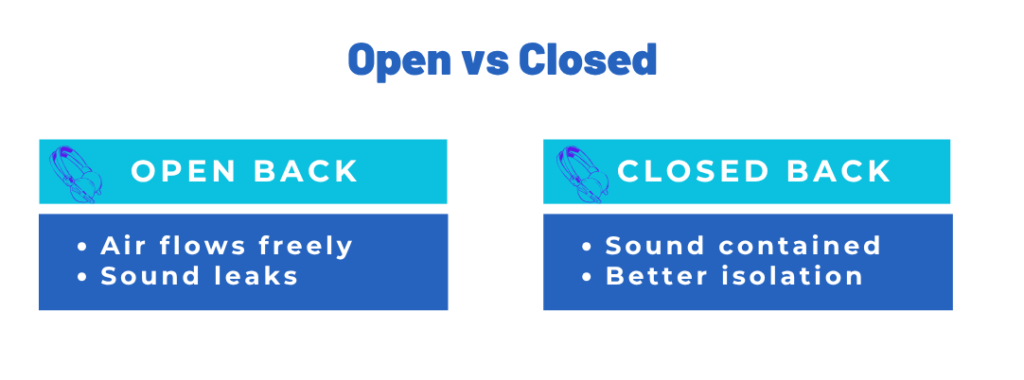
Closed back headphones seal the ear cups. They control leakage and increase isolation. That makes them practical, sometimes necessary, during recording. You can monitor loudly without bleeding into the mic.
The trade-off is spatial perception. Closed designs can feel more confined. Not always worse. Just different. Some high-end closed models manage impressive imaging, but they rarely feel as open as a true open back design.
So which is better?
If you are mixing in a quiet room and want a more natural sense of space, open back designs often make more sense. If you are recording or working in an untreated space, closed back is usually the smarter choice.
Notice the word usually. There are exceptions. Workflow matters more than ideology.
| Feature | Open Back | Closed Back |
| Soundstage | Wider, more natural | More focused |
| Isolation | Low | High |
| Leakage | High | Low |
| Best For | Mixing in quiet rooms | Recording and noisy spaces |
Sound Isolation and Leakage
Two terms people constantly mix up are isolation and leakage. They are not the same thing.
Isolation is about what stays out. How well does the headphone block external noise?
Leakage is about what escapes. How much of your playback spills into the room?
Closed back headphones generally offer higher isolation and lower leakage. Open back headphones typically offer low isolation and high leakage. That part is simple.
What is not simple is how that affects real sessions.
If you are recording vocals and your headphone leaks, your mic will pick it up. Even faint bleed can limit how much compression you can apply later. That is not a small issue. It directly affects mix flexibility.
On the other hand, if you are mixing in a quiet environment, extreme isolation is less important than tonal balance and imaging. In that context, chasing isolation may actually push you toward a design that feels less natural.
Context decides everything.
Surround Sound and Spatial Effects
Most studio headphones are stereo for a reason.
When you see surround sound or spatial audio in marketing, it is usually software processing. The headphone still has two drivers. The effect is created through phase manipulation and frequency shaping.
That does not make it useless. But it does change perception.
Artificial spatial processing can exaggerate width, shift the center of imaging, and alter depth cues. If you are making critical decisions about panning, reverb, or stereo balance, that extra processing can distort your judgment.
If your goal is immersion for gaming or film watching, spatial effects can be enjoyable. If your goal is accurate mixing, added processing introduces variables you did not ask for.
Bottom line: treat surround sound as a feature for consumption, not a foundation for critical studio work.
Driver Technology and Size
The driver is the component that turns electrical signal into air movement. Everything you hear begins there. But bigger or more expensive does not automatically mean more accurate.
Let’s break it down clearly.
Dynamic Drivers
Dynamic drivers are the most common design in studio headphones. They use a voice coil attached to a diaphragm that moves within a magnetic field. Current flows. The diaphragm moves. Air shifts. Sound happens.
Simple in concept. Hard to perfect.
Why do they dominate the market?
Because they are efficient, durable, and practical. Most dynamic headphones are easy to drive. You can plug them into an interface, laptop, or mixer without needing a separate amplifier. They also tend to deliver strong bass impact because the diaphragm can move with relatively large excursion.
But here is the nuance. Dynamic drivers vary wildly in quality. A well-engineered dynamic headphone can sound controlled, balanced, and highly detailed. A poorly tuned one can sound boomy or harsh.
The design is common. The execution is what matters.
Planar Magnetic Drivers
Planar magnetic drivers take a different approach. Instead of a small coil pulling part of the diaphragm, the diaphragm itself carries a conductive trace and is suspended between magnetic arrays. The force is distributed more evenly across the surface.
In theory, this leads to cleaner movement and faster response.
In practice, good planar headphones often sound tight, controlled, and very precise with transients. Low frequencies can feel less bloated and more textured. Complex passages can feel less congested.
Now the counterpoint.
Planar does not automatically mean better. Some planar models are heavy. Many require more power. If your interface cannot drive them properly, you may lose the very control you paid for. And poorly tuned planar headphones can still sound unbalanced.
They offer potential. Not magic.
For critical listening and mixing, planar designs can be extremely revealing. But only when powered and tuned correctly.
| Feature | Dynamic | Planar Magnetic |
| Common Use | Most studio models | High-end models |
| Power Needs | Easy to drive | Often needs more power |
| Weight | Usually lighter | Often heavier |
| Sound Character | Versatile, varied tuning | Often tighter transients |
Large Drivers vs Small Drivers
You will often see driver sizes listed as 40 mm, 45 mm, 50 mm, sometimes larger. The marketing implication is obvious. Bigger must mean better.
Not so fast.
A larger driver can move more air. That can help with low frequency extension. It can also change how the headphone handles dynamics. But raw size does not guarantee depth, clarity, or control.
Materials matter. Diaphragm stiffness matters. Magnet strength matters. Enclosure design matters. Tuning matters most of all.
A well-tuned 40 mm driver can outperform a poorly implemented 50 mm driver without breaking a sweat.
So does driver size matter?
Yes. But it is one variable in a much larger system. If you focus only on millimeters, you are looking at the least interesting part of the equation.
Bottom line: evaluate how the headphone behaves, not how large the driver sounds on paper.
Why Some Engineers Still Prefer Dynamic Drivers
It is easy to assume that planar magnetic designs are the logical upgrade. More even force distribution. Faster response. Greater precision.
But many experienced engineers still choose dynamic drivers on purpose.
Why?
Because absolute detail is not always the goal. Translation is.
Some dynamic headphones have a slightly more forgiving character. Not inaccurate. Just less clinical. That subtle warmth can mirror how music behaves on everyday systems. If you mix on something extremely revealing, you may end up compensating too aggressively. Pulling back highs too much. Over-controlling the low end. Polishing details that average listeners will never hear.
There is also the matter of weight and comfort. Dynamic headphones are often lighter. Over long sessions, that matters more than theoretical transient speed.
And then there is simplicity. A dynamic headphone that is easy to drive behaves consistently across interfaces and environments. A planar model that needs strong amplification can underperform if paired with weak output.
So the question is not which technology is superior.
The better question is: which one helps you make decisions that hold up outside your headphones?
That is the metric that matters.
Frequency Response and Tuning
This is where marketing and reality start to diverge.
Every headphone has a frequency response curve. That curve describes how loud different frequencies are relative to each other. But reading a number like 20 Hz to 20 kHz tells you almost nothing. Almost every headphone claims that range. The shape of the curve is what matters.
Flat Frequency Response Explained
A flat frequency response, in theory, means all frequencies are reproduced at equal relative levels.
In practice, perfectly flat does not exist. Headphones interact directly with your ears. Ear shape, seal, and even head position affect what you hear. What manufacturers mean by flat is usually neutral or controlled, not mathematically identical output across the spectrum.
So why aim for flat at all?
Because exaggerated tuning creates distorted judgment. If the bass is elevated, you may reduce bass in your mix too much. If highs are boosted, you may tame treble unnecessarily. A neutral presentation reduces that compensation instinct.
But here is the important nuance. Flat does not automatically mean pleasing. Many truly neutral headphones sound less exciting at first listen. That is not a flaw. It is a sign that they are not hyping the signal.
The goal in studio work is not excitement. It is a translation.
Enhanced Bass and Treble Boost
Some headphones intentionally shape the curve to sound more dramatic.
Bass boosts add weight and impact. Treble boosts add perceived clarity and air. On first listen, this tuning can feel impressive. Wider. Brighter. Bigger.
The problem shows up later.
If your headphone exaggerates bass, you may cut too much low end in your mix. Play that mix on a neutral system and it sounds thin. If treble is hyped, you may underrepresent high frequencies, leading to dull playback elsewhere.
That said, not all shaping is bad. Slight tuning adjustments can compensate for headphone limitations. The issue is not shaping itself. The issue is extreme coloration that hides problems instead of revealing them.
Ask a better question. Does this headphone expose issues, or flatter them?
Midrange Clarity
The midrange is where most musical information lives. Vocals, guitars, snares, pianos, synth leads, dialogue. If the midrange is unclear, the mix collapses no matter how deep the bass extends.
Good midrange clarity allows you to judge balance between instruments. You can hear masking. You can hear when vocals are slightly too forward or slightly buried. Subtle EQ moves become easier to evaluate.
If the mids are recessed, you may push vocals too loud. If they are muddy, you may over-EQ trying to fix something that is partly the headphone’s fault.
This is why experienced engineers often prioritize midrange integrity over exaggerated low end extension or sparkling highs.
Bottom line: bass impresses. Highs attract attention. But mids determine whether a mix holds together.
High Resolution Audio Labels
Some headphones carry a Hi-Res Audio label. This typically means they can reproduce frequencies above 20 kHz.
That specification sounds impressive, but it does not guarantee better mixing decisions. Human hearing rarely extends beyond 20 kHz, and extended range alone does not ensure balanced tuning.
Accuracy depends more on how evenly the audible range is handled than on how far beyond it the driver can technically reach.
Impedance and Amplification Basics
This is where confusion multiplies.
People see a number like 250 ohms and assume higher means better. Others assume low impedance means lower quality. Neither assumption survives scrutiny.
Impedance is electrical resistance, measured in ohms. It influences how much voltage a headphone needs to reach a given volume. But volume alone tells you nothing about control, distortion, or clarity.
There is another variable many people ignore: sensitivity. A low impedance headphone with high sensitivity can play very loud from weak sources. A high impedance headphone with low sensitivity can sound underpowered even at full volume. You cannot evaluate impedance in isolation.
Let’s separate the concepts.
Low vs High Impedance
Low impedance headphones, typically between 16 and 80 ohms, are easier to drive. You can plug them into a phone, laptop, or entry-level interface and reach comfortable listening levels without strain.
That does not make them inferior. It makes them practical.
High impedance headphones, often 250 ohms or more, require more voltage to reach the same loudness. That is why they are commonly paired with dedicated headphone amplifiers or strong studio interfaces.
Here is the nuance.
When properly powered, some high impedance designs can maintain better electrical damping and stability. In certain implementations, this can translate into cleaner transients and tighter low end control. But this is not guaranteed. Driver design, enclosure tuning, and amplifier quality matter just as much.
Plug a 250 ohm model into a weak laptop output and you may get lower volume, reduced dynamics, and less clarity. Not more.
So the real question is not low versus high.
The better question is: what is your source capable of delivering, and how sensitive is the headphone you are pairing with it?
If you are running a typical USB interface with moderate output, 32 to 80 ohms is often a safe range. If you own a powerful interface or dedicated amplifier, higher impedance models become viable without compromise.
Context decides performance.
Built in Amplifier
Some headphones include a built in amplifier. These are common in wireless and USB powered designs.
The advantage is simplicity. The manufacturer controls the amplification stage and matches it to the driver. You do not need to think about output voltage or gain structure. It behaves consistently.
That consistency can be helpful for portable workflows and creators who want minimal setup.
But there is a tradeoff.
You are locked into the internal amplification design. You cannot upgrade it. You cannot experiment with different amplification characteristics. In professional mixing environments, flexibility often matters more than convenience. Many engineers prefer passive headphones because they can shape and control the amplification chain separately.
Convenience versus control. That is the real decision.
Integrated DAC
A DAC converts digital audio into an analog signal that your headphone drivers can reproduce. Every digital playback device contains one. The difference is in quality and implementation.
USB headphones often include an integrated DAC. Compared to weak onboard laptop audio, this can be a meaningful upgrade. Lower noise floor. Better output stability. Cleaner signal.
However, in a studio setup, you are typically using a dedicated audio interface. That interface already contains a purpose-built DAC and headphone amplifier designed for monitoring. Adding another conversion stage inside the headphone does not automatically improve fidelity and may reduce routing flexibility.
That said, not all interfaces are equal. A well-designed USB headphone can outperform a poorly implemented interface output. The hierarchy is not absolute.
So when does an integrated DAC make sense?
For mobile setups. For travel. For creators working directly from a laptop without external hardware.
In a fixed studio workflow, a solid audio interface usually offers more control, better monitoring integration, and cleaner gain staging.
Bottom line: impedance, sensitivity, amplification, and DAC quality form a system. Evaluate the entire signal chain, not just the number printed on the box.
Comfort and Ergonomic Design
You can have excellent sound quality, but if your headphones become uncomfortable after 30 minutes, your judgment changes. Not gradually. Noticeably.
Discomfort shortens sessions. It increases listening fatigue. It shifts focus away from the work and toward your head.
Comfort is not cosmetic. It directly affects performance.
Adjustable Headbands
A headband does more than hold the headphones in place. It determines how weight is distributed across your skull.
A good headband should distribute pressure evenly rather than concentrate it on a narrow strip at the top of your head. It should adjust smoothly and stay in position without constant readjustment. Stability matters because shifting position changes how the drivers align with your ears.
Poor headband design leads to hot spots, scalp pressure, and subtle shifts in positioning. Those shifts are not just uncomfortable. They can alter perceived balance, especially in the high frequencies.
Fit stability equals tonal consistency.
Rotatable Ear Cups

Rotating ear cups are often marketed as a convenience feature. They are more than that.
First, they help accommodate different head shapes and jaw angles. A cup that can pivot properly creates a better seal. A better seal often means more accurate low frequency response.
Second, one ear monitoring becomes easier. DJs and recording engineers frequently slide one cup off to monitor room sound or communicate during tracking. Hinges and swivel joints make that movement smoother and reduce mechanical stress over time.
Design flexibility supports workflow flexibility.
Ear Pad Materials
Ear pads influence both comfort and acoustics.
Velour pads are breathable and comfortable over long sessions. They tend to reduce heat buildup and pressure. However, they often provide less isolation and can slightly reduce perceived bass because of a looser seal.
Leather or synthetic leather pads typically create a tighter seal. This improves isolation and can enhance low frequency presence. The tradeoff is heat retention. Long sessions may feel warmer and less breathable.
Foam density and thickness also matter. Memory foam can improve comfort and seal, but it can compress over time. Pad wear changes the sound. As pads flatten, bass response can shift and imaging can subtly change.
Comfort and tone are linked. Pad choice is not purely ergonomic.
Lightweight Designs
Weight is cumulative.
A headphone that feels solid and substantial in the hand can feel heavy after two hours. Neck tension builds slowly. Jaw fatigue follows. Concentration drops.
That does not mean heavier headphones are inherently worse. Some heavier designs offer excellent build quality and acoustic performance. The key is weight distribution. A slightly heavier headphone with excellent balance can feel lighter than a poorly balanced lighter model.
Do not judge comfort by weight alone. Judge it by how it feels after a full session.
Long Session Comfort and Listening Fatigue
Here is what truly matters over four to eight hours:
Moderate clamping force. Enough to maintain seal, not enough to cause pressure.
Breathable materials that prevent heat buildup.
Stable positioning that does not shift when you move.
Excessive clamping can increase physical fatigue. Too little clamping can break the seal and alter low frequency response. Either extreme affects perception.
There is also psychological fatigue. Physical discomfort amplifies listening fatigue. When your ears or head hurt, you are more likely to make rushed decisions just to end the session.
If two headphones sound similar but one disappears on your head, the one you forget you are wearing is usually the better long term tool.
Comfort is not a luxury feature. It is part of accuracy.
Ear Tips vs Ear Pads Clarification
Some discussions mention custom ear tips, but that usually applies to in ear monitors rather than over ear studio headphones.
In over ear designs, ear pads play the critical role. Their material, thickness, and seal influence both comfort and tonal balance. Replacing worn pads often restores both fit and sound consistency.
Cable and Connectivity Options
This part gets overlooked, but it should not.
Cables seem minor compared to drivers or tuning. Yet in daily studio work, they affect movement, reliability, and even signal integrity. Small decisions here prevent long term frustration.
Detachable vs Fixed Cable
Detachable cables offer one obvious advantage: repairability.
Cables fail more often than drivers. They get stepped on, twisted, pulled, and bent at awkward angles. With a detachable system, you replace the cable and keep working. With a fixed cable, damage can mean soldering work or replacing the entire headphone.
There is also flexibility. Some models allow different cable lengths or balanced connections depending on your interface. That matters if your setup evolves.
Fixed cables are simpler in design. Fewer connection points can mean one less mechanical failure point. But when something goes wrong, you have fewer options.
If longevity matters to you, detachable cables are usually the smarter choice.
Long vs Short Cable
Studio headphones often include long cables for a reason.
In recording sessions, you may move between instruments, racks, or control surfaces. A longer cable allows freedom without constant unplugging. It also reduces strain on the headphone jack when you turn your head.
But length has tradeoffs.
Excess cable can create clutter. It can get caught under chair wheels or tangled around the gear. In small desktop setups, a very long cable becomes unnecessary overhead.
Short cables make more sense for portable use or tight workspaces. Less slack. Less mess.
Choose based on movement patterns, not assumptions.
Coiled vs Straight Cable
Coiled cables stretch when needed and retract when not. This keeps the workspace cleaner and reduces the chance of stepping on excess slack. They are common in recording environments where movement is unpredictable.
However, coiled cables can exert slight tension when extended. Over long sessions, that tension can subtly pull on one ear cup.
Straight cables are lighter and apply less pulling force. They feel more relaxed in fixed mixing positions. But they require more attention to length management.
Neither is superior in all cases. Match the cable style to how you move while working.
Replaceable Parts and Durability
Cables are only one part of the durability equation.
Look for headphones that allow easy replacement of cables, ear pads, and headband cushions. Pads compress over time. Cushions flatten. Sound can change as materials wear down.
A headphone with replaceable components can last five to ten years or more with proper care. One with glued parts may become disposable once a single element fails.
Durability is not glamorous. But in professional environments, reliability is part of performance.
Bottom line: small hardware details determine whether your headphones remain tools or become temporary accessories.
Inline Volume Control
You may see headphones with inline volume controls built into the cable. These are common in consumer and gaming models.
For studio work, they are rarely essential. Most monitoring levels are controlled from an audio interface, mixer, or dedicated headphone amplifier. Inline controls add convenience, but they also introduce another component that can wear out or create signal inconsistencies.
In professional setups, external level control is usually cleaner and more reliable.
Balanced Headphone Outputs
You may also encounter balanced headphone outputs using connectors such as 4 pin XLR or 4.4 mm balanced plugs.
Balanced connections can reduce noise and improve channel separation in certain high end amplifier setups. However, in most studio environments with short cable runs and quality interfaces, the difference is subtle.
Balanced output is a specialized feature, not a requirement for accurate monitoring.
Build Quality and Longevity
Build quality is not about how premium something feels out of the box. It is about how it behaves after three years of daily use.
Headphones live a rough life. They get stretched, twisted, dropped, stepped on, packed into bags, and worn for hours at a time. The real test is not the first impression. It is long term stability.
Metal vs Plastic Construction
People often assume metal automatically means better.
Metal components, especially in headbands and yokes, can offer higher structural strength. They resist cracking under tension. They tolerate repeated stretching better over time. That matters if you frequently take headphones on and off during sessions.
But metal also adds weight. More weight increases fatigue unless it is carefully balanced.
Plastic is not inherently weak. Well engineered plastic can be flexible, impact resistant, and lighter. Some plastics absorb stress rather than cracking under it. Poorly designed plastic, on the other hand, fails at hinge points and adjustment rails.
Material alone does not determine durability. Stress distribution does.
Look closely at joints, swivel points, and extension rails. Those are the failure zones.
Replaceable Ear Pads and Parts
Ear pads wear out. Not eventually. Inevitably.
Foam compresses. Synthetic leather flakes. Velour thins. As pads degrade, comfort drops and sound changes. Seal weakens. Bass response shifts. Imaging can subtly alter.
If pads are replaceable, you restore both comfort and acoustic consistency with a simple swap. If they are glued or difficult to source, the entire headphone may become unusable despite perfectly functioning drivers.
The same logic applies to headband cushions and cables. A design that supports spare parts is designed for longevity. A design without them is designed for replacement.
Ask yourself a practical question. Can you still buy pads for this model five years from now?
That answer tells you more about lifespan than marketing ever will.
Foldable Designs
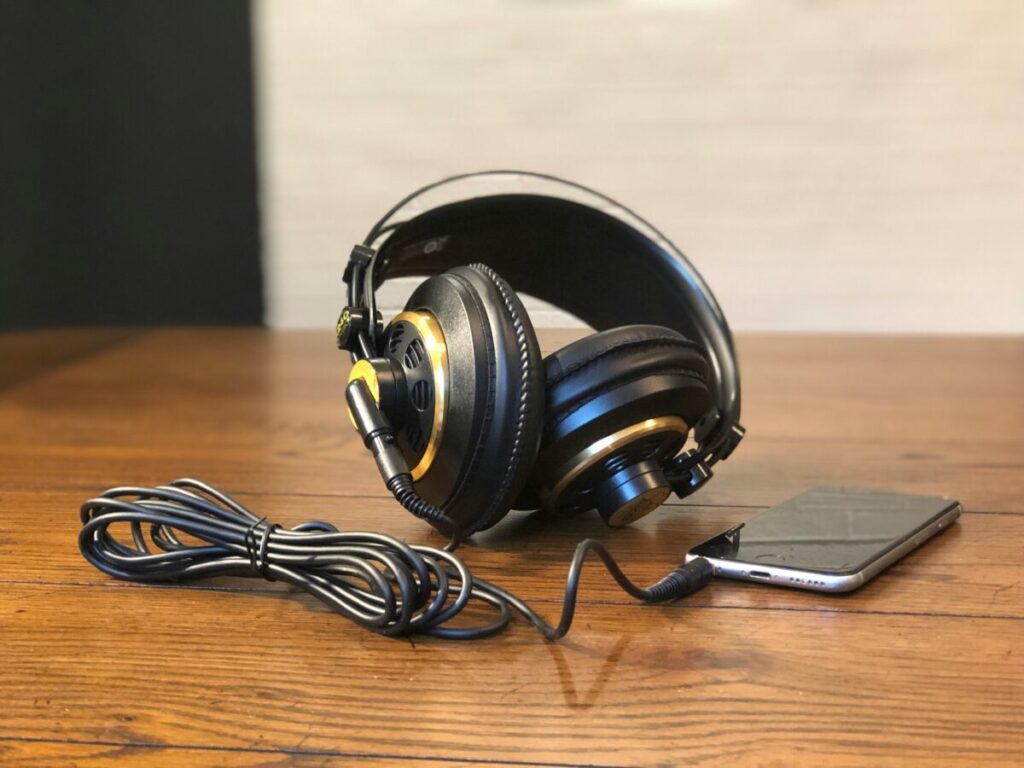
Foldable headphones are convenient for storage and travel. They take up less space and fit easily into bags.
But folding mechanisms introduce moving parts. Moving parts introduce wear points.
If you travel frequently or work in multiple locations, a foldable design makes sense. Just inspect the hinge construction carefully. Solid pivot points and reinforced joints matter more than the folding feature itself.
If your headphones rarely leave the studio desk, a non folding design may offer slightly greater structural simplicity and long term durability.
Portability always trades something for convenience. The question is whether you need that trade.
Bottom line: longevity is not about feeling premium. It is about surviving repetition.
Choose designs that respect stress, allow part replacement, and maintain structural integrity over time.
Choosing Features Based on Your Workflow
This is where everything connects.
Specs mean nothing without context. A feature that is essential in one workflow can be irrelevant in another. The mistake most people make is choosing based on reputation instead of use case.
Start with how you actually work.
Recording
When recording, isolation and leakage control matter more than soundstage width.
If you are tracking vocals, any headphone bleed can leak into the microphone. Even subtle bleed limits how much compression you can apply later without artifacts. That is not a small detail. It affects mix flexibility.
Closed back designs are usually the practical choice. They reduce leakage and block outside noise. Moderate to strong isolation helps performers focus without raising monitor levels too high.
Comfort still matters, especially during long tracking sessions, but acoustic containment comes first.
The goal in recording is control, not spaciousness.
Mixing
Mixing flips the priorities.
Here, isolation matters less if your room is quiet. What matters is tonal balance and spatial judgment. You need to hear midrange clearly. You need honest bass. You need high frequencies that are present but not exaggerated.
Open back designs often feel more natural for this task because they reduce internal reflections and pressure buildup. Many engineers find them easier for long critical sessions.
But do not turn this into dogma. Some closed back models mix extremely well. The real priority is neutrality and consistency.
When mixing, excitement is a distraction. Accuracy is the objective.
Podcasting
Podcasting sits somewhere between recording and mixing.
You are monitoring your own voice in real time. Too much isolation can feel unnatural. Too little isolation can cause feedback or room noise issues.
Comfort becomes critical because sessions can run long. Pressure points distract you. Heat buildup becomes noticeable. Midrange clarity is essential since spoken voice lives there.
You do not need extreme low end extension. You need clear, honest mids and stable positioning.
The goal is clarity and endurance.
Mobile or Minimal Setup
In mobile setups, practicality becomes the dominant factor.
You may be working from a laptop without a powerful headphone amplifier. In that case, lower impedance and reasonable sensitivity matter. You want consistent output without pushing your device to its limits.
Lightweight construction reduces fatigue when you are working in non traditional spaces. Short or detachable cables prevent clutter and tangling.
You are optimizing for flexibility, not perfection.
| Workflow | Top Priorities |
| Recording | Isolation, low leakage |
| Mixing | Neutral tuning, clarity |
| Podcasting | Comfort, midrange clarity |
| Mobile | Low impedance, lightweight |
The pattern should be clear.
Recording prioritizes containment.
Mixing prioritizes neutrality.
Podcasting prioritizes clarity and comfort.
Mobile work prioritizes practicality.
There is no universal best configuration. There is only what supports your workflow with the least friction.
That is the real decision framework.
Frequently Asked Questions
Do expensive studio headphones always sound better?
Not automatically.
Higher prices often reflect materials, build quality, research costs, and brand positioning. Some expensive models offer excellent performance. Others charge a premium for reputation and aesthetics.
Sound quality depends primarily on tuning, driver implementation, and how well the headphone matches your source and workflow. A well tuned mid range model can outperform a poorly tuned high priced one.
Price increases potential. It does not guarantee accuracy.
Are open back headphones better for everything?
No.
Open back designs often feel more natural and spacious, which makes them popular for mixing in quiet environments. But they leak sound and offer little isolation. That makes them unsuitable for recording vocals or working in noisy spaces.
They are tools for specific conditions, not universal upgrades.
Better for mixing does not mean better for all tasks.
Do I need an amplifier for studio headphones?
Only if your headphones require more power than your source can provide.
High impedance or low sensitivity models may need a dedicated amplifier to reach proper volume and maintain control. But many modern low impedance headphones work perfectly well with standard audio interfaces and laptops.
The real question is whether your current setup can drive the headphone cleanly without distortion or weak dynamics.
Match the headphone to the source. Not the other way around.
Is wireless good for studio work?
It depends on the level of precision required.
For casual listening, editing, or general monitoring, wireless can be convenient. Modern codecs have improved significantly.
For critical mixing and mastering, wired connections remain more consistent. Wireless introduces latency, potential compression, and reliance on battery life. Even small variables can affect judgment during detailed work.
If accuracy is the priority, wired still holds the advantage.
How important is frequency response?
Extremely important.
Frequency response determines how balanced or colored a headphone sounds. It influences every mix decision you make. If bass is exaggerated, you compensate. If highs are recessed, you boost them.
However, numbers on a spec sheet are not enough. You need to understand the shape of the response and how it translates to real listening.
Accuracy is not about wide range. It is about balance.
Can one headphone do everything?
It can cover multiple tasks reasonably well. It will not be perfect at all of them.
A headphone optimized for isolation may not offer the most natural soundstage. A model designed for spacious mixing may leak too much for recording. Tradeoffs are unavoidable.
Many professionals use different headphones for tracking, mixing, and reference listening. Not because one pair is inadequate, but because specialization improves efficiency.
The smarter approach is not chasing a mythical all in one solution. It is understanding which compromises you are willing to accept.
Conclusion
Ignore the marketing. Focus on function.
Studio headphones are not status symbols. They are decision making tools. Every design choice, from acoustic structure to driver type to ear pad material, influences how you hear and how you react.
Once you understand how acoustic design shapes space, how tuning affects judgment, how impedance interacts with amplification, and how comfort impacts long sessions, the decision becomes less emotional and more intentional.
There is no universally best studio headphone. There is only the model that introduces the fewest compromises for your workflow.
You are not buying a brand. You are choosing a reference point. A filter through which every mix decision passes.
Choose the one that helps you think clearly, work longer, and translate better.
That is the standard.

A passionate tech blogger and the founder of Best Tech View, a dynamic platform dedicated to all things technology. With a keen interest in the tech, Ahmad strives to provide insightful and engaging content on the latest tech trends, and breakthroughs.